 Pin It
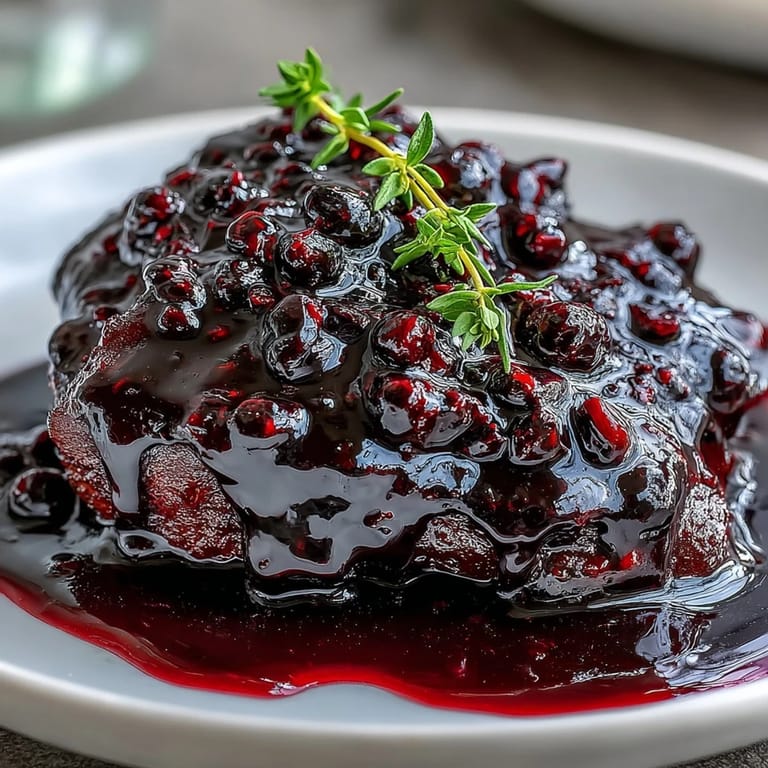
 There's something almost magical about watching black currants collapse into a glossy, wine-dark sauce—it happened quite by accident the first time, when I was trying to salvage a duck dinner that needed something more sophisticated than what my pantry seemed to offer. I'd grabbed a handful of frozen black currants on impulse at the market weeks before, not entirely sure what I'd do with them, and they were still hiding in the back of my freezer. Twenty-five minutes later, the kitchen smelled like a French bistro, and my guests couldn't stop asking what I'd done differently. That's when this reduction became a regular visitor to my stovetop.
I made this for a winter dinner party where someone had brought a beautiful pork loin, and honestly, I was nervous about whether the reduction would work with everyone's expectations of what a sauce should be. But watching people go quiet for a moment after that first bite, then immediately ask for the recipe, taught me that taking a small risk in the kitchen almost always pays off. That sauce became the star of the evening, which still makes me smile.
Ingredients
- Black currants (1 cup, fresh or frozen): Use them straight from the freezer if that's what you have—they break down beautifully either way and bring a tartness that no other berry quite captures.
- Dry red wine (1 cup): Don't use anything you wouldn't drink yourself, but this isn't the moment for your most expensive bottle; something honest and medium-bodied works perfectly.
- Chicken or vegetable stock (1/2 cup): The stock rounds out the wine's edges and deepens the overall flavor without making the sauce taste watered down.
- Balsamic vinegar (2 tbsp): This adds a subtle sweetness underneath the tart notes, almost like it was made for black currants.
- Shallot (1 small, finely chopped): One shallot is gentle enough not to overpower but gives the sauce a quiet backbone that holds everything together.
- Fresh thyme (1 sprig) and bay leaf (1): These cook out after 15 minutes, leaving behind their essence without any woody texture in the finished sauce.
- Sugar (2 tbsp): This isn't about making the sauce sweet—it's about balancing the acidity so each flavor can sing without any single note screaming.
- Black pepper and sea salt: Freshly ground pepper hits different here; it adds a tiny peppery warmth that ties the whole thing together.
- Cold unsalted butter (2 tbsp): The cold cubes whisked in at the end create that glossy, silky finish that makes people think you went to culinary school.
Tired of Takeout? 🥡
Get 10 meals you can make faster than delivery arrives. Seriously.
One email. No spam. Unsubscribe anytime.
Instructions
- Start with a quiet sauté:
- Melt butter in a medium saucepan over medium heat, then add the chopped shallot. You'll know it's ready when it turns translucent and soft, around 2 to 3 minutes—listen for that gentle sizzle.
- Bring everything together:
- Pour in the black currants, red wine, stock, balsamic vinegar, thyme sprig, bay leaf, sugar, salt, and pepper all at once. Give it a good stir so nothing sticks to the bottom.
- Let it simmer down:
- Bring the mixture to a gentle boil, then drop the heat to low and let it bubble softly for 15 to 20 minutes, stirring occasionally. You'll watch the liquid go from soupy to silky as it reduces by about half.
- Strain for smoothness:
- Remove the thyme sprig and bay leaf, then pour everything through a fine mesh strainer into a clean saucepan, pressing on the currants to extract every drop of flavor. This step separates a rustic sauce from a refined one.
- Finish with butter:
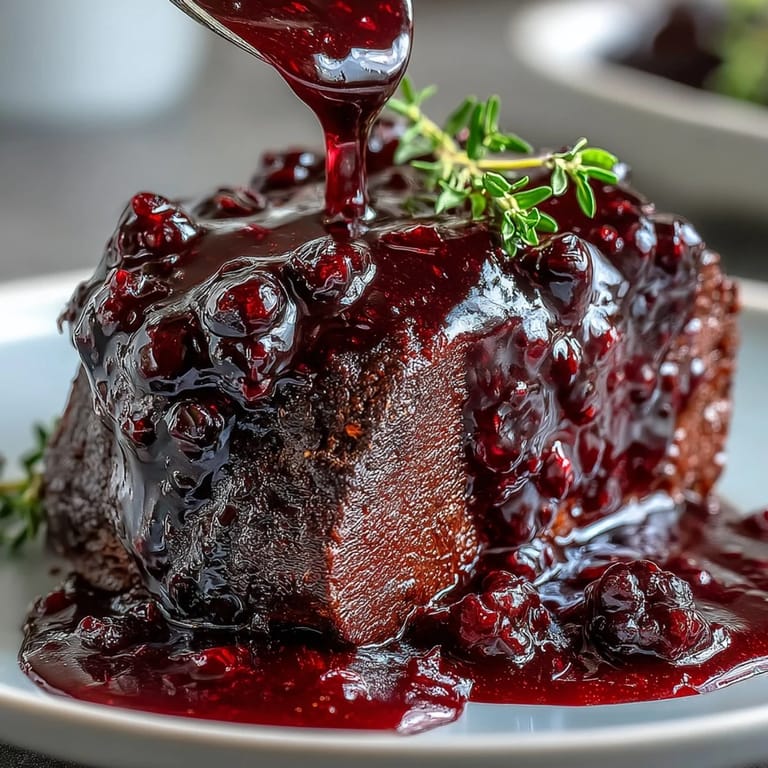
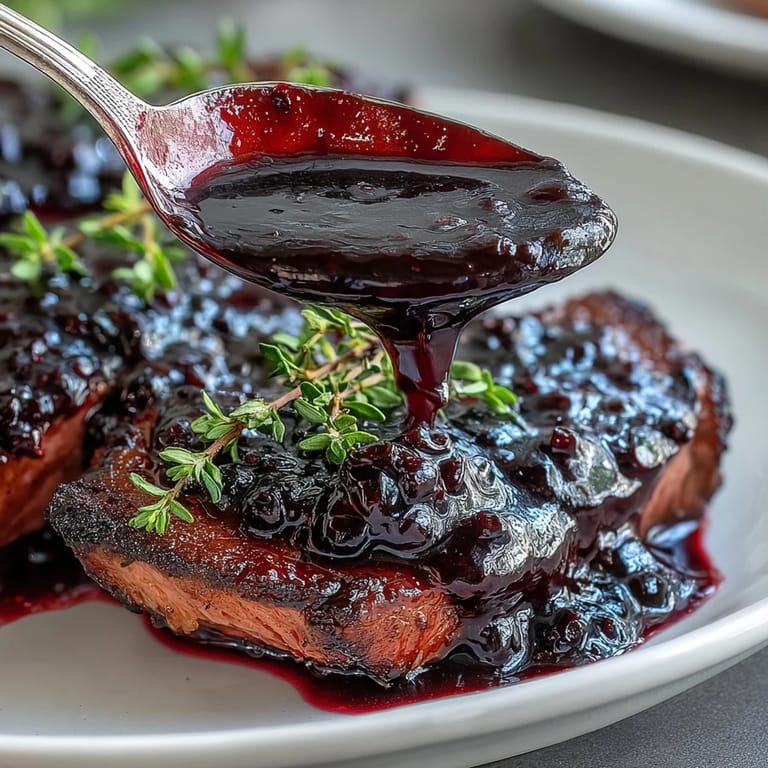
- Return the strained sauce to low heat and whisk in those cold butter cubes one at a time, waiting for each piece to melt before adding the next. The sauce will go glossy and luxurious, coating the back of a spoon beautifully.
- Taste and adjust:
- Do a final taste check and adjust the seasoning or add a splash more vinegar if you want it sharper. Serve it warm, drizzled generously over your protein.
 Pin It
 This sauce stopped being just a side dish the moment someone told me they'd started making it at home and their kids actually asked for seconds of their vegetables because of it. Food that bridges that gap between impressive and genuinely delicious is worth keeping close.
Why This Sauce Works So Well
The magic lives in the contrast—black currants are naturally tart, almost aggressive on the tongue, but the red wine softens that edge with its own subtle tannins and fruit notes. Then the butter comes in like a peacemaker, smoothing everything into something cohesive that feels like more than the sum of its parts. When you taste it all together, there's no single flavor that dominates; instead, they create this conversation that keeps evolving with each spoonful.
Making It Ahead of Time
I've found this sauce actually tastes better when you make it the day before—the flavors meld overnight in a way that feels deeper and more intentional. Just reheat it gently over low heat, and if it's lost some of its silkiness, whisk in a small knob of cold butter to bring back that glossy finish. It stores happily in the fridge for three or four days, which means you can have an elegant dinner without the last-minute stress.
Pairing Beyond the Obvious
Everyone thinks of duck and pork first, which are absolutely right, but I've drizzled this over roasted beets and forgotten cheese, spooned it over vanilla ice cream as a dare (it works), and even used it to glaze roasted root vegetables for a vegetarian main course. The tartness of black currants is forgiving enough to complement almost anything rich, and the wine depth keeps everything feeling grown-up. Once you make it once, you'll start seeing opportunities everywhere.
- A spoonful over sharp cheddar and crackers makes a sophisticated appetizer that people remember.
- Leftover sauce can be frozen for up to three months, ready whenever you need something special.
- If your sauce breaks and looks too thin after adding butter, return it to low heat and whisk in a teaspoon of cornstarch mixed with water to restore body.
 Pin It
 This reduction has become my answer to 'what can I make that feels special without stressing me out,' and I suspect it'll become yours too. Make it once, and it won't be the last time.
Recipe Questions & Answers
- → What meats pair best with this black currant reduction?
Roasted duck, pork, venison, and charcuterie are excellent choices, complementing the sauce's tangy-sweet flavor profile.
- → Can I prepare the reduction in advance?
Yes, it can be made a day ahead and gently reheated before serving to retain its smooth texture and depth of flavor.
- → How do the herbs affect the sauce's taste?
Fresh thyme and bay leaf add subtle earthiness and aromatic complexity that balance the fruitiness and acidity.
- → Is it possible to use a different liquid instead of red wine?
Substituting some wine with crème de cassis adds extra depth, while vegetable or chicken stock helps mellow the flavor.
- → How do I achieve a glossy finish for the sauce?
Whisking in cold unsalted butter at the end enriches the sauce and creates a shiny, smooth texture.
- → What is the best way to strain the sauce?
Using a fine mesh strainer removes solids, ensuring a smooth, velvety consistency perfect for drizzling.