 Pin It
 The first time I made these mango agar-agar jelly cubes, the vibrant smell of ripe fruit filled my kitchen so completely that even the cat abandoned her nap to investigate. There was a humidity hanging in the air that day, a reminder that desserts should be cooling and light, especially when the sun seems determined to bake everything in sight. Peeling mangoes always gets a little messy, but there&aposs something meditative about slipping the golden flesh from its skin and blending it into a sunset-hued puree. It&aposs a simple delight to watch something so ordinary transform into a dessert this striking. To this day, every cube feels like a tiny, edible window into summer.
Last spring, I brought a tray of these to a picnic with old friends. The sun was just starting to dip through the trees, and we all gathered around as someone insisted on using a fork to pry out the first perfect, wobbly square—only to have it immediately slip onto the grass, to collective laughter. That single, slightly chaotic moment set the tone for a meal that was more about sharing stories (and rescuing sticky cubes) than formality. Each jelly captured the spirit of that evening: cheerful, resilient, and a little bit playful.
Ingredients
- Mangoes: Go for the ripest mangoes you can find for maximum sweetness and aroma—if the skin gives slightly under gentle pressure, it's perfect.
- Water: Helps blend the mangoes into a smooth, pourable puree that sets beautifully with agar-agar.
- Sugar: Adjust this to suit your taste; a little more makes it almost candy-like, while less keeps it bright and natural.
- Lemon juice: Adds a burst of acidity that sharpens the mango flavor and cuts any cloying sweetness.
- Agar-agar powder: This vegan setting agent can be tricky; always stir constantly to avoid lumps and ensure a perfectly smooth jelly.
- Coconut milk: Full fat yields the dreamiest, richest top layer—shake the can to combine if it&aposs separated.
- Vanilla extract: Just a dash brings out warmth and complexity in the coconut layer.
Tired of Takeout? 🥡
Get 10 meals you can make faster than delivery arrives. Seriously.
One email. No spam. Unsubscribe anytime.
Instructions
- Blend the mangoes:
- Pop those juicy mango cubes, water, sugar, and lemon juice in a blender and whirr until the mixture is perfectly smooth and sunshine-bright.
- Dissolve the agar-agar:
- Pour the puree into a saucepan and scatter the agar-agar into it—keep whisking over medium heat and listen for bubbling as it boils, then let it simmer just long enough for the powder to disappear completely.
- Set the mango base:
- Quickly pour the hot mango mixture into your mold and spread it evenly; after a brief cool, slide it into the fridge and let it rest until it wobbles but doesn&apost jiggle fiercely.
- Make the coconut layer:
- In a fresh saucepan, join coconut milk, sugar, vanilla, and agar-agar—bring to a gentle boil and watch for little creamy bubbles as you stir constantly so nothing catches.
- Layer and chill:
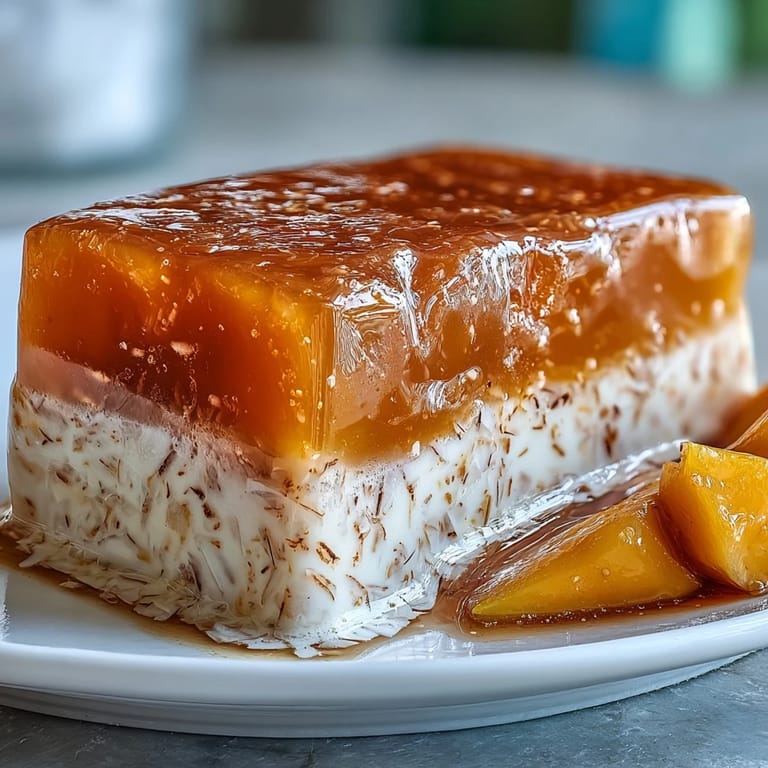
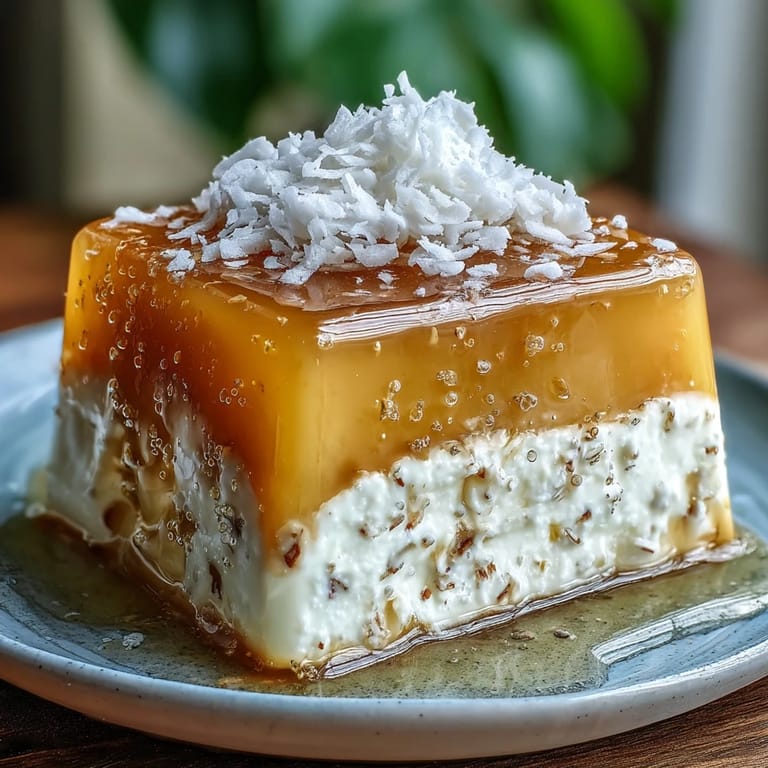
- Carefully pour the warm coconut mixture over the set mango, letting the layers meet without mixing; let cool, then refrigerate until completely firm throughout.
- Cut and serve:
- Once it&aposs fully set, lift out the jelly slab, slice into neat cubes, and serve chilled for pure refreshment.
 Pin It
 There was a quiet moment during a festive lunch when a friend paused mid-bite, looked up, and smiled—the kind that says everything tastes exactly as it should, and everyone is right where they belong. Somehow, that single square of mango jelly carried the flavor of belonging, of warmth, and of a shared summer day that lingers long after the last plate is clean.
How to Pick the Perfect Mangoes
Trust your nose—a fragrant, almost floral aroma at the stem end means the mango is ripe. Don&apost be afraid of a few spots on the skin; those usually signal intense flavor. If you press gently and it yields, you're good to go. When in doubt, let mangoes ripen uncovered on the counter for a day or two.
Agar-Agar Troubleshooting Made Simple
Agar-agar sets at room temperature, not in the fridge like gelatin, but don&apost skip chilling for the final texture. If your jelly base looks grainy, it probably needed longer to dissolve. Stubborn lumps? Strain the mixture through a fine mesh sieve before pouring into your mold for a silky finish.
Customization Secrets for Every Occasion
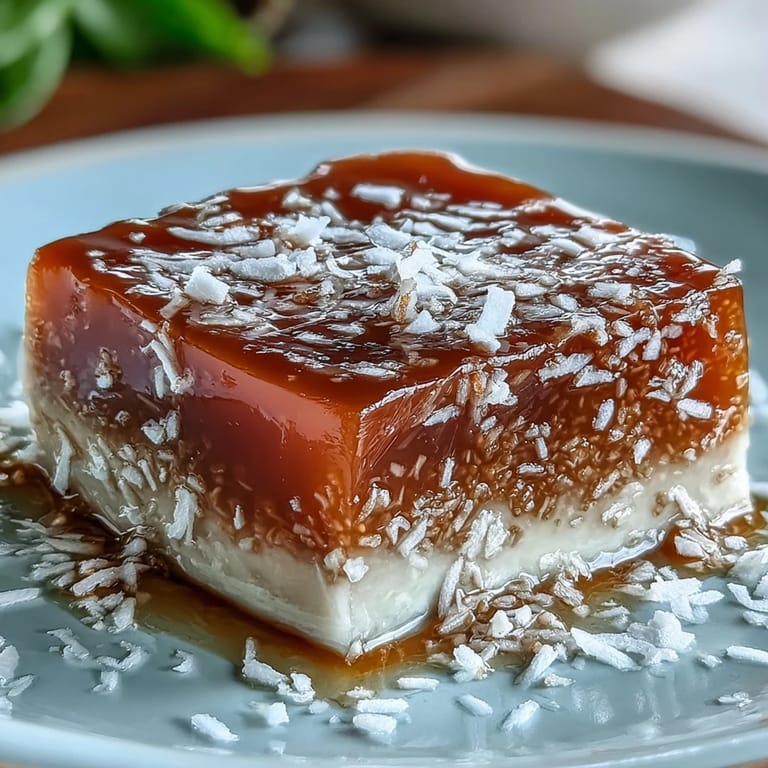
Sometimes I swirl a little passionfruit puree into the mango for a tangy twist, or tuck diced fruit between layers for a surprise. The cubes look beautiful topped with a mint leaf or edible flower, especially for parties.
- Line your mold with plastic wrap for effortless removal.
- The jelly sets firm, so use a sharp knife dipped in hot water for clean cuts.
- Sprinkle a tiny pinch of salt on top just before serving—it lifts the flavors surprisingly well.
 Pin It
 There&aposs something quietly joyful about sharing little squares of sunshine from a homemade tray. May they bring brightness to any table, no matter the season.
Recipe Questions & Answers
- → What is agar-agar and how does it work?
Agar-agar is a seaweed-derived gelling agent that sets when heated and then cooled. It must be boiled briefly (about 1–2 minutes) to dissolve fully; once cooled it produces a firm, slightly springy gel ideal for clean-cut cubes.
- → Can I use gelatin instead of agar-agar?
Gelatin can be used but it is not vegan and gives a softer, more wobbly set. Use about 1¼ teaspoons gelatin powder per 1½ teaspoons agar-agar as a rough swap, bloom gelatin in cold water first and avoid boiling to preserve its setting ability.
- → How do I prevent the coconut layer from mixing into the mango layer?
Chill the mango layer until it is just set but still slightly tacky, then cool the hot coconut mixture for a few minutes before pouring. Pour the coconut gently over the back of a spoon or use a ladle to slow the flow and maintain distinct layers.
- → How long will the jelly cubes keep in the fridge?
Stored covered, the cubes keep well for 3–4 days. For best texture and flavor, consume within 48 hours; separation or slight weeping of coconut milk can occur after longer storage.
- → Can I use frozen or canned mango instead of fresh?
Yes—use thawed frozen mango or well-drained canned mango pulp. Adjust the water and sugar to account for the fruit's sweetness and moisture, and blend to a smooth consistency before adding agar-agar.
- → Any tips for cutting neat, uniform cubes?
Chill the set block thoroughly before cutting. Warm a sharp knife under hot water, wipe it dry between cuts, and score a grid first for even pieces. Use a thin-bladed knife for cleaner edges.