 Pin It
 My neighbor handed me a container of chilled soba noodles one summer afternoon, insisting I'd been missing out on the easiest lunch known to humankind. She was right, though I didn't expect how addictive that nutty sesame dressing would become, or how a bowl of cold noodles and vegetables could feel like a small celebration on an ordinary Tuesday. What started as skepticism turned into my go-to meal when I wanted something that felt both light and satisfying, ready in less time than it takes to decide what to eat.
I made this for a potluck on a sweltering evening, bringing it in a big glass container, slightly nervous nobody would touch cold noodles when there were warm casseroles everywhere. Within minutes it was gone, and three people asked for the recipe, one of them eating straight from the bowl while standing by the porch railing. That's when I realized this wasn't just a quick lunch—it was the kind of dish people actually wanted to come back for.
Ingredients
- Dried soba noodles (250 g): Look for 100% buckwheat if you're going gluten-free, though the regular stuff has a slightly earthier flavor I've grown fond of.
- Shelled edamame (1 cup): Frozen ones work just as well as fresh and save you the shelling drama—keep them in the freezer for spontaneous meals.
- Cucumber (1 medium): Julienne it yourself or use a mandoline if you have the confidence; the thin strips soak up dressing better than chunks.
- Carrots (2 medium): Peeling them first makes a difference in texture, and the bright color against the noodles is honestly half the appeal.
- Scallions (2): Slice them thin and use both the white and green parts—the white bits add a sharp bite that balances the richness of sesame.
- Toasted sesame seeds (2 tbsp): Toast your own if you can; the difference between stale seeds and fresh-toasted ones is bigger than you'd think.
- Fresh cilantro or mint (1/4 cup, optional): This is where personal preference takes over—I lean toward mint on hot days and cilantro when I want something earthier.
- Soy sauce (3 tbsp): Use tamari if gluten matters to you, though regular soy sauce has that salty depth that makes the dressing sing.
- Rice vinegar (2 tbsp): The mild acidity keeps everything bright without overpowering the other flavors.
- Toasted sesame oil (1 tbsp): This is non-negotiable for flavor—the toasted kind has personality that regular sesame oil simply doesn't have.
- Tahini or smooth peanut butter (1 tbsp): Both work, but tahini feels more authentic and doesn't overpower like peanut butter sometimes does.
- Honey or maple syrup (1 tbsp): A touch of sweetness that rounds out the sesame and salty notes without making it dessert.
- Fresh ginger (1 tsp, grated): Don't skip this; it adds a subtle warmth that makes people wonder what secret ingredient you're hiding.
- Garlic clove (1 small, minced): One clove is enough to whisper garlic flavor rather than shout it at your mouth.
- Water (1 tbsp, or as needed): Keep this nearby to adjust the dressing thickness—you want it pourable but not watery.
Tired of Takeout? 🥡
Get 10 meals you can make faster than delivery arrives. Seriously.
One email. No spam. Unsubscribe anytime.
Instructions
- Boil the soba noodles:
- Bring a pot of water to a rolling boil and add the noodles, stirring gently so they don't clump together. They'll cook in about 4 to 5 minutes, and you'll know they're done when they're tender but still have a slight chew—overcooked soba noodles lose their whole appeal, so keep an eye on them.
- Rinse and cool them down:
- Drain them into a colander and immediately rinse under cold water, tossing gently with your fingers until they're completely cooled. This stops the cooking and prevents them from sticking together into one sad clump.
- Blanch the edamame:
- While the noodles cook, bring another pot of salted water to a boil and add the edamame, cooking for 2 to 3 minutes until they're tender and bright green. Drain and set them aside, and they'll stay warm enough to add to the cool noodles without making everything lukewarm.
- Mix the sesame dressing:
- Whisk together the soy sauce, rice vinegar, sesame oil, tahini, honey, ginger, and garlic in a small bowl until smooth and creamy. If it feels too thick, add water a little at a time until it reaches a consistency that drizzles easily without being runny.
- Prep your vegetables:
- Julienne the cucumber and carrots into thin, even pieces—they look prettier and soak up flavor better when they're uniform. Slice the scallions thinly, and if you're using fresh herbs, tear them by hand rather than chopping so they feel less bruised.
- Toss the noodles with dressing:
- Put the cooled noodles in a large bowl and pour about half of the dressing over them, tossing gently until everything is coated evenly. This way each noodle gets flavor, and you still have dressing left to drizzle over the top.
- Assemble the bowls:
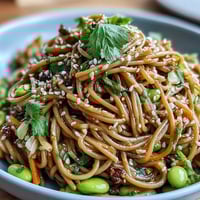
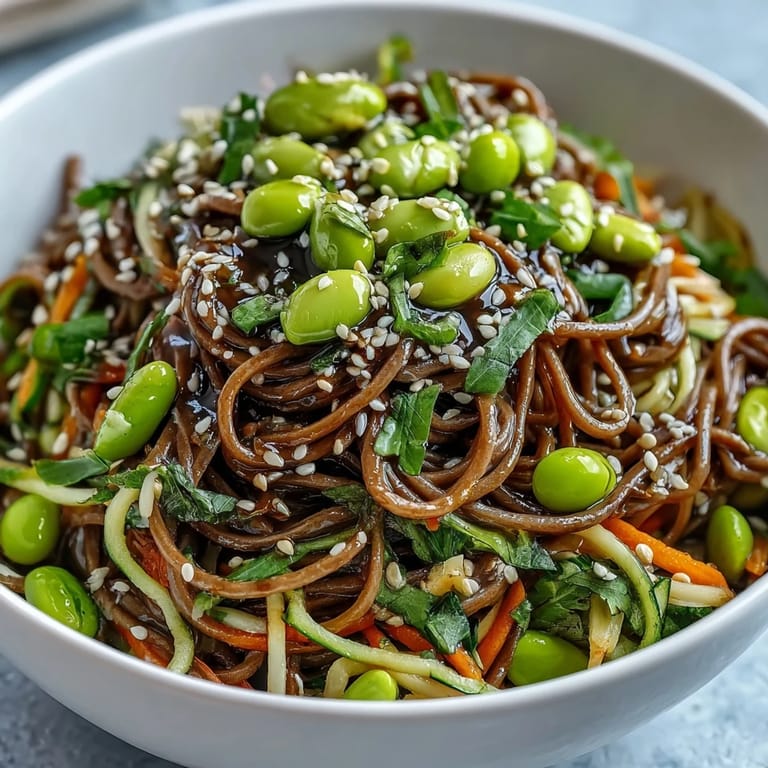
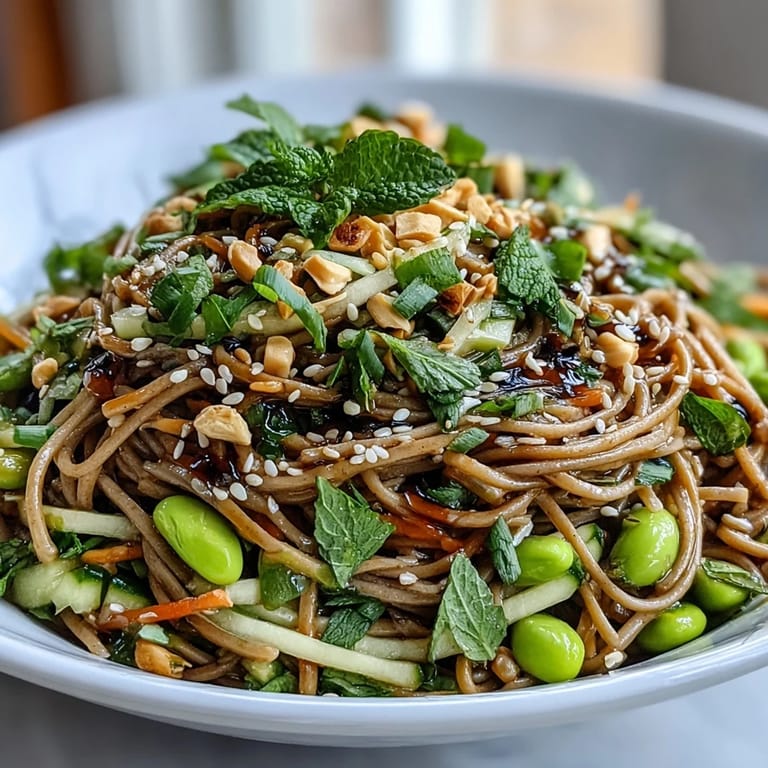
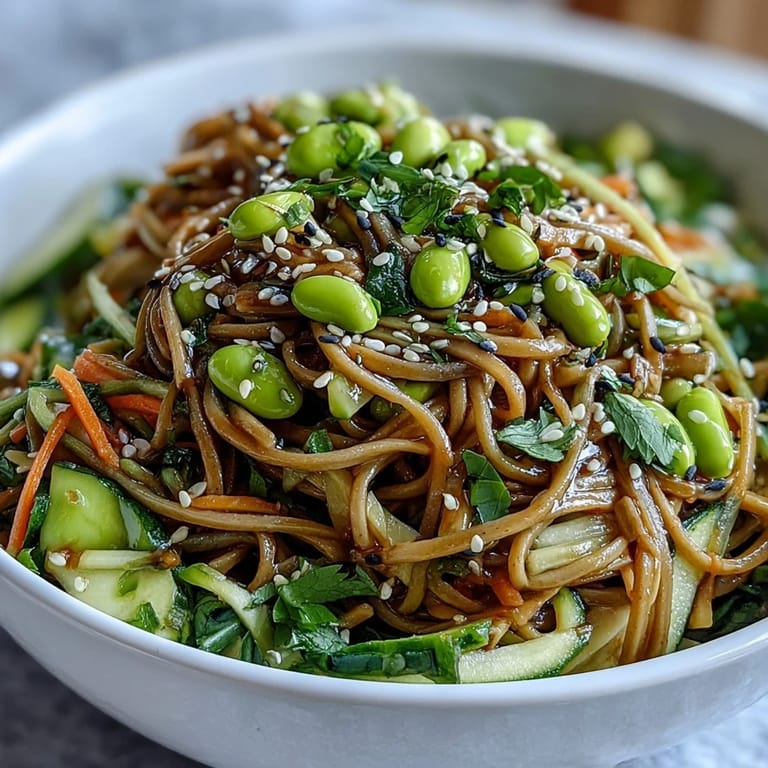
- Divide the dressed noodles among four bowls and arrange the edamame, cucumber, carrots, and scallions on top in whatever pattern makes you happy. Drizzle the remaining dressing over everything and finish with a scatter of toasted sesame seeds and fresh herbs if you're using them.
 Pin It
 There's something almost meditative about arranging vegetables in a bowl, knowing that in a few minutes someone's going to eat something that tastes far better than the sum of its simple parts. A coworker once told me that eating this at her desk made even a hectic afternoon feel manageable, and that stuck with me more than any five-star review ever could.
Why This Works When You're Overwhelmed
There's a reason this bowl appeals to people who don't have time to cook but still want real food. Everything is raw or minimally cooked, which means you're not hovering over a stove sweating through dinner prep. The flavors come from the dressing, not from technique, so even if you've never julienned a vegetable in your life, this still tastes intentional and delicious.
Make It Your Own
The beauty of a bowl like this is that it welcomes change. Some mornings I add shredded cabbage because I have it and it adds a nice crunch; other times I toss in some grilled tofu or a soft-boiled egg if I want more protein. The dressing stays the same, but the vegetables shift with what I bought at the market or what's lingering in my crisper drawer.
Storage and Timing Tips
I've learned that it's best to keep the noodles and dressing separate if you plan to eat leftovers—store them in different containers and combine them when you're ready, so the noodles don't get soggy by tomorrow. The vegetables can be prepped a day ahead, and the dressing keeps in a jar for about four days, making this one of those rare meals that actually gets easier the second time around.
- Store cooked noodles and vegetables in separate containers to prevent sogginess.
- The sesame dressing will thicken slightly as it sits, so add a splash of water when you reheat it.
- This bowl is at its best served cold or at room temperature, never reheated, so it's ideal for meal prep or casual entertaining.
 Pin It
 This bowl has become my answer to the question of what to make when you want something that feels nourishing and special without the exhaustion of cooking. It's the kind of meal that proves you don't need complicated recipes or expensive ingredients to eat well.
Recipe Questions & Answers
- → What makes soba noodles unique?
Soba noodles are made from buckwheat flour, giving them a nutty flavor and firm, chewy texture. They're traditionally served cold or hot in Japanese cuisine and provide a good source of plant-based protein and fiber.
- → Can I make this bowl gluten-free?
Yes. Look for 100% buckwheat soba noodles and substitute tamari for soy sauce. Many traditional soba noodles contain wheat, so always check the label to ensure they're entirely buckwheat-based.
- → How long does the sesame dressing keep?
The dressing stays fresh in an airtight container in the refrigerator for up to one week. The tahini and sesame oil may solidify when cold—simply let it sit at room temperature for 10 minutes and whisk before using.
- → What vegetables work best in this bowl?
Cucumber and carrots provide classic crunch and sweetness. You can also add snap peas, bell peppers, radishes, shredded cabbage, or bean sprouts. The key is varying textures and colors for visual appeal.
- → Can I add more protein?
Absolutely. Grilled tofu, pan-seared tempeh, shredded chicken, or soft-boiled eggs make excellent additions. Edamame already provides 8 grams of protein per serving, but these options create a more substantial meal.
- → Should I serve this hot or cold?
This bowl is traditionally served chilled or at room temperature, making it perfect for warm weather or packed lunches. Rinse the cooked noodles under cold water to stop cooking and prevent sticking, then toss with dressing while cold.