 Pin It
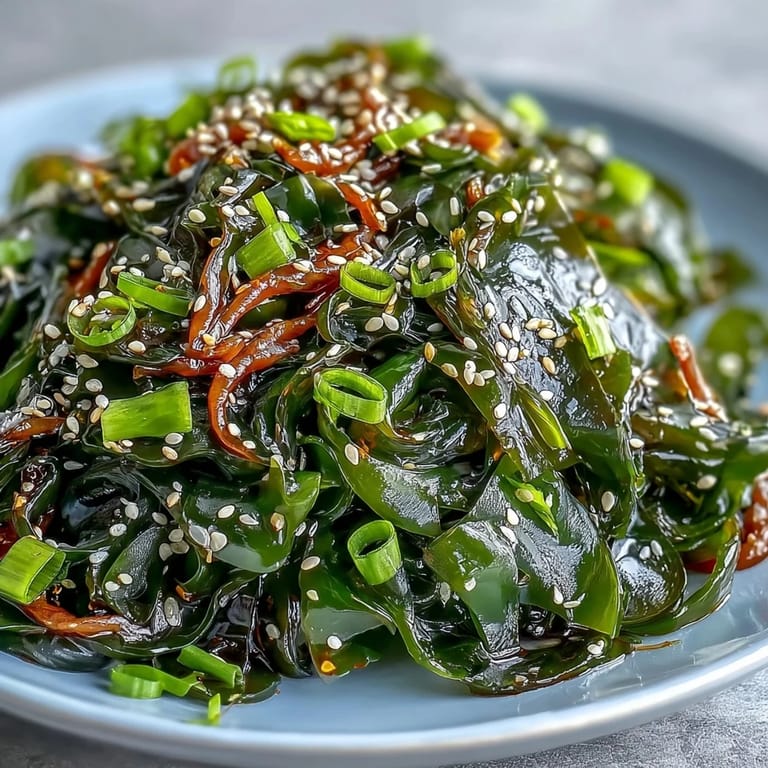
 A friend once handed me a container of seaweed salad at a dinner party, and I was skeptical until that first bite hit my tongue—bright, salty, oceanic, with this unexpected warmth from the ginger and the nuttiness of sesame oil. I asked for the recipe immediately, thinking it would be complicated, but she laughed and told me it was just rehydrated seaweed and a quick dressing she'd thrown together on a weeknight. Now I make it whenever I need something that feels both elegant and effortless, like I've spent more time in the kitchen than I actually have.
Last summer I made this for a potluck where everyone brought heavy casseroles and pasta salads, and this seaweed salad just sat there looking jeweled and delicate next to their offerings. By the end of the night, the bowl was empty and three people asked me for the recipe, holding their phones up like they were photographing something precious. That's when I realized this dish has a quiet confidence about it.
Ingredients
- Dried mixed seaweed (30 g, wakame, hijiki, or arame): This is the soul of the dish, so don't skip quality here—look for vacuum-sealed packages that smell oceanic and briny, not musty.
- Cucumber (1 small, thinly sliced): The crispness cuts through the umami and keeps everything from feeling too heavy or heavy.
- Carrot (1 small, julienned): It adds sweetness and color, plus a slight resistance when you bite down that keeps the texture interesting.
- Scallions (2, thinly sliced): Raw scallions bring a sharp, oniony punch that makes your palate wake up.
- Ponzu sauce (3 tbsp): This is where the magic happens—that citrusy, salty backbone that makes everything taste alive.
- Rice vinegar (1 tbsp): It sharpens the dressing without overwhelming, adding brightness without aggression.
- Soy sauce or tamari (1 tbsp): Use tamari if you're gluten-free, and don't skimp on the quality because it's a star ingredient here.
- Toasted sesame oil (1 tbsp): This needs to be the real stuff, toasted, not regular sesame oil—it's the difference between a good salad and one that sticks with you.
- Fresh ginger (1 tsp, grated): Micro-plane it fresh every time; the warmth and bite completely change the dish's personality.
- Sugar or maple syrup (1 tsp): Just a whisper to balance the acid and brine, not to make it sweet.
- Chili flakes (1 tsp, optional): If you add them, do it—they're not just heat, they're a flavor layer.
- Toasted sesame seeds (2 tbsp): Toast them yourself if you can; the smell alone will convince you this is worth the extra minute.
- Red chili, thinly sliced (1 tbsp, optional): Fresh slices look beautiful and give you heat in discrete moments rather than throughout.
Tired of Takeout? 🥡
Get 10 meals you can make faster than delivery arrives. Seriously.
One email. No spam. Unsubscribe anytime.
Instructions
- Rehydrate the seaweed gently:
- Place the dried seaweed in a bowl and cover it completely with cold water—you'll watch it unfurl and transform into something tender and alive in about ten minutes. Drain it carefully and squeeze out the excess water with your hands, but don't wring it like laundry or you'll bruise those delicate strands.
- Combine the base ingredients:
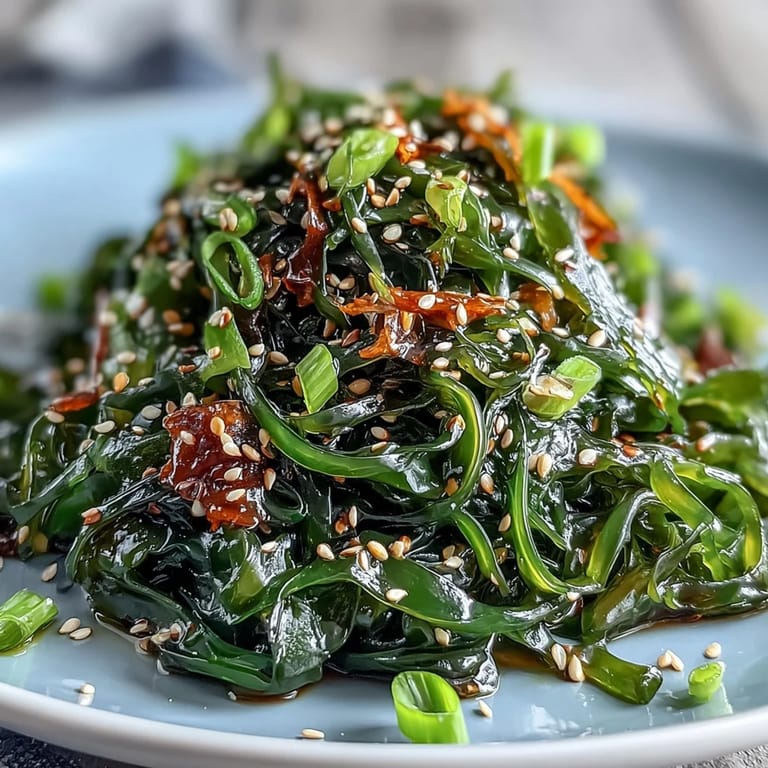
- Toss the rehydrated seaweed with your sliced cucumber, julienned carrot, and thin scallion rings in a large bowl, letting everything mingle loosely. This is where you get to appreciate the colors—the deep greens and blacks of the seaweed against the bright orange and white.
- Build the dressing with intention:
- In a small bowl, whisk together the ponzu, rice vinegar, soy sauce, sesame oil, grated ginger, and a tiny bit of sugar until it's smooth and emulsified-looking. Taste it before you pour it over everything—this is your moment to adjust if it's too salty, too sour, or needs that chili flake kick.
- Dress and toss with care:
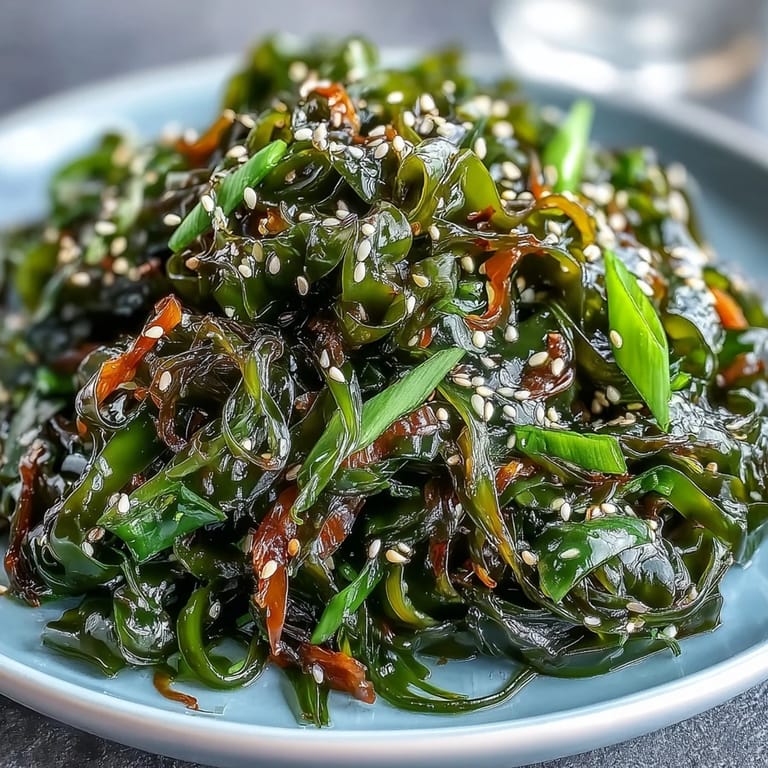
- Pour the dressing over the salad and toss gently, as if you're cradling something fragile, because those seaweed pieces will break if you're aggressive. You want everything coated evenly, every strand dressed, every vegetable piece glistening.
- Plate and garnish with precision:
- Transfer to a serving platter or individual bowls and scatter the toasted sesame seeds across the top like you're finishing something intentional. Add the thin red chili slices if you're using them, letting them sit on the surface where they'll catch the light.
- Serve with timing:
- Serve it chilled if you made it ahead, or at room temperature if you're eating it right away—both work beautifully, just make sure it's not been sitting too long or the vegetables will start to weep.
 Pin It
 There's something almost meditative about preparing this salad—the way your knife moves through the cucumber, the sound of sesame seeds toasting, the moment you grate fresh ginger and that sharp, clean smell floods your kitchen. I've made it so many times now that my hands know the motions, but it never feels rote because each ingredient is alive and present.
When Ponzu Met Sesame Oil
The first time I made this dressing from scratch instead of using a bottled mix, I was nervous about getting the balance right, but once I tasted that first spoonful—umami, citrus, warmth, nuttiness all at once—I understood why seaweed salad had been haunting my food thoughts. The ponzu brings this salty-sour backbone that sesame oil would never provide alone, but together they create something that tastes intentional and complete, like someone studied flavor combinations for years before arriving at this exact equation.
The Texture Revolution
What makes this salad sing instead of just exist is the interplay of textures—the tender give of rehydrated seaweed against the snap of cucumber and carrot, the bite of raw scallion, the crunch of sesame seeds at the end. I learned this the hard way when I once used overcooked or mushy vegetables, thinking texture didn't matter in a salad, and the whole thing fell flat because nothing pushed back against anything else. Now I treat each component like it has a job to do.
Making It Your Own
This salad is forgiving and flexible in ways that feel almost rebellious for something so refined-looking. You can add thinly sliced radish for extra crunch, toss in cooked edamame if you want protein, or adjust the dressing's sweetness and acidity to match your mood that day—it never feels like you're breaking a rule, just having a conversation with the recipe.
- Toast your sesame seeds in a dry pan for two minutes to wake up their flavor, then transfer them immediately to a cool plate so they don't keep cooking.
- If you're making this more than a few hours ahead, keep the dressing separate and combine everything just before serving so the vegetables stay crisp.
- Taste the dressing before you commit—this is the moment to add more ginger, more chili, more sweetness, or more salt based on what your palate wants.
 Pin It
 This salad has become my answer to the question of what to bring to dinner when I want to show up with something that feels thoughtful but doesn't require me to spend all day in the kitchen. It's the kind of dish that makes people pause mid-conversation to ask what you did to make it taste like that.
Recipe Questions & Answers
- → What type of seaweed is best for this dish?
Dried mixed seaweed varieties like wakame, hijiki, or arame work well when rehydrated for this salad.
- → Can the dressing be adjusted for dietary needs?
Yes, substitute tamari for soy sauce to make the dressing gluten-free and adjust sweetness or acidity as desired.
- → How long should the seaweed soak before use?
Soak the dried seaweed in cold water for about 10 minutes or until fully rehydrated, then drain thoroughly.
- → What are good garnish options?
Toasted sesame seeds provide a nutty crunch, while thinly sliced red chili adds a mild heat and vibrant color.
- → Is this dish served hot or cold?
It's best served chilled or at room temperature for a refreshing taste experience.