 Pin It
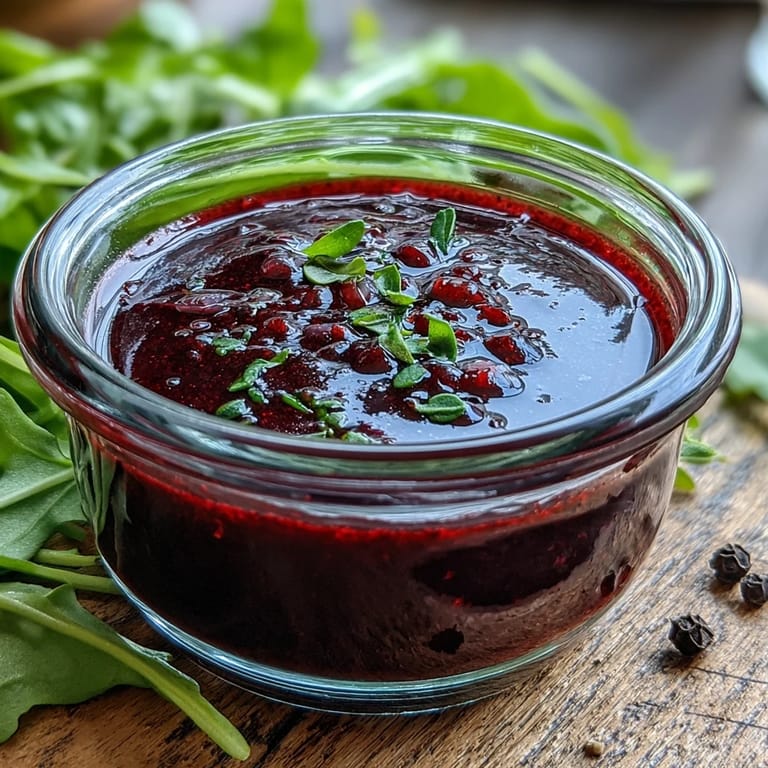
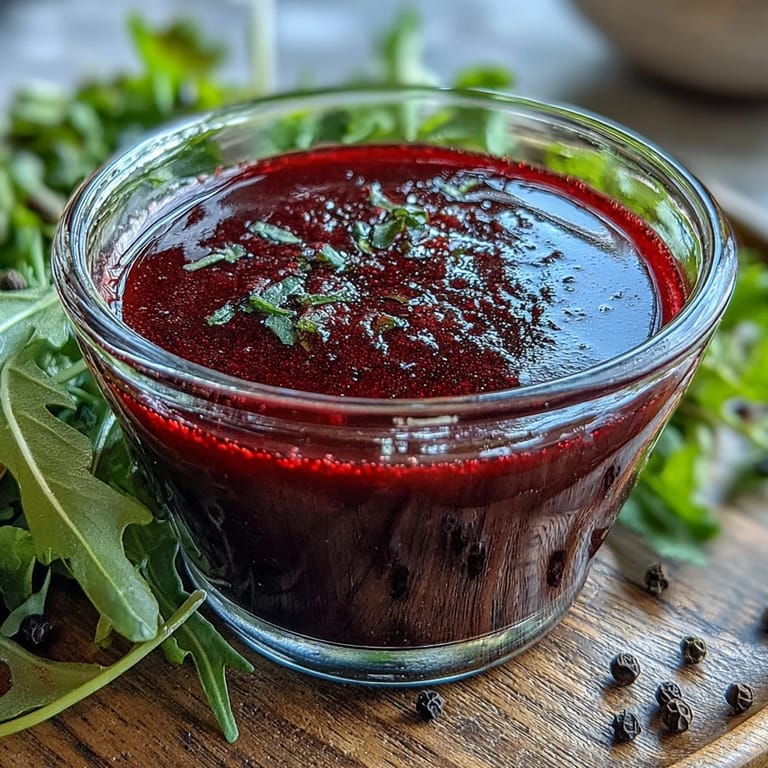
 I discovered black currant vinaigrette by accident one autumn when a farmer's market vendor handed me a bottle of dark, jewel-toned juice with no real explanation of what to do with it. Standing in my kitchen that evening, staring at the mysterious bottle, I decided to treat it like any other vinaigrette base and whisked it with vinegar and olive oil. The result was so vibrant and complex—tart, slightly sweet, with this mysterious depth—that I've been making it ever since for salads that actually taste like something worth remembering.
I made this for a dinner party on a rainy November evening when my friend brought a salad of bitter greens and roasted beets. I drizzled this vinaigrette over everything just to try it, and halfway through the meal, someone asked what made it taste so good. When I told them it was basically black currant juice, olive oil, and vinegar, they looked at me like I'd just shared a secret code to better cooking—which, in a way, I had.
Ingredients
- Black currant juice (1/4 cup): This is the star—unsweetened juice gives you pure flavor without hiding behind sugar, and its deep berry notes create complexity that regular vinaigrettes can't match.
- Red wine vinegar or apple cider vinegar (2 tablespoons): Red wine vinegar keeps everything elegant and balanced, but apple cider works beautifully too if that's what you have open on your counter.
- Fresh lemon juice (1 tablespoon): A squeeze of brightness that keeps the dressing from feeling heavy, and it prevents the black currant from overwhelming the palate.
- Extra virgin olive oil (1/3 cup): Don't skimp here—this is where half your flavor lives, so use oil you'd actually want to taste on its own.
- Dijon mustard (1 teaspoon): The secret emulsifier that makes everything cling together and adds a subtle sharpness that cuts through richness.
- Honey or maple syrup (1 teaspoon, optional): A tiny touch balances the tartness if your black currant juice is particularly assertive, but taste first before deciding you need it.
- Shallot, finely minced (1 tablespoon): Fresh allium bite that wakes everything up—mince it small so it distributes evenly and doesn't overpower in any single bite.
- Sea salt and black pepper: Season to your taste, understanding that salt will bloom as the dressing sits, so go easy at first.
Tired of Takeout? 🥡
Get 10 meals you can make faster than delivery arrives. Seriously.
One email. No spam. Unsubscribe anytime.
Instructions
- Build the base:
- Pour the black currant juice, vinegar, and lemon juice into your bowl and give them a good whisking together so they're already friendly. Add the mustard, optional sweetener, minced shallot, salt, and pepper, whisking until you see everything starting to combine and smell that bright, tart aroma rising up.
- Emulsify with patience:
- This is where technique matters—slowly drizzle the olive oil in while whisking constantly, as if you're coaxing the vinegar and oil into a proper friendship. You'll feel the mixture thicken slightly as the mustard and shallot help bind everything together into something glossy and unified.
- Taste and adjust:
- Take a spoonful on a piece of lettuce and actually taste it, because your palate knows better than any recipe what you need. Maybe it wants more salt, or maybe a drop more honey to ease the tartness—trust that instinct.
- Store or serve:
- Use it immediately while it's vibrant, or funnel it into a jar with a tight lid and refrigerate where it'll last up to a week. Always shake it well before pouring because the oil and vinegar love to separate.
 Pin It
  Pin It
 There's something almost magical about watching people taste this for the first time—their faces shift from curiosity to genuine delight as they register that tartness, that subtle sweetness, the way it clings to greens and makes every bite matter. That moment when someone asks for the recipe is when you know you've made something worth repeating.
What Makes Black Currant Special
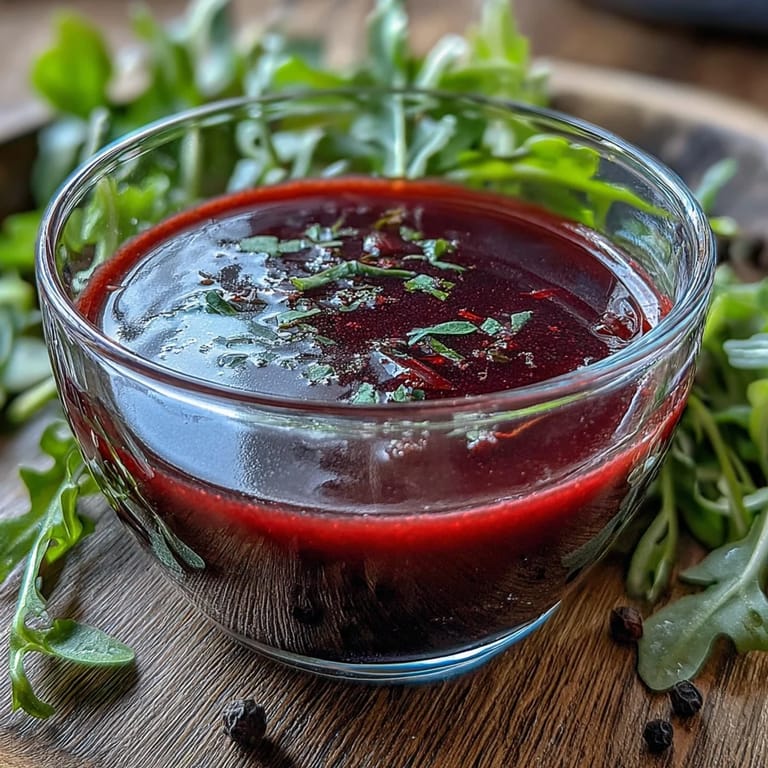
Black currants have this haunting, almost mysterious flavor that's part berry, part mineral, with a tartness that demands respect but rewards you instantly. Most people have never tasted them fresh, so black currant juice in a vinaigrette introduces them to something genuinely new without any pretension—it's just a fruit you might have missed, suddenly making your salad taste like something discovered rather than something assembled. The color alone is worth it, staining your bowl and your tongue a deep, jeweled purple that announces you did something intentional with dinner.
When to Reach for This Dressing
I reach for this most in autumn and winter when salads need warmth and complexity rather than brightness alone, draping it over roasted beets, crispy shallots, and creamy goat cheese. Spring greens get dressed with it when they're bitter and need something with real personality, and grain salads—farro, wheat berries, wild rice—suddenly taste like something you'd order at a restaurant. It's equally at home on grilled chicken or salmon, where its tartness cuts through richness and adds a professional-feeling finish.
Making It Your Own
Once you understand how this works, it becomes a template for other vinaigrettes using whatever juice or reduction captures your imagination. I've made versions with pomegranate juice when black currants disappeared from my market, with a splash of aged balsamic for deeper notes, and even with a tiny bit of crushed black pepper for heat. The beauty is that once you've whisked oil and vinegar together with mustard and intention, you're no longer following recipes—you're cooking.
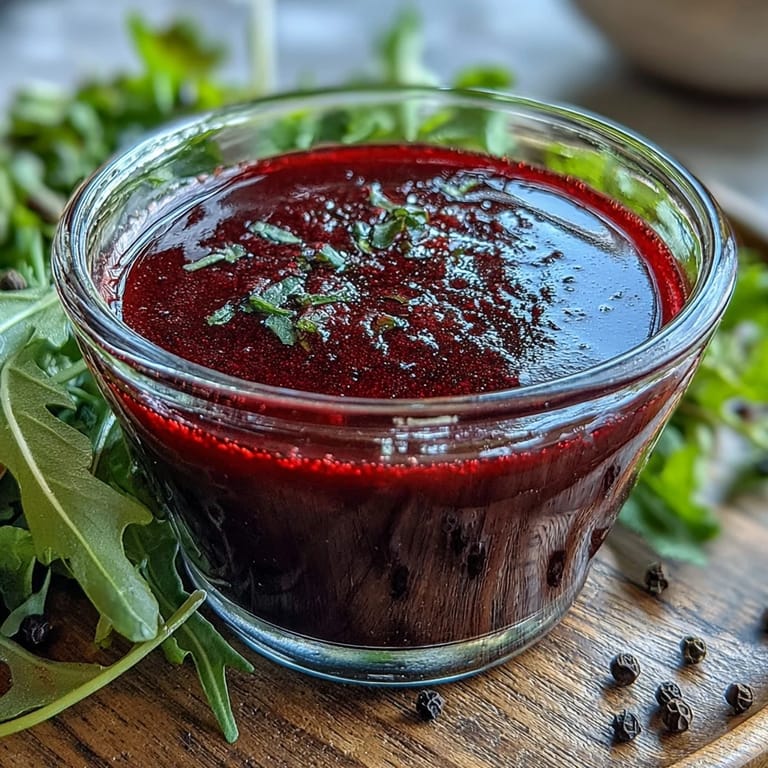
- Strain the finished vinaigrette through a fine mesh sieve if you prefer it completely smooth without visible shallot pieces.
- Make a double batch and keep it in a glass jar in your refrigerator, shaking it before each use like a ritual.
- Taste as you go and remember that salt has a delayed bloom, so under-season slightly and adjust after an hour of sitting.
 Pin It
  Pin It
 This dressing taught me that sometimes the best discoveries come from standing in the kitchen with something unfamiliar, willing to whisk it together and see what happens. Keep a bottle of black currant juice on hand, and suddenly every salad becomes an opportunity.
Recipe Questions & Answers
- → Can I make black currant vinaigrette ahead of time?
Yes, this vinaigrette stores beautifully in the refrigerator for up to one week. The flavors actually develop and mellow over time. Keep it in a jar with a tight-fitting lid and shake well before each use, as some separation may occur naturally.
- → What can I substitute for black currant juice?
Pomegranate juice or cranberry juice work well as alternatives, providing similar tartness and deep color. Pomegranate molasses diluted with water is another option. Each substitute will slightly alter the flavor profile while maintaining the tangy, fruit-forward character.
- → How do I fix a separated vinaigrette?
If the dressing separates, simply whisk it vigorously or shake the jar vigorously before using. For a smoother texture, you can also blend it briefly with an immersion blender. Adding a small amount of Dijon mustard helps stabilize the emulsion and prevent separation.
- → Is this vinaigrette suitable for special diets?
This dressing is naturally vegetarian, vegan, and gluten-free. Use maple syrup instead of honey to maintain vegan status. Always check your Dijon mustard label to confirm it's gluten-free, as some varieties contain wheat-based vinegar or additives.
- → What salads pair best with black currant vinaigrette?
This vinaigrette shines on mixed greens with goat cheese, candied walnuts, and fresh pears. It also complements roasted beet salads, spinach with sliced strawberries, and hearty grain bowls featuring quinoa or farro. The tart flavor profile pairs especially well with creamy cheeses and grilled proteins.
- → Can I use a blender instead of whisking?
Absolutely. Using an immersion blender or standard blender creates an exceptionally smooth, creamy emulsion. Add all ingredients except the olive oil first, blend to combine, then drizzle in the oil while the blender runs for maximum stability. This method is particularly helpful if you prefer a very smooth texture without shallot pieces.