 Pin It
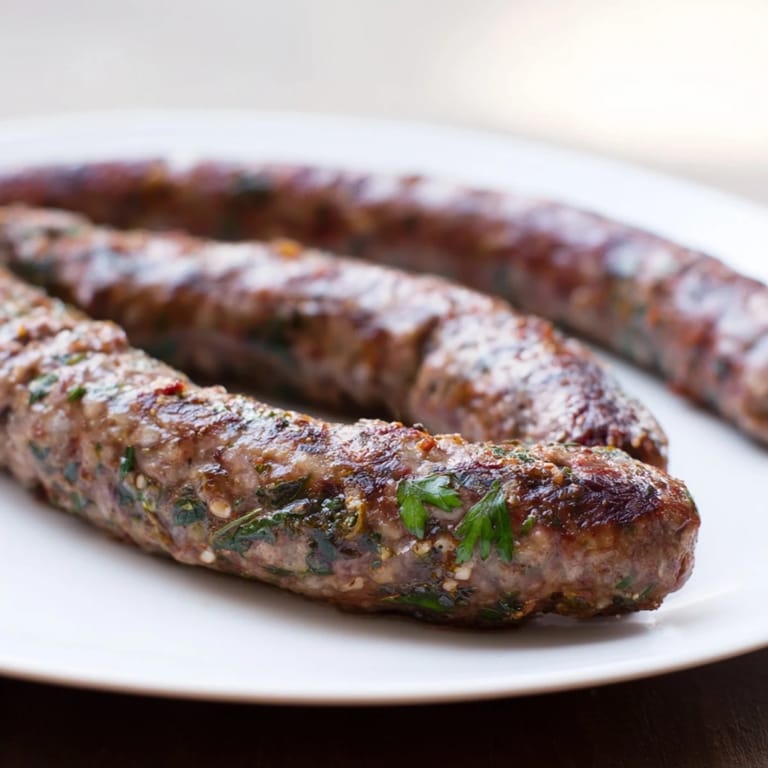
 My first bite of merguez happened on a dusty Tunis street corner, where an elderly vendor was grilling these crimson sausages over charcoal, the smoke carrying such an intoxicating blend of spices that I had to stop and ask for one immediately. The casing crackled between my teeth, and the heat hit me at once—not just from the cayenne, but from the way garlic and harissa had been coaxed into every grain of meat. That sausage taught me that some of the most memorable food comes from simplicity and patience, not complexity. Years later, I finally asked my Tunisian friend Farah how to make them at home, and she laughed because it wasn't mysterious at all—just good meat, honest spices, and the confidence to let them speak.
I remember making these for a dinner party when a friend mentioned she'd never had authentic merguez, only the supermarket version. I filled the casings while she watched, asking about every spice, and by the time they hit the grill, the whole yard smelled like a spice souk. When everyone bit into them, there was this moment of collective quiet—the kind that means food has done its job. She asked for the recipe before dessert was even served.
Ingredients
- Ground beef and lamb (500 g total): The combination gives merguez its signature depth; beef brings earthiness while lamb adds richness and a subtle gaminess that makes these sausages unforgettable.
- Harissa paste (2 tbsp): This is the soul of the sausage, bringing heat, complexity, and an authentic Tunisian character that no single spice can replicate—buy it from a Middle Eastern market or make your own if you're patient.
- Garlic (3 cloves, minced): Mince it fine so it distributes evenly throughout the meat and doesn't create bitter pockets when grilled.
- Ground cumin, coriander, smoked paprika, fennel, and caraway (1 tbsp each of the first two, 1 tsp each of the rest): These spices are the architecture of flavor; they create warmth, earthiness, and a subtle sweetness that balances the heat.
- Cayenne pepper (1 tsp): This is your heat control—adjust down if you're cooking for sensitive palates, but don't skip it entirely as it's essential to the authentic profile.
- Fresh cilantro and parsley (2 tbsp each, chopped): These add brightness and prevent the sausages from tasting one-dimensional; they're not garnish, they're integral.
- Cold water (2 tbsp): This helps the mixture stay cohesive and prevents the sausages from cracking during cooking.
- Sausage casings (1.5 m, optional): Natural sheep casings give you that satisfying snap, but if you can't find them or prefer not to use them, you can shape the mixture into patties or logs instead.
Tired of Takeout? 🥡
Get 10 meals you can make faster than delivery arrives. Seriously.
One email. No spam. Unsubscribe anytime.
Instructions
- Combine the meats and build the base:
- In a large bowl, merge the ground beef and lamb together with your hands, making sure there are no dense pockets of one meat or the other. The mixture should be relatively uniform before you add anything else.
- Add the spice and heat:
- Scatter the garlic, harissa, cumin, coriander, paprika, fennel, caraway, cayenne, salt, and pepper over the meat, then mix thoroughly using your hands or a wooden spoon. You're looking for everything to be evenly distributed; taste a tiny pinch and adjust the heat if needed.
- Finish with fresh herbs and moisture:
- Fold in the cilantro and parsley, then add the cold water and mix until the texture becomes sticky and cohesive. This is when you'll know the mixture is ready to stuff or shape.
- Prepare the casings (if using):
- Rinse the sheep casings under cool water and soak them in lukewarm water for at least 15 minutes so they become pliable and easier to work with. Fit your sausage stuffer or a piping bag with a wide nozzle, then carefully fill the casings, working slowly to avoid air pockets.
- Form or rest the sausages:
- If using casings, twist them into 5–6 inch links and prick any visible air bubbles with a needle. If going casing-free, shape the mixture into logs about the size of your thumb and refrigerate for 30 minutes so they hold their shape on the grill.
- Get the grill ready:
- Preheat your grill or grill pan over medium-high heat until it's hot enough that a drop of water sizzles on contact. This ensures the sausages get a proper crust without burning.
- Grill with care and confidence:
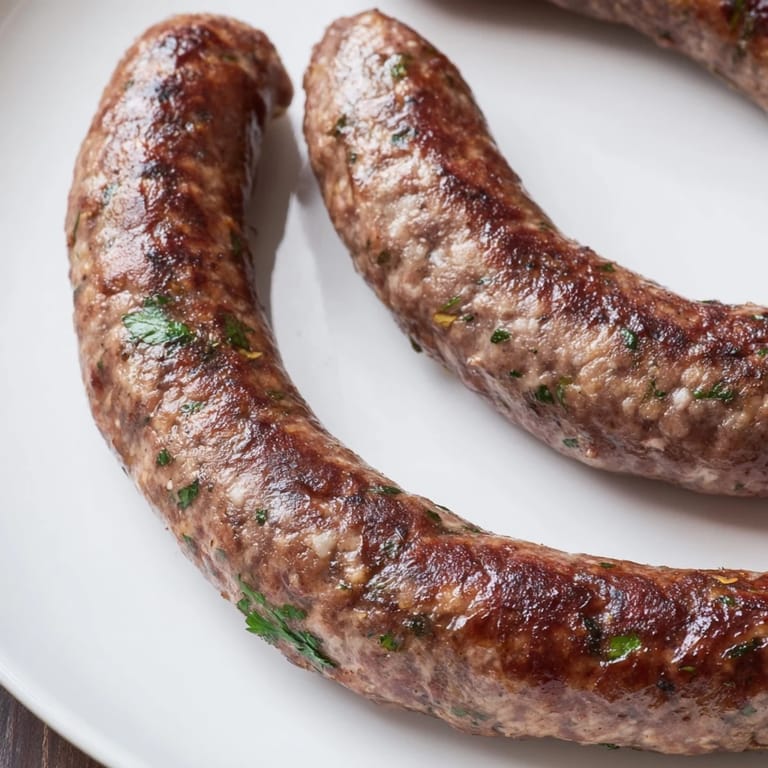
- Place the sausages on the grill and resist the urge to move them constantly—let them sit for 3–4 minutes, then turn and repeat on the other side. They're done when the exterior is deeply browned and the interior temperature reaches 160°F (71°C), about 8–10 minutes total.
- Rest and serve:
- Let them cool for a minute or two before serving, as the filling will be molten hot inside. Serve immediately with flatbread, in a warm baguette, or alongside couscous and a cool yogurt sauce.
 Pin It
 There was an afternoon when I made merguez for my neighbor, a Tunisian woman named Leila who'd recently moved in. She watched me from my kitchen doorway, and when I asked if I was doing it right, she came over and adjusted the amount of caraway, saying it needed a little more earthiness. The sausages we made together tasted different than the ones I'd made alone—not because of the caraway, but because she was there, and food somehow tastes better when it's a shared conversation.
The Spice Balance That Makes Merguez Sing
The magic of merguez isn't in using rare or expensive ingredients—it's in understanding how the spices work together. Cumin and coriander form the backbone, warm and slightly sweet; fennel and caraway add an anise-like brightness that feels almost floral; and smoked paprika gives a subtle depth that makes people ask what they're tasting. Harissa is the glue that holds them all together, acting less as a single ingredient and more as a seasoning paste that carries all these flavors into the meat. When you grind your own spices instead of buying pre-ground, the difference is noticeable—the aromas are brighter and the flavors taste fresher—but honestly, good quality store-bought spices work beautifully too.
Casings Versus Skinless: What Works Best
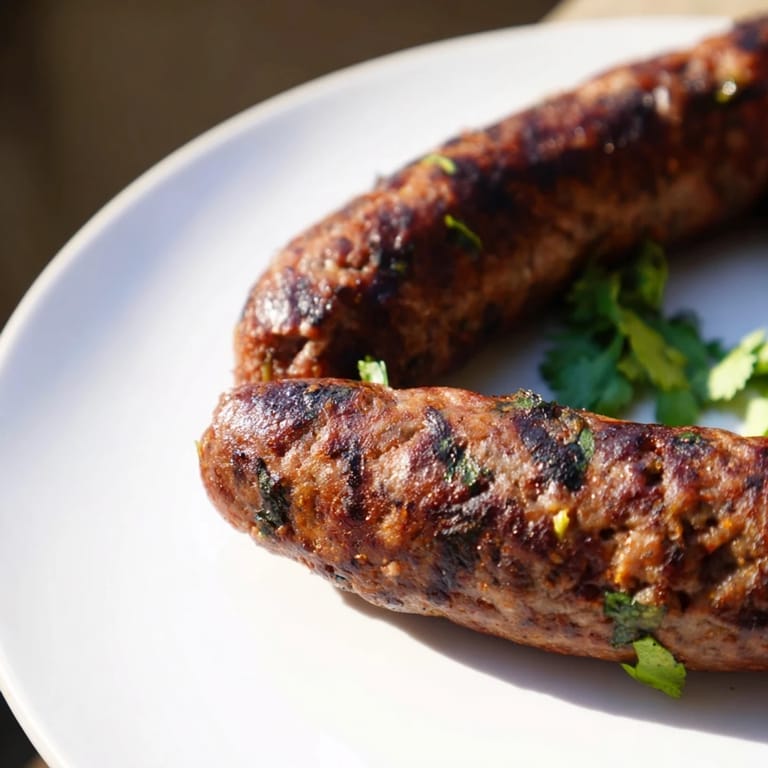
Natural casings give you that satisfying snap and traditional appearance, but they require a bit of technique and aren't always easy to find. If you go casing-free, you lose the pop but gain simplicity—shape the mixture into thick patties or logs, chill them, and grill them exactly the same way. Some people call these kefta, and they're equally delicious, just more casual. I've made both versions dozens of times, and I honestly can't say one is better than the other; it's just a question of whether you want to engage with the ritual of stuffing casings or prefer the straightforward approach.
Serving and Pairing Ideas
Merguez is wonderfully adaptable, which is part of why it's become such a beloved dish across North Africa and beyond. The most traditional way is tucked into warm flatbread or a split baguette with a dollop of harissa mayo and sliced tomato, but it's equally at home nestled into a bed of fluffy couscous with roasted vegetables, or served as part of a mezze platter with hummus, olives, and fresh salad. If you're serving them as an appetizer, make them smaller and thread them onto skewers for easy sharing. For a cooler option, chill them and serve sliced over a grain salad with fresh herbs and a lemon vinaigrette—they're surprisingly refreshing cold.
- Pair with a bold red wine like Syrah, or a crisp white like Sauvignon Blanc if you prefer.
- A cooling mint yogurt sauce cuts through the spice beautifully and feels authentic to the region.
- Leftover sausages keep in the fridge for three days and can be reheated gently or eaten cold the next day.
 Pin It
 These sausages have a way of bringing people together, partly because of how they taste, but also because of the confidence they inspire—once you've made them once, you'll want to make them again and again. Serve them warm, watch people's faces when they take that first bite, and know you've made something truly special.