 Pin It
 There's something about the smell of soffritto hitting hot oil that stops me mid-thought every single time. Years ago, I was making this minestrone on a Wednesday evening when my neighbor wandered over, drawn by that exact aroma, and we ended up cooking it together while the rain drummed against the kitchen window. It became the soup I make whenever I want to feel both grounded and generous at the same time.
I learned this recipe isn't really about following steps perfectly—it's about trusting your senses. Once, I was cooking this for a friend who was going through a rough patch, and I forgot to add the red pepper flakes, but the basil at the end made it sing anyway. That taught me that a good minestrone is forgiving and always comes together because the fundamentals are solid.
Ingredients
- Olive oil: Use something you actually like the taste of, not the cheapest bottle—it's one of only a few fats holding this whole thing together.
- Onion, carrots, and celery: This trio is non-negotiable; it's the flavor foundation that makes everything else taste like home cooking.
- Garlic: Mince it fine so it melts into the oil rather than turning into chewy bits.
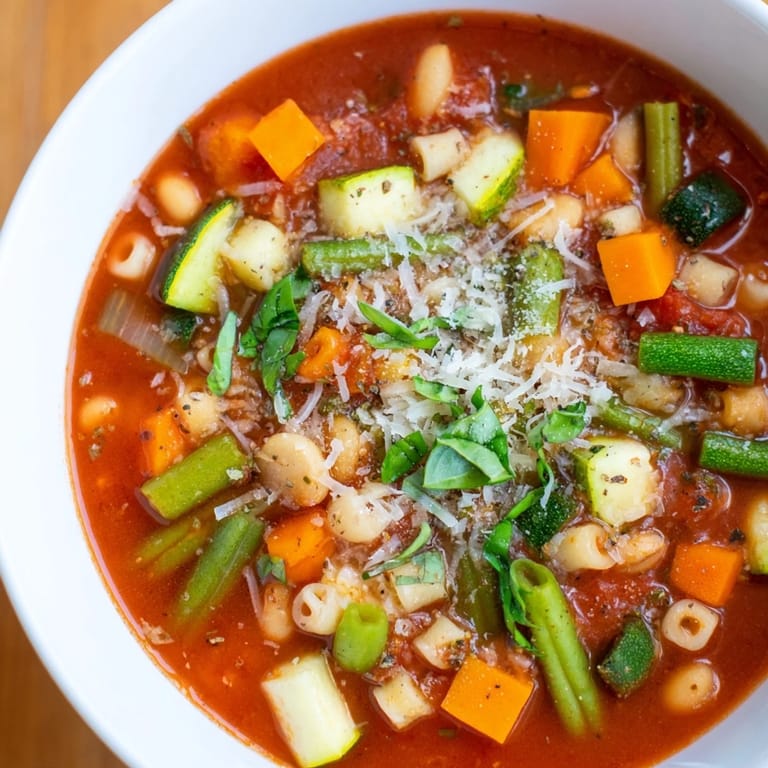
- Zucchini and green beans: They add color and a gentle sweetness that balances the tomato's acidity.
- Diced and crushed tomatoes: The combination gives you both texture and a deeper, more layered tomato flavor.
- Vegetable broth: Quality matters here—use something with actual flavor, not just salt and water.
- Oregano and thyme: Dried herbs work perfectly; I've tried fresh and honestly the dried versions are more reliable in a long simmer.
- Tomato paste: A tablespoon or two deepens everything, but don't skip it thinking you have enough tomato already.
- Small pasta: Ditalini feels most authentic, but any tiny shape works and won't overwhelm the broth.
- Cannellini beans: They add creaminess and protein without needing any cream at all.
- Fresh basil and parsley: Always add these at the very end so they stay bright and don't turn dark and tired.
- Parmesan cheese: Optional, but a light scatter on top adds a salty complexity that pulls everything together.
Tired of Takeout? 🥡
Get 10 meals you can make faster than delivery arrives. Seriously.
One email. No spam. Unsubscribe anytime.
Instructions
- Build your base with softened vegetables:
- Heat your olive oil over medium heat and add the onion, carrots, and celery all at once. Listen for a gentle sizzle, and stir occasionally while they soften—about five minutes. You'll know they're ready when the onion turns translucent and the whole pot smells incredible.
- Add the middle layer of flavor:
- Stir in the minced garlic along with the zucchini and green beans. Cook for three minutes until everything becomes fragrant but the garlic doesn't brown—you're building layers, not rushing.
- Bring in the tomatoes and broth:
- Add both cans of tomatoes, the vegetable broth, dried oregano, thyme, salt, pepper, red pepper flakes if you want heat, and the tomato paste. Stir everything together really well so the paste dissolves evenly, then let it come to a boil.
- Let it simmer and develop:
- Lower the heat and let it bubble gently uncovered for fifteen minutes. This isn't rushed time—walk away and come back, and you'll notice how the flavors have married together.
- Add the pasta and beans:
- Stir in the small pasta and drained cannellini beans. Simmer for another ten to twelve minutes until the pasta is tender but still has some structure. Taste as you go—pasta finishes faster or slower depending on the shape and your stove.
- Finish with fresh herbs:
- Turn off the heat and stir in the chopped basil and parsley so they stay bright and alive. Adjust the salt and pepper to taste—sometimes soup needs a final little boost of seasoning.
- Serve with intention:
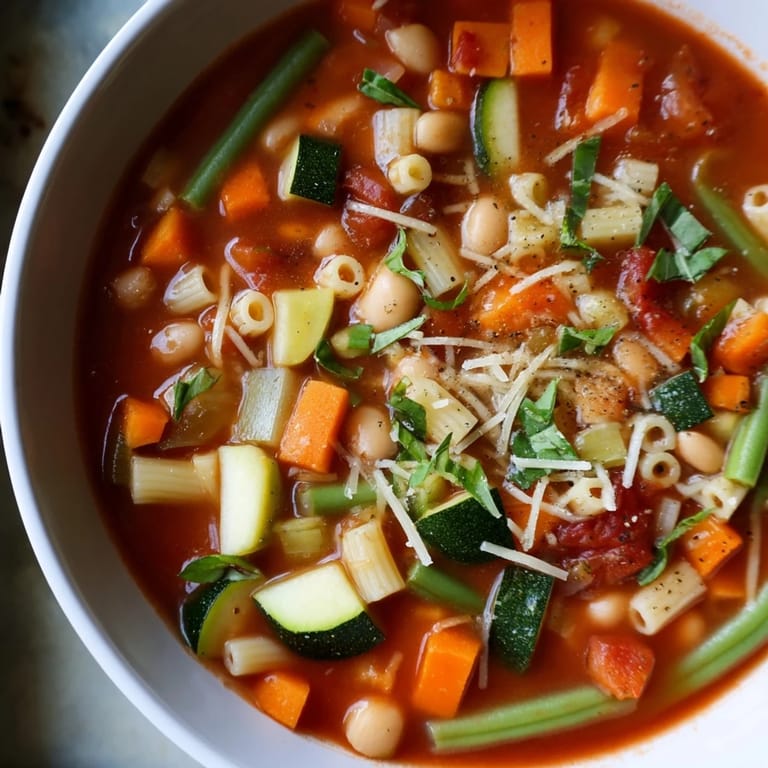
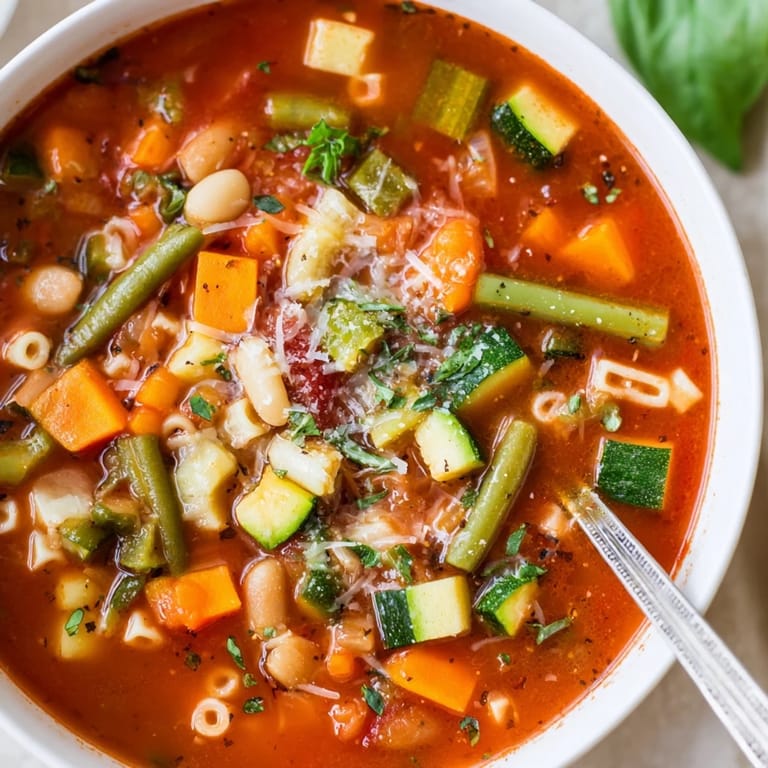
- Ladle into bowls and top with grated Parmesan if you like, or a drizzle of good olive oil, or just eat it plain. Hot crusty bread on the side turns it into something complete.
 Pin It
 This soup became my answer to almost everything—a bad day, a crowded kitchen, unexpected guests, leftover vegetables, or the simple human need to feel like someone cares. It's the kind of food that doesn't announce itself but quietly does the job.
Why This Tastes Like Home
Minestrone isn't trying to be fancy or rare. It's built on the idea that good food comes from paying attention to simple things done well: letting vegetables soften properly, not rushing the broth, and respecting the herbs that finish it. Every region in Italy makes their own version, which means there's no single way to do it wrong—only different ways to make it yours.
Making It Your Own
This recipe is a skeleton that wants you to adapt it. If you find spinach on sale, throw it in at the end. If you have kale instead of green beans, that works too. Some days I add a splash of red wine or a hit of balsamic vinegar. The broth stays constant, but everything else can shift based on what's in your kitchen and what you're craving.
Serving and Storage
This soup tastes better the next day when the flavors have had time to really know each other. Store it in the fridge for up to five days or freeze it in portions for up to three months—though I'd suggest freezing it without the pasta and adding fresh pasta when you reheat, just to keep everything from turning mushy.
- Serve with a thick slice of bread you can actually tear apart, not something that crumbles into the bowl.
- A drizzle of good olive oil on top feels like a small luxury and costs almost nothing.
- If you're making this for someone, a simple green salad alongside feels right and rounds everything out.
 Pin It
 This minestrone is the kind of recipe that teaches you something about cooking each time you make it. There's comfort in that.
Recipe Questions & Answers
- → Can I use gluten-free pasta in this dish?
Yes, substituting regular pasta with gluten-free pasta works well and maintains the texture and flavor balance.
- → How can I make this more hearty?
Adding additional beans or vegetables like spinach or kale near the end of cooking enhances heartiness and nutrition.
- → What herbs best complement the tomato basil broth?
Dried oregano and thyme create a fragrant base that pairs beautifully with fresh basil and parsley added at the end.
- → Is Parmesan cheese necessary?
Parmesan adds a savory finish but is optional; omitting it keeps the dish vegan friendly.
- → Can I prepare this in advance?
This dish reheats well and flavors deepen after resting, making it suitable for meal prep and leftovers.
- → What cooking tools are recommended?
A large soup pot, wooden spoon, and sharp knife are essential for efficient preparation and cooking.