 Pin It
 There's something almost magical about coming home to the smell of beef and sesame wafting through your kitchen after a long day, and I discovered that magic completely by accident when my slow cooker stopped cooperating with my usual chicken routine. I'd tossed in some beef, broth, and whatever aromatics I had on hand, then forgot about it while catching up on work—eight hours later, I ladled that tender, deeply flavored broth over some ramen noodles I'd quickly cooked, and my entire family gathered around asking what restaurant I'd ordered from. That first bowl taught me that sometimes the best dishes happen when you're not trying too hard, and this slow cooker beef ramen became the recipe I keep coming back to.
I made this for my neighbor Sarah one winter evening when she mentioned feeling under the weather, and watching her eyes light up when she tasted that first spoonful reminded me why comfort food matters so much. She came back asking for the recipe, but more importantly, she came back for another bowl the next week, which tells you everything you need to know about whether this dish actually delivers on its promises.
Ingredients
- Beef chuck roast, 1.5 pounds cut into chunks: Chuck is where the magic happens because it has just enough marbling to become incredibly tender during the long, slow cook, collapsing into strands that soak up all that savory broth.
- Salt and freshly ground black pepper: Don't skip the fresh grinding—it makes a real difference in how the beef tastes.
- Onion, 1 thinly sliced: The onion breaks down into the broth and creates this subtle sweetness that balances all the salty, umami flavors.
- Garlic, 4 cloves minced: Mincing it fine means it dissolves into the broth rather than leaving big chunks floating around.
- Fresh ginger, 1 tablespoon grated: This adds a gentle warmth and complexity that makes people ask what the secret ingredient is.
- Beef broth, 4 cups low-sodium recommended: Low-sodium gives you control over the final salt level, which is important when you're reducing broth for hours.
- Water, 3 cups: Water balances the richness and prevents the broth from becoming too intensely salty.
- Soy sauce, 1/4 cup low-sodium if preferred: This is your umami backbone, so taste as you go to make sure it's hitting the right note for your palate.
- Sesame oil, 2 tablespoons: Drizzle this in near the end if you want the aroma to really shine, or add it with the broth if you prefer a more integrated flavor.
- Brown sugar, 2 tablespoons: A pinch of sweetness rounds out the savory elements and deepens the broth's complexity.
- Fresh ramen noodles, 2 packs about 7-8 oz total: Fresh noodles have a better texture than dried, but if that's all you have, dried works fine—just follow the package timing.
- Baby spinach, 1 cup: It wilts right into the hot broth at the last second, adding freshness without overwhelming the dish.
- Green onions, 2 sliced: These add a bright, sharp note that cuts through all the richness beautifully.
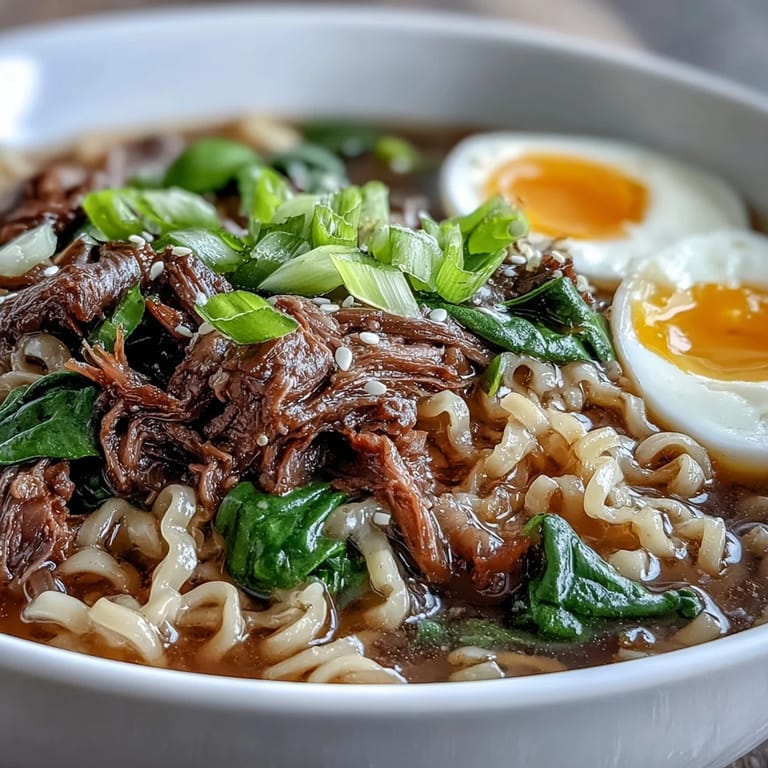
- Soft-boiled eggs, 1 per serving optional: A perfectly cooked soft-boiled egg with a runny yolk transforms a bowl into something restaurant-quality.
- Sriracha or chili oil, optional to taste: Add this if you want heat, or let people drizzle their own at the table.
Tired of Takeout? 🥡
Get 10 meals you can make faster than delivery arrives. Seriously.
One email. No spam. Unsubscribe anytime.
Instructions
- Season your beef generously:
- Coat those chunks with salt and pepper, making sure every surface gets touched—this is your foundation for flavor that no amount of broth can fix later.
- Build your slow cooker base:
- Layer the beef in first, then scatter the onion, garlic, and ginger on top like you're arranging a edible landscape. This layering helps the aromatics release their flavors gradually as the beef cooks.
- Pour in your liquid and seasonings:
- Combine the broth, water, soy sauce, sesame oil, and brown sugar, then pour it all over the beef and vegetables. Give it a gentle stir to combine, but don't go crazy—you want the ingredients to mingle naturally.
- Let time and heat do the work:
- Cover and cook on low for 8 hours or high for 4 hours, depending on how much time you have. You'll know it's ready when the beef falls apart with just a fork.
- Cook your noodles separately:
- About 10 minutes before you want to eat, bring a large pot of water to a boil and cook the ramen according to package directions, then drain well. Cooking them separately keeps them from getting mushy in the hot broth.
- Shred that tender beef:
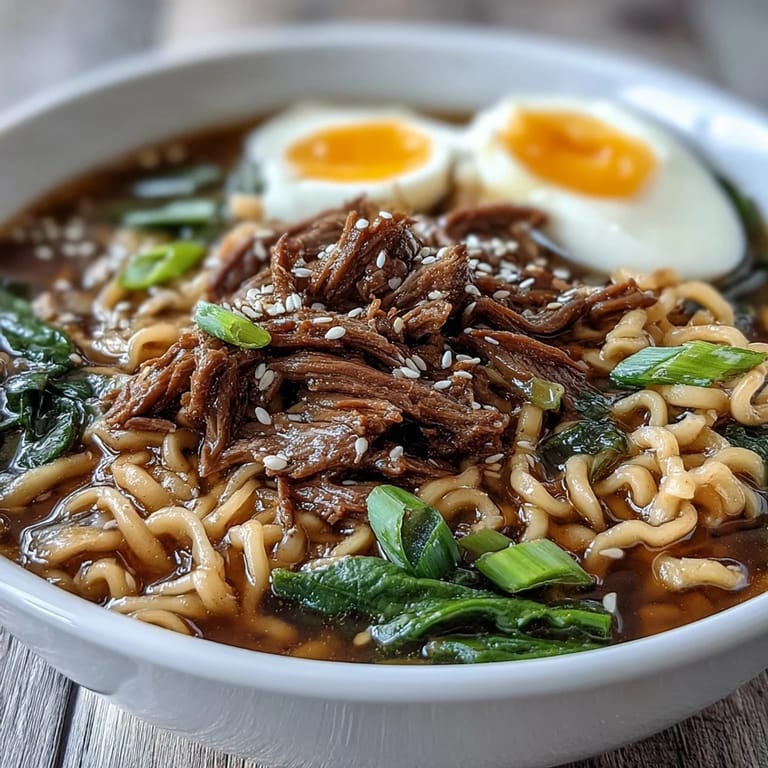
- Using two forks, gently pull the beef apart right in the slow cooker—it should fall into tender strands without any resistance. This distributes those beautiful pieces throughout the broth.
- Wilt in your greens:
- Stir the spinach into the hot broth and let it soften for 2-3 minutes, which adds a fresh element without cooking out all its nutrients.
- Assemble your bowls:
- Divide the cooked noodles between bowls, then ladle the beef and hot broth over the top. The heat of the broth will warm the noodles perfectly.
- Top and finish:
- Scatter green onions over each bowl, add a halved soft-boiled egg if you're using them, and drizzle with sriracha or chili oil if you want heat. Let people customize their own heat level at the table.
 Pin It
 My son asked me once why this dish made him feel calm and full at the same time, and I realized that's exactly what comfort food should do—nourish both your body and whatever part of you needs settling. That's when this recipe stopped being something I make and became something I make for people I care about.
The Slow Cooker Secret
There's a reason slow cookers have made such a comeback in modern kitchens, and it's not just about convenience—it's about transformation. When you cook beef low and slow for hours, the collagen in that tough cut breaks down into gelatin, which is what gives the broth that silky, luxurious mouthfeel that you can't achieve any other way. The first time I understood this on a scientific level, I started respecting my slow cooker the way chefs respect their ovens, because it's actually doing something remarkable with humble ingredients.
Customizing Your Bowl
This recipe is honestly just a starting point, because the beauty of ramen is how personal it becomes once it's in your bowl. I've made it with bok choy instead of spinach on nights when I wanted something more substantial, added mushrooms when I found them on sale, and once threw in some corn kernels because my kids requested it—and you know what, it was delicious. The broth is so well-balanced that it acts like a friendly canvas for whatever vegetables you want to celebrate that week, which is why I keep making this instead of just ordering out.
Finishing Touches That Matter
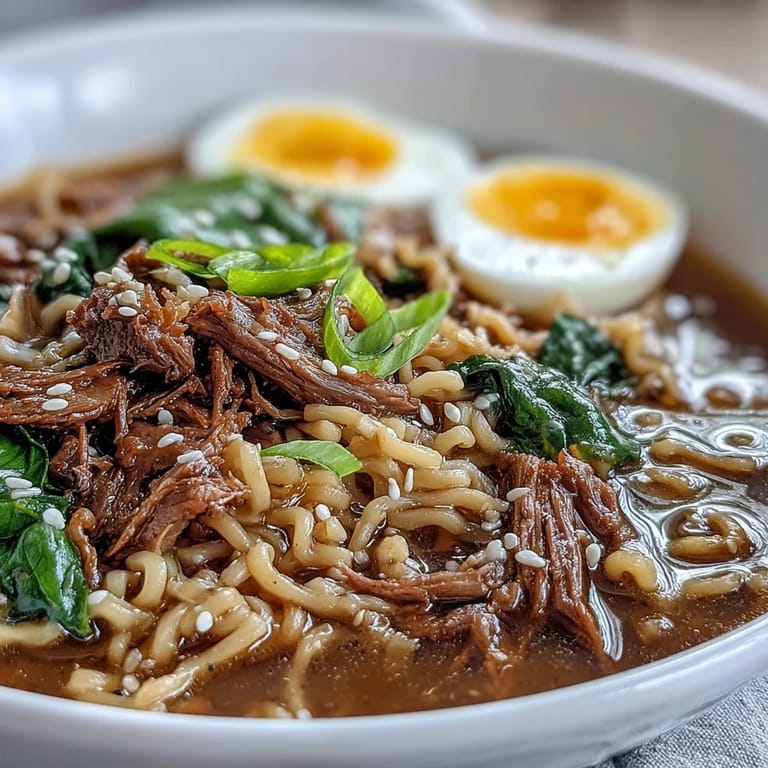
The difference between a good bowl and a restaurant-quality bowl often comes down to what you add at the end, which sounds dramatic but tastes true. That perfectly soft-boiled egg with its runny golden yolk, the snap of fresh green onions, the heat of a drizzle of good chili oil—these aren't garnishes, they're flavor moments that each add their own dimension to every spoonful. I learned this when my sister brought home soft-boiled eggs from a fancy ramen spot and I realized I'd been eating incomplete bowls my whole life, and now I always make them.
- Invest in a small egg timer or learn to boil eggs by feel, because a soft-boiled egg with a slightly runny yolk is worth getting right.
- Buy the best chili oil you can find or make your own, because this final drizzle is what people taste last and remember most.
- Set up a little garnish station and let people build their own bowls, which turns dinner into something interactive and fun.
 Pin It
 This slow cooker beef ramen has become my reliable answer to the question "what's for dinner?" because it's genuinely hard to mess up and consistently delivers something that feels special. More importantly, it's taught me that comfort food doesn't require hours of active work—sometimes it just requires time, heat, and the willingness to let good ingredients become something even better together.
Recipe Questions & Answers
- → How long should the beef cook in the slow cooker?
The beef should cook on low for 8 hours or on high for 4 hours until it's tender and easily shredded.
- → Can I substitute ramen noodles?
Yes, egg noodles or gluten-free noodles like tamari-based variants work well as alternatives.
- → What vegetables complement this dish?
Baby spinach is used here, but bok choy, napa cabbage, mushrooms, carrots, or corn can be added for extra flavor and nutrition.
- → Is it necessary to sear the beef before slow cooking?
Searing beef chunks in a hot skillet before slow cooking adds richer flavor, but it's optional if short on time.
- → How should garnishes be prepared?
Sliced green onions add freshness, and soft-boiled eggs provide richness. A drizzle of chili oil or Sriracha can add desired heat.
- → Are there allergen considerations?
This dish contains soy, wheat, and eggs if included. Substitute gluten-free noodles and tamari for gluten or soy allergies.