 Pin It
 I still remember the summer I first experienced a proper Italian farmhouse board—not on a fancy restaurant plate, but spread across a weathered wooden table at a small agriturismo in Tuscany. The owner's grandmother had arranged it with such casual abundance that it took my breath away. Chunks of cheese tumbled next to silky cured meats, bread torn by hand scattered everywhere, and suddenly I understood that this wasn't fancy food at all. It was honest, generous, and utterly perfect. Now whenever I want to recreate that feeling of being welcomed into an Italian home, I build this board.
The first time I served this to unexpected dinner guests, I was nervous. But the moment they saw that board, their faces transformed. I watched my friend reach for a piece of Taleggio with prosciutto, then sun-dried tomato, then bread—and she closed her eyes like she'd just tasted something sacred. That's when I realized this board does something special: it turns eating into conversation, into connection.
Ingredients
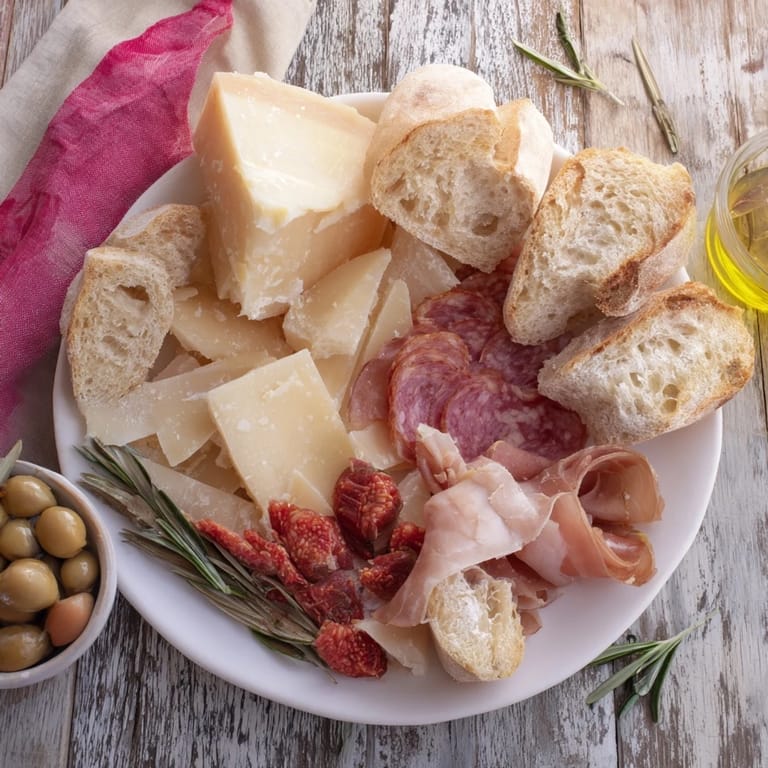
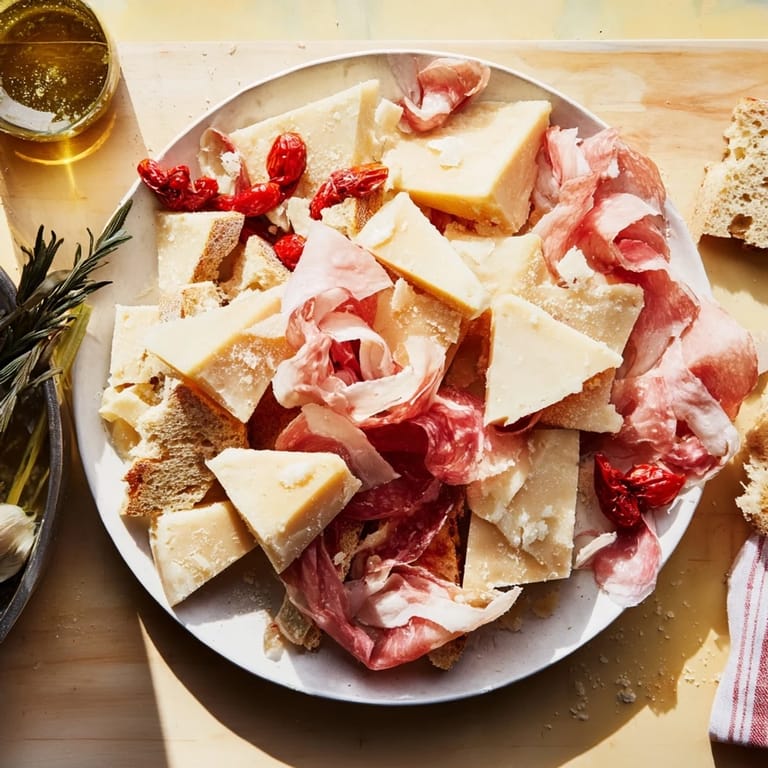
- Parmigiano-Reggiano, broken into large chunks (200 g): The king of Italian cheeses—its sharp, crystalline bite cuts through the richness of cured meats beautifully. Break it into irregular chunks rather than slicing; the jagged edges catch light and look dramatic
- Pecorino Toscano, cut into wedges (200 g): Sharper and more assertive than its Romano cousin, this cheese adds character and complexity. The wedges should be substantial enough that people feel like they're choosing something special
- Taleggio, torn into rustic pieces (150 g): This is the creamy, almost buttery soul of the board. Tear it rather than cut it—the irregular pieces practically melt on bread, which is exactly the point
- Prosciutto di Parma, loosely piled (150 g): Paper-thin, delicately salty, and utterly essential. Pile it loose and relaxed; tight, neat stacks look restaurant-y. You want it to look like it just happened
- Finocchiona salami, thickly sliced (120 g): The fennel seeds give this salami a whisper of licorice that surprises and delights. Thick slices are more interesting than thin ones, and they don't dry out as quickly
- Coppa, arranged in rustic folds (120 g): Softer and more delicate than salami, coppa's marbling makes it visually stunning. Fold it gently so it catches light and looks generous
- Large rustic Italian loaf such as ciabatta, torn into rough pieces (1 loaf): The board's anchor. Tear it unevenly—some pieces with crust, some without—so people have choices. Tear it just before serving so the insides stay soft
- Castelvetrano olives (1 cup): Buttery, mild, and bright green—these aren't the intense black olives that dominate. They won't compete with the other flavors
- Sun-dried tomatoes in olive oil, drained (1 cup): Concentrated sweetness and chew. The oil they're packed in is liquid gold for drizzling, but drain them so they don't make everything soggy
- Marinated artichoke hearts, quartered (1 cup): Their tanginess balances the richness beautifully. Quarter them so they're easy to grab and eat standing up
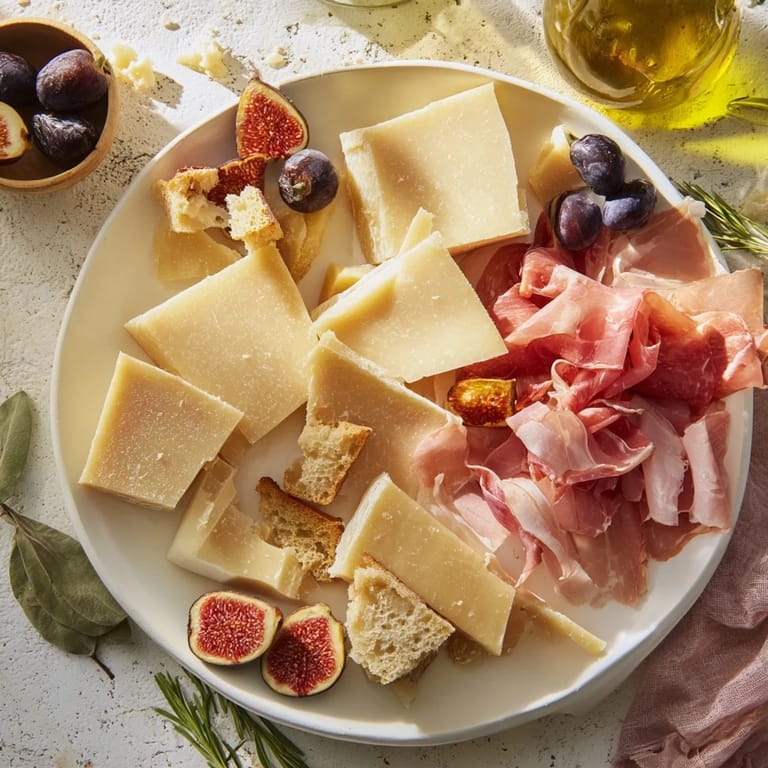
- Fresh grapes or figs, halved (1 small bunch): A moment of sweetness and freshness that resets your palate. If figs are in season, they're worth their weight in gold on this board
- Extra-virgin olive oil for drizzling (1/4 cup): This is the finishing touch that brings warmth and shine. Use your best oil—this is its moment to shine
- Fresh rosemary sprigs for garnish: Not just decoration. The aroma, the visual softness against the hard cheeses, the way it whispers Italian countryside—it matters
- Coarse sea salt and cracked black pepper, to taste: Season thoughtfully. These two add depth without overwhelming
Tired of Takeout? 🥡
Get 10 meals you can make faster than delivery arrives. Seriously.
One email. No spam. Unsubscribe anytime.
Instructions
- Begin with the cheeses:
- Start with your largest board—this needs room to breathe. Break the Parmigiano-Reggiano into irregular, dramatic chunks. Some should be small enough to eat in one bite, others large enough to be a statement. Cut the Pecorino into wedges that look intentional but not fussy. Tear the Taleggio into pieces that show its creamy interior. Arrange them in natural clusters across the board, leaving plenty of negative space. Cheese shouldn't be crowded; it needs air around it to be appreciated.
- Layer in the cured meats:
- Pile the prosciutto loosely—let it crinkle and fold naturally. If it's too tight, it looks controlled. You want it to look like someone just gently arranged it and walked away. Drape coppa in soft folds between cheese clusters. Arrange salami slices in overlapping waves, like you're creating little mountains and valleys. The meats should weave around and between the cheeses, not dominate.
- Scatter the bread:
- Tear the ciabatta just before this moment so it's still soft inside. Scatter pieces all around—some touching cheese, some standing alone. The bread is the vehicle for everything else, so make sure it's everywhere people might reach.
- Fill the gaps with abundance:
- Now the fun part: add olives in small piles, sun-dried tomatoes in clusters, artichoke quarters scattered like treasure. The board should look generous and full, but not cramped. Each element should have a little breathing room. Add grapes or figs last—their bright color and shape bring visual life to the whole arrangement.
- Finish with care:
- Drizzle olive oil lightly over the bread and some of the cheeses. It should shimmer but not pool. Scatter rosemary sprigs around the board—they'll catch eyes and noses. Taste a tiny piece of something, then season with a light hand of sea salt and cracked pepper. The cured meats are already salty, so hold back. You want seasoning to enhance, not overwhelm.
- Bring it to the table immediately:
- This is not something that should sit. The bread will dry, the oil will separate, the moment will pass. Serve it within minutes of finishing, when everything is at its best.
 Pin It
 I'll never forget serving this board to my grandmother for the first time. She grew up in Rome, and I was nervous—who was I to present an "Italian" board to the real thing? She looked at it quietly for a long moment, then smiled and said, "This is how we eat at home. You understand." That moment meant more to me than any compliment ever could. Food that connects us across generations, across oceans, is the best kind.
Building a Board That Works
The secret to a stunning board isn't perfection—it's proportion and intention. Think of it like creating a painting where each element has a purpose. The cheeses are your bold strokes, the cured meats add drama, the bread is your canvas, and the vegetables and fruits are the subtle colors that make everything else pop. Every ingredient should be visible and within reach. Avoid packing it so tightly that people feel intimidated to take the first piece. A board that looks abundant but not crowded invites people to dive in.
Cheese Selection and Swaps
While this board celebrates three specific Italian cheeses, don't let that limit you. The real art is choosing cheeses with different textures and intensities. If Taleggio isn't available or is out of season, Fontina brings similar creaminess. Gorgonzola introduces a blue-cheese boldness that some people crave. Asiago offers nuttiness and a harder texture. The only rule is variety—hard, soft, sharp, and mild all belong on the same board. Mix local producers with imported classics if you find something that speaks to you.
Timing, Storage, and Final Flourishes
The beauty of this board is its simplicity, but that simplicity requires a few thoughtful moments. Prep everything while you have time—slice and dice, arrange your serving dishes, chill the small bowls if you're using them. But don't assemble the full board until the last possible moment before guests arrive. The bread should be torn minutes before serving. The oil should be drizzled right before it hits the table. If you're making this for a party, you can prep ahead, then do the final assembly while your guests have a drink. They'll barely notice, and your board will be at its absolute best.
- Keep cheeses and cured meats at room temperature for at least 30 minutes before serving—cold cheese loses its flavor completely
- If the bread is starting to feel stale, brush the torn pieces very lightly with a little of that beautiful olive oil just before placing them on the board
- Small bowls for oily items like olives and sun-dried tomatoes prevent their oil from weeping all over the board
 Pin It
 This board is my answer to "I don't know what to serve." It's elegant without trying, generous without being excessive, and it tastes like vacation every single time. Make it for people you love, and watch how it brings them together.
Recipe Questions & Answers
- → Which cheeses are best for this board?
Parmigiano-Reggiano, Pecorino Toscano, and Taleggio provide a balanced mix of sharp, salty, and creamy textures ideal for a rustic Italian board.
- → Can I substitute the cured meats?
Yes, alternatives like soppressata or speck work well to maintain the rich, savory character of the meat selection.
- → What breads complement this board?
A large rustic Italian loaf such as ciabatta, torn roughly, adds the perfect chewy texture to offset the cheeses and meats.
- → What accompaniments enhance flavor?
Castelvetrano olives, sun-dried tomatoes, and marinated artichokes bring bright, briny, and tangy notes, balancing the richness.
- → How should I season the board?
Light drizzles of extra-virgin olive oil along with coarse sea salt and cracked black pepper highlight the natural flavors without overpowering them.
- → What wines pair well with this board?
Robust Italian reds like Chianti or Sangiovese complement the savory meats and sharp cheeses beautifully.