 Pin It
 I discovered the magic of a pickled and fermented vegetable feast during a summer visit to a farmer's market in Portland, where an elderly woman was selling mason jars of jewel-toned vegetables she'd been preserving for decades. I watched her arrange them on a wooden board like edible art, and I realized that pickling wasn't just about preservation—it was about capturing a moment of abundance. That day, I brought home my first jar and couldn't stop reaching for those tangy, crunchy vegetables. Now, whenever I make this colorful platter, I'm transported back to that moment of discovery, and I understand why she'd perfected this craft.
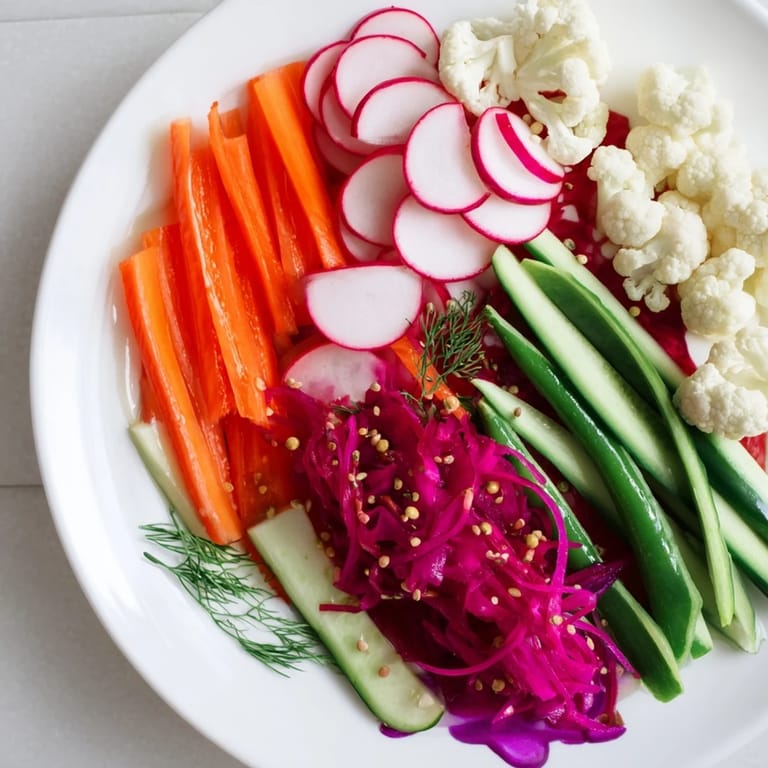
I remember the first time I served this to friends at a dinner party. I'd arranged the vegetables in neat little rows on a white ceramic board, the reds and yellows and purples creating a mosaic. Everyone stopped talking when I set it down. One friend actually gasped. It became the unexpected star of the meal—guests returned to it all evening, and I realized that sometimes the simplest things, when presented with intention, become the most memorable.
Ingredients
- Carrots, julienned: The natural sweetness of carrots becomes almost honeyed when pickled, and julienning them lets the brine get into every layer—this is where patience with your knife pays off
- Cucumber, sliced: Stay with thin slices so they absorb the brine quickly; thick cucumbers stay too watery
- Radishes, thinly sliced: These are the spicy surprise that keeps people reaching back; they maintain their crunch beautifully and add a peppery bite
- Red cabbage, shredded: It bleeds its gorgeous color into the brine, turning everything slightly pink—this is actually ideal and shows you're doing it right
- Cauliflower florets: Keep them small; they absorb flavor faster than you'd expect and stay surprisingly crunchy
- Green beans, trimmed: Choose younger, thinner beans that are more tender; older ones can become mealy when pickled
- White vinegar: This is the neutral backbone that lets all the vegetables sing without competing flavors
- Water and sugar: The sugar balances the acid and helps create that addictive sweet-sour tension that makes you keep eating
- Kosher salt: Don't substitute table salt; the larger crystals dissolve more evenly and give you better control
- Garlic cloves, sliced: Thin slices distribute better than whole cloves and mellow beautifully as they pickle
- Mustard seeds: These little flavor bombs seem humble until you bite into them and get that unexpected pop
- Coriander seeds: They add warmth and a subtle citrus note that ties everything together
- Black peppercorns: Leave them whole; they'll infuse slowly without overpowering
- Bay leaves, fresh dill, and red chili: These are your flavor architects—the dill keeps it fresh, the chili adds intrigue, and the bay leaves remind you that this is something special
Tired of Takeout? 🥡
Get 10 meals you can make faster than delivery arrives. Seriously.
One email. No spam. Unsubscribe anytime.
Instructions
- Prepare Your Vegetables:
- Wash everything thoroughly and cut with intention. Your knife work matters here because uniform pieces look beautiful on the board and pickle evenly. The carrots should be thin enough that you can almost see light through them; the cucumber should be thin discs; the radishes paper-thin slices. This is the meditative part—take your time and notice how the colors look on your cutting board.
- Make the Magic Brine:
- Combine the vinegar, water, sugar, and salt in a saucepan and bring it to a boil, stirring occasionally until the salt and sugar completely dissolve. You'll know it's ready when there are no grainy bits at the bottom. The steam rising from the pan should smell sharp and clean. This is the base that will transform your vegetables from ordinary to extraordinary.
- Arrange with Artistry:
- Pack your clean glass jars tightly with vegetables, but arrange them thoughtfully. Group similar colors together in patterns—all the reds in one section, the yellows in another. This isn't just presentation; dense packing helps everything pickle evenly. Think of it like creating edible stained glass.
- Distribute Your Aromatics:
- Scatter the garlic, mustard seeds, coriander seeds, peppercorns, bay leaves, dill sprigs, and chili slices evenly among your jars. Don't pile them all in one spot; distribute them like you're creating a seasoning experience in every bite.
- Pour the Brine:
- While the brine is still warm (but not piping hot), pour it carefully over the vegetables until everything is completely submerged. This is important—any vegetable that pokes above the brine will turn soft or brown. Use a spoon to press things down gently if needed.
- The Waiting Game:
- Seal your jars and let them cool to room temperature on the counter, then move them to the refrigerator. This is where patience becomes a virtue. For quick pickles, you can taste them after 12 hours, but if you can wait 24 to 48 hours, the flavors deepen in ways that seem almost magical.
- The Fermentation Path (Optional):
- If you want to explore true fermentation, prepare a lighter brine of 2% salt to water (20 grams salt per liter of water) and leave your vegetables at room temperature for 5 to 7 days. Check them daily for bubbling and flavor development. This creates a completely different, more complex experience with living probiotics.
- Present with Pride:
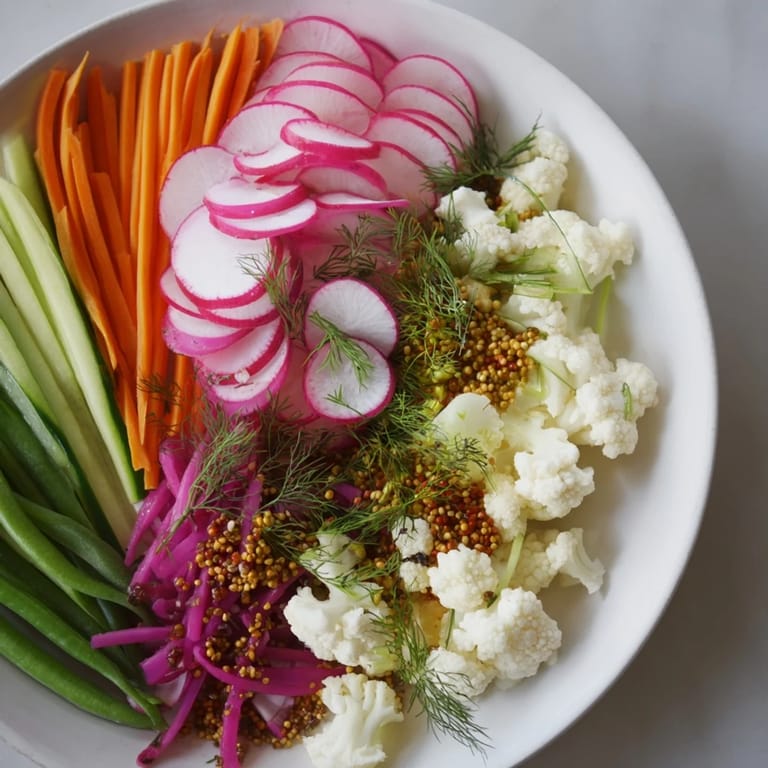
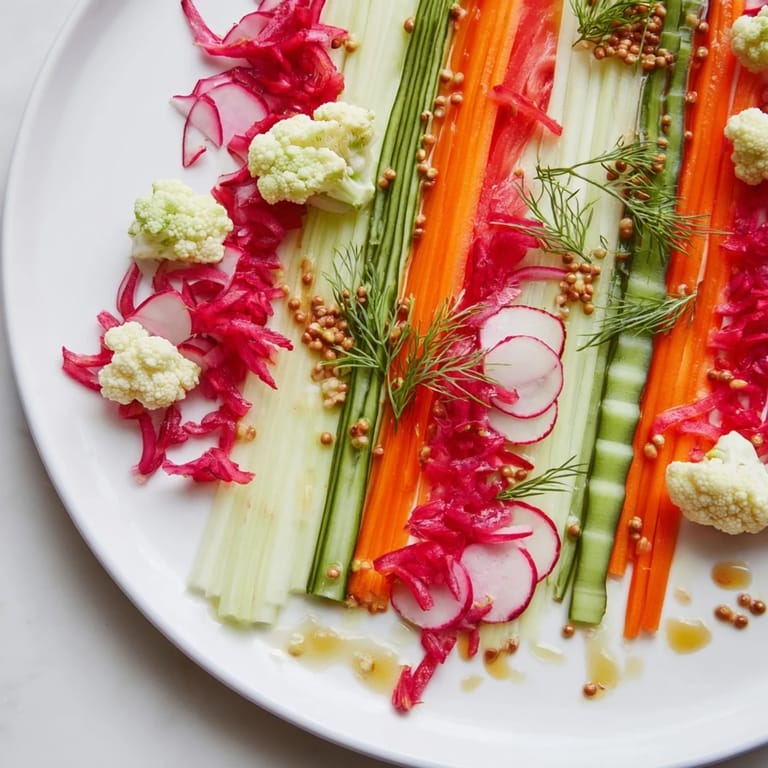
- When serving, arrange your pickled and fermented vegetables in small jars or bowls on a wooden board or serving tray. Linear patterns, grid patterns, concentric circles—whatever feels beautiful to you. The colors are your palette, and the board is your canvas.
 Pin It
 There's a moment, usually around day three of fermentation, when I open the jar and smell that distinctive tangy aroma rising up. It's the smell of transformation, of ingredients becoming something better than the sum of their parts. It reminds me that some of life's best things can't be rushed, and that waiting for good food is its own kind of meditation.
Seasonal Variations to Try
The beauty of pickling is that you can follow the seasons and let what's available guide your creativity. In summer, when beets and turnips appear at farmers markets, try adding thin slices of roasted beets for earthiness, or paper-thin turnip slices for a delicate crunch. In fall, pearl onions become your secret weapon—they pickle into these sweet, tender gems that are almost addictive. Winter opens up possibilities with harder vegetables like kohlrabi or daikon radish that hold their texture beautifully. I've learned to keep my eyes open at the market and let what's freshest inspire my jars.
Vinegar Adventures
White vinegar is reliable, but once you've mastered the basic method, the vinegar becomes your storytelling tool. Rice vinegar creates a more delicate, almost sweet pickling liquid that feels Japanese in spirit. Apple cider vinegar brings an apple-orchard warmth that makes everything feel homey and autumnal. Red wine vinegar deepens the colors and adds sophistication. I once made a batch with champagne vinegar just to see what would happen, and it became the most elegant pickle I've ever made—subtle, complex, and somehow special enough for a fancy cheese board.
Building Your Perfect Feast Board
A pickled and fermented vegetable feast becomes transcendent when you think about what surrounds it. The crunch and acidity pair beautifully with crusty bread for soaking up the brine, and if you're serving omnivores, cured meats like prosciutto or salami create a stunning contrast. For a fully plant-based spread, vegan cheeses, olives, and nuts create a complete picture. Fresh herbs scattered across the board—more dill, some parsley, a few mint leaves if you're feeling playful—add another layer of freshness. I love serving this with a crisp Riesling or a dry rosé that echoes the vinegar's brightness, or for non-drinkers, sparkling water with fresh lemon feels equally special.
- The interplay of textures—the crunch of the pickles against soft bread or cheese—is what makes this memorable
- Don't arrange everything at once if you're serving over several hours; refresh the board halfway through to keep it looking abundant and fresh
- Pickled vegetables are naturally shelf-stable, so this is perfect for make-ahead entertaining when you want to look effortless
 Pin It
 Making this feast has become my way of saying I care—whether it's for a dinner party or quietly for myself, knowing there's a jar of bright, tangy vegetables in my fridge feels like having a small moment of joy waiting for me. That's the real magic here.
Recipe Questions & Answers
- → How long does the pickling process take?
Quick pickling requires at least 12 hours in the refrigerator, while fermentation can take 5–7 days for deeper flavors.
- → Can I use different vegetables for this dish?
Absolutely, seasonal veggies like beets, turnips, or pearl onions work well and add unique textures and flavors.
- → What spices enhance the pickling brine?
Mustard seeds, coriander seeds, black peppercorns, garlic, bay leaves, fresh dill, and optional chili create a balanced aromatic profile.
- → Is fermentation necessary for flavor?
Fermentation isn't required but it deepens complexity and tanginess compared to quick pickling, offering richer taste layers.
- → How should the vegetables be arranged for serving?
Arrange pickled and fermented vegetables neatly in linear or grid patterns on a serving board for a striking visual presentation.