 Pin It
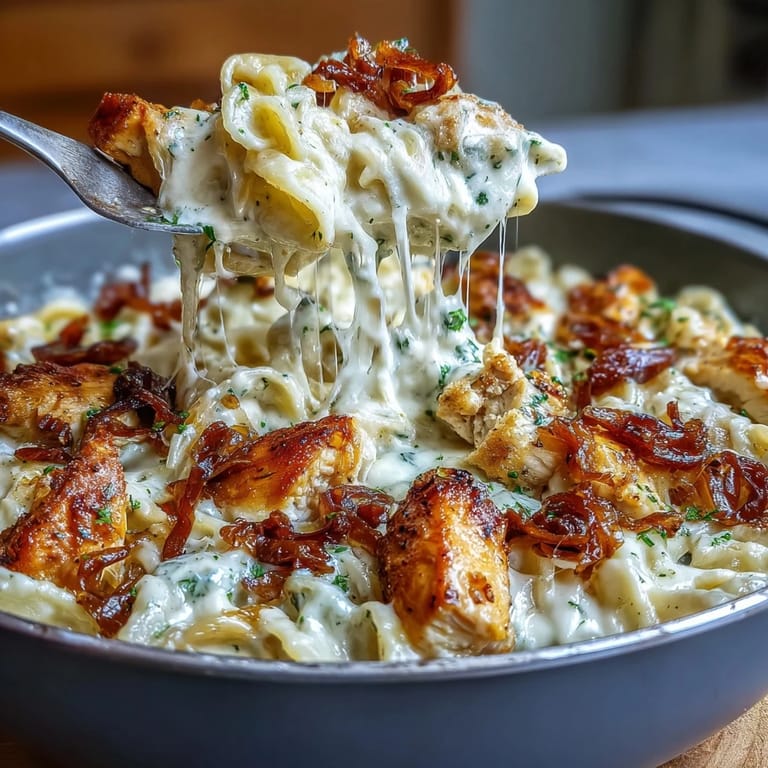
 There's a Tuesday evening I keep coming back to, when my neighbor mentioned she'd been craving French onion soup but wanted something more substantial. I stood in my kitchen thinking about that, watching the golden light hit my Dutch oven, and suddenly imagined what it would taste like if you folded all those caramelized onions and melted cheese into a pasta dish instead. One pot, no fussing between multiple pans, just the smell of butter and onions filling the whole house. That's how this dish found its way into my regular rotation.
I made this for my partner on a rainy October afternoon, and watching them take that first bite, seeing their eyes light up at the combination of tender chicken and those deeply sweet onions, reminded me why I love cooking. They asked for seconds before finishing the first bowl, which might sound simple, but that's exactly when you know a recipe has become something worth keeping.
Ingredients
- 2 large boneless, skinless chicken breasts (about 500 g), cut into bite-sized pieces: Cutting them into smaller, uniform pieces means they cook quickly and distribute throughout the dish instead of dominating it—think of them as a supporting player rather than the main event.
- 3 large yellow onions, thinly sliced: Yellow onions are sweeter than white ones, and slicing them thin means they'll caramelize evenly and create that jammy, golden base that makes everything else taste better.
- 3 cloves garlic, minced: Fresh garlic adds brightness that prevents the dish from becoming one-note sweet; mince it finely so it disappears into the sauce rather than announcing itself.
- 2 tablespoons fresh thyme leaves (or 1 teaspoon dried thyme): Thyme bridges the gap between the chicken and the classic French onion flavors—use fresh if you can, as it adds a subtle earthiness dried thyme can't quite capture.
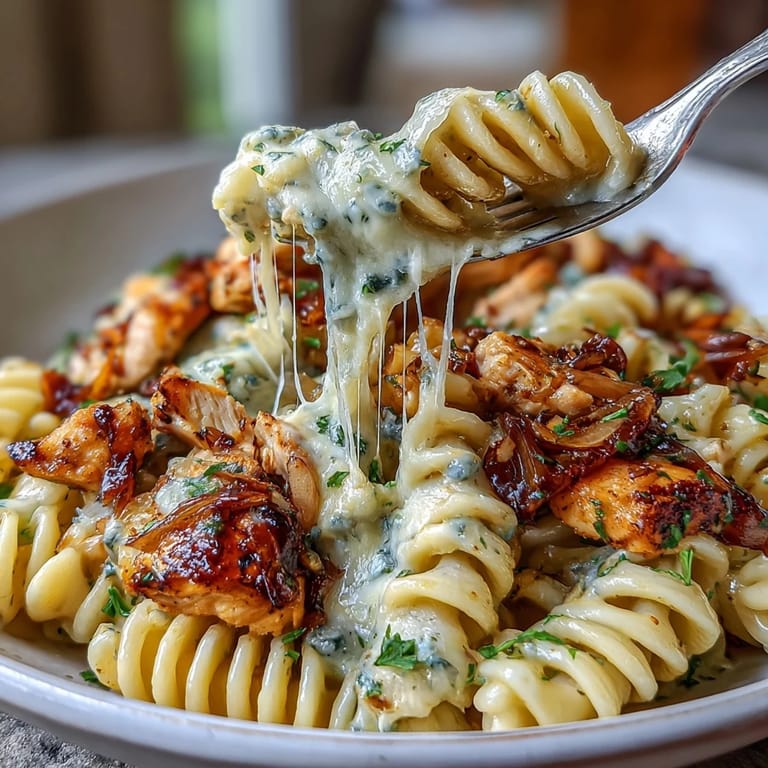
- 340 g (12 oz) short pasta (penne, fusilli, or rigatoni): Short shapes work best because they hold onto the creamy sauce; I prefer penne for its ridges that catch all that cheesy goodness.
- 3 tablespoons unsalted butter and 2 tablespoons olive oil: Butter gives richness while oil prevents burning—this combination is what makes the onions turn that deep amber color without scorching.
- 1 liter (4 cups) low-sodium beef or chicken broth: Low-sodium is essential because you're reducing the liquid and concentrating flavors; it won't turn salty.
- 120 ml (1/2 cup) dry white wine (optional): The wine adds complexity and a subtle acidity that cuts through the richness, though extra broth works fine if you skip it.
- 100 g (1 cup) Gruyère cheese, shredded: Gruyère is nutty and melts beautifully; it's the anchor of this dish and worth seeking out rather than substituting with milder cheeses.
- 50 g (1/2 cup) mozzarella cheese, shredded: Mozzarella keeps things creamy and stretchy without overpowering the Gruyère's flavor—it's the diplomatic choice.
- 2 tablespoons grated Parmesan cheese: A shower of Parmesan at the end adds a salty, sharp note that keeps the whole dish from feeling too indulgent.
- Salt and freshly ground black pepper, to taste: Season as you go, not just at the end—you'll taste the difference immediately.
Tired of Takeout? 🥡
Get 10 meals you can make faster than delivery arrives. Seriously.
One email. No spam. Unsubscribe anytime.
Instructions
- Sear the chicken until golden:
- Heat your olive oil and a tablespoon of butter in a large Dutch oven over medium heat until it shimmers. Add the chicken, season generously with salt and pepper, and let it sit undisturbed for a minute so it develops a golden crust—this takes about 6 to 8 minutes total. You'll smell it before you see it done, that savory, slightly caramelized aroma that tells you something good is happening.
- Coax the onions into deep caramelization:
- Return the pot to medium-low heat with the remaining butter and add those thinly sliced onions along with a generous pinch of salt. This is where patience becomes your secret weapon—20 to 25 minutes of stirring occasionally might seem long, but those onions need time to break down and turn into something sweet and golden. The kitchen will smell unbelievable, almost like a French bistro on a cold evening.
- Build the flavor base:
- Once the onions are caramelized, add your minced garlic and thyme, stirring for about a minute until the raw garlic smell softens and the thyme releases its oils into the pot.
- Deglaze with wine:
- Pour in the white wine if using it, and with a wooden spoon, scrape up all those brown bits clinging to the bottom—that's concentrated flavor you don't want to waste. Let it bubble away for 2 to 3 minutes until it reduces by about half, which concentrates the flavors even more.
- Bring everything together:
- Return the cooked chicken to the pot along with the uncooked pasta and broth, then bring everything to a boil before reducing to a simmer. Stir occasionally as it cooks for 10 to 12 minutes—the pasta absorbs the broth and softens while everything melds together into one cohesive dish.
- Finish with creamy cheese:
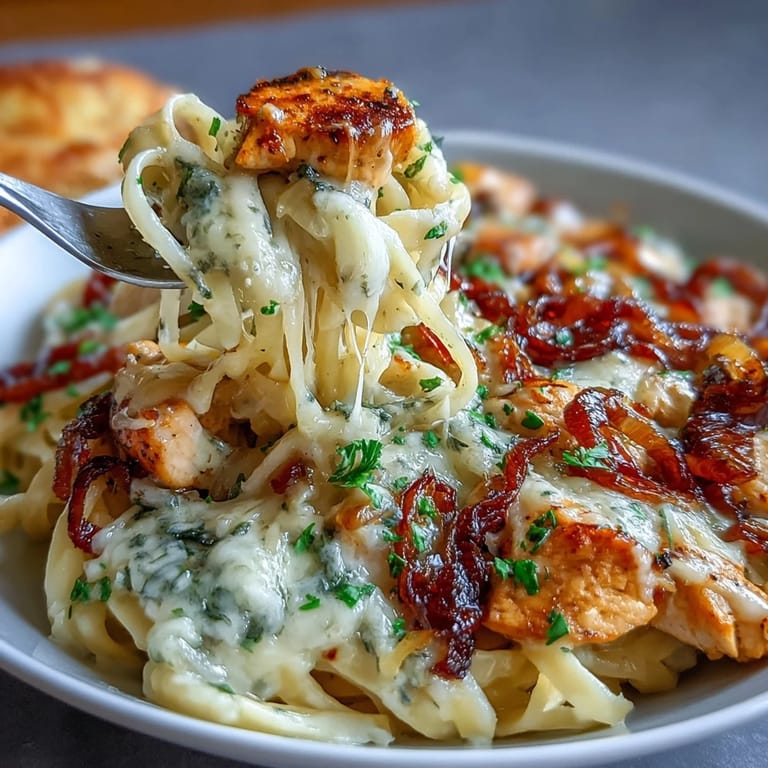
- Stir in the Gruyère and mozzarella off the heat (this keeps the cheese from becoming grainy), and let them melt into a creamy, luxurious sauce. Taste it now and adjust your salt and pepper—this is your chance to make sure it tastes exactly right.
- Add the final touches:
- Sprinkle Parmesan over the top and, if you're feeling fancy, slide the whole pot under the broiler for 2 to 3 minutes until it's golden and bubbly on top. If broiling feels like too much, just sprinkle the cheese on and serve it hot—it will still be wonderful.
 Pin It
 What strikes me most about this dish is that it transformed from a random kitchen idea into something my guests now specifically request. It sits at that perfect intersection of effort and reward—it doesn't demand technical skill, but it rewards attention and patience, which feels like cooking should actually work.
The Magic of Caramelized Onions
Caramelization is different from browning—it's a slower process where the natural sugars in onions break down and deepen into something entirely new. I learned this the hard way once by cranking the heat too high, ending up with bitter, burnt onions that ruined an entire batch. Now I embrace the slowness, use it as time to prep other ingredients, set the table, or just stand there with a cup of tea breathing in that amber-colored magic happening in the pot. The onions will tell you when they're ready—they'll be soft, shiny, and smell like caramel and butter.
Why This Works as a One-Pot Meal
Most pasta dishes require a separate pot for the pasta and another for the sauce, which means more dishes and more opportunity for things to cool down. By cooking the pasta directly in the broth with all the other components, it becomes a unified dish where every strand of pasta absorbs the flavor of chicken, onions, and that creamy cheese. The starch from the pasta also helps thicken the broth naturally, creating a sauce without any added flour or cream—it's elegant in its simplicity.
Customizing Without Losing the Soul
This dish has flexibility built into its bones, which I appreciate because cooking shouldn't feel rigid or precious. You can swap Gruyère for Swiss or Emmental if that's what you have on hand, use vegetable broth and skip the chicken for a vegetarian version, or even substitute the white wine with a splash of apple cider vinegar for acidity. The one thing I wouldn't change is the caramelized onions—they're what make this taste like something special instead of just cheese pasta with chicken.
- Serve alongside a crisp green salad tossed with sharp vinaigrette to cut through the richness.
- A glass of Chardonnay alongside it completes the French bistro moment perfectly.
- Leftovers actually improve the next day as the flavors settle and deepen, though you might need to loosen it with a splash of broth when reheating.
 Pin It
 This is the kind of recipe that reminds you why cooking for people matters—it's not about impressing anyone, it's about creating a moment where everyone at the table feels cared for. Make it, and I promise it becomes yours.