 Pin It
 There's something about olive oil in desserts that caught me off guard the first time a friend served these at her garden party—I'd expected heaviness, but instead bit into something delicate and almost buttery, the kind of unexpected pleasure that makes you ask for the recipe immediately. The black currant frosting arrived as a revelation, tart and elegant in a way that made afternoon tea feel like an occasion. Now, whenever I need to impress without fussing endlessly, these cupcakes are my answer.
I made these for my mother-in-law's book club once, nervous about whether the flavors would land, and watched her face light up when she tasted one—she immediately wanted to know if the tartness was intentional, then ate a second one before asking for extras to take home. That moment taught me that sometimes the slightly unconventional choice is exactly what people didn't know they were hungry for.
Ingredients
- All-purpose flour (1 1/2 cups): Provides structure without heaviness—sift it with your dry ingredients so every crumb distributes evenly.
- Baking powder and baking soda (1 tsp and 1/2 tsp): Work together to lift the batter, creating that tender, feathery crumb that makes olive oil cupcakes special.
- Fine sea salt (1/4 tsp): Enhances sweetness and balances the richness of the olive oil—don't skip it.
- Granulated sugar (3/4 cup): Beaten with eggs until pale, it aerates the batter and builds the foundation for moisture.
- Large eggs (2), room temperature: Cold eggs won't incorporate smoothly; let them sit out while you gather everything else.
- Extra virgin olive oil (1/2 cup): Use a mild or buttery variety rather than peppery—this is where your cupcakes get their tender texture and subtle richness.
- Whole milk (1/2 cup), room temperature: Keeps the crumb delicate and tender; cold milk can seize the batter.
- Pure vanilla extract (1 tsp): The real thing makes a whisper of difference—don't settle for imitation.
- Lemon zest (optional, from 1 lemon): A brightness that wakes up the whole cake, though you can omit it if you prefer the olive oil to shine alone.
- Unsalted butter (1/2 cup), softened: The frosting base—softened butter whips fluffier than cold butter, trapping air into clouds.
- Cream cheese (4 oz), softened: Adds tanginess and structure; letting it sit on the counter for 30 minutes beforehand prevents lumps.
- Powdered sugar (2 cups), sifted: Sifting removes clumps that would make frosting grainy—worth the extra minute.
- Black currant jam or puree (1/4 cup): The soul of the frosting—look for jam with visible seeds and real fruit, not the overly sweet stuff.
- Lemon juice (1 tsp): Cuts through richness and echoes the subtle brightness in the cake itself.
- Salt pinch: Makes the frosting taste more like itself, not sweet blur.
Tired of Takeout? 🥡
Get 10 meals you can make faster than delivery arrives. Seriously.
One email. No spam. Unsubscribe anytime.
Instructions
- Set the stage:
- Preheat your oven to 350°F and line the muffin tin—this takes just a moment but prevents scrambling later. Room temperature ingredients are your secret weapon here; pull eggs and milk from the fridge while the oven warms.
- Whisk the dry:
- Combine flour, baking powder, baking soda, and salt in a medium bowl, whisking until everything feels evenly distributed. This aerates the flour and ensures the leavening agents are spread throughout, not clumped in one corner.
- Beat eggs and sugar:
- In a large bowl, beat eggs and sugar together for about 2 minutes—you'll see the mixture pale and thicken, which means air is being incorporated. This is what gives olive oil cupcakes their tender crumb instead of the denser texture you'd get from a plain mixing method.
- Incorporate the olive oil:
- Drizzle in olive oil gradually while whisking, watching it emulsify into the eggs and sugar like magic. Don't rush this step; gradual incorporation means a smooth, homogenous batter without any separated pools of oil.
- Add wet ingredients:
- Stir in milk, vanilla, and lemon zest if using—the mixture will look a bit thin, which is exactly right. The liquid will be absorbed as you fold in the flour, so trust the process here.
- Fold gently:
- Using a spatula, fold the dry ingredients into the wet mixture until just combined—a few flour streaks are fine, overmixing develops gluten and makes cupcakes tough. This is where patience pays off; stop folding the moment you can't see dry flour.
- Fill the liners:
- Divide batter evenly among the liners, filling each about two-thirds full—this gives them room to rise without spilling over. A small ice cream scoop makes this task nearly foolproof.
- Bake until golden:
- Bake for 16 to 18 minutes, until a toothpick inserted into the center comes out clean or with just a few moist crumbs. The tops will be a pale golden brown and feel springy when you lightly touch them.
- Cool with patience:
- Let cupcakes rest in the pan for 5 minutes before transferring to a wire rack—this prevents them from crumbling while still being delicate enough to handle. Complete cooling takes about an hour; frost them warm and they'll absorb the frosting like little sponges, which is wonderful or disastrous depending on your preference.
- Make the frosting:
- Beat softened butter and cream cheese together until completely smooth and creamy, about 2 minutes—any lumps will stay lumps. Gradually add sifted powdered sugar, beating between additions to prevent clouds of powder escaping into your kitchen.
- Add the black currant magic:
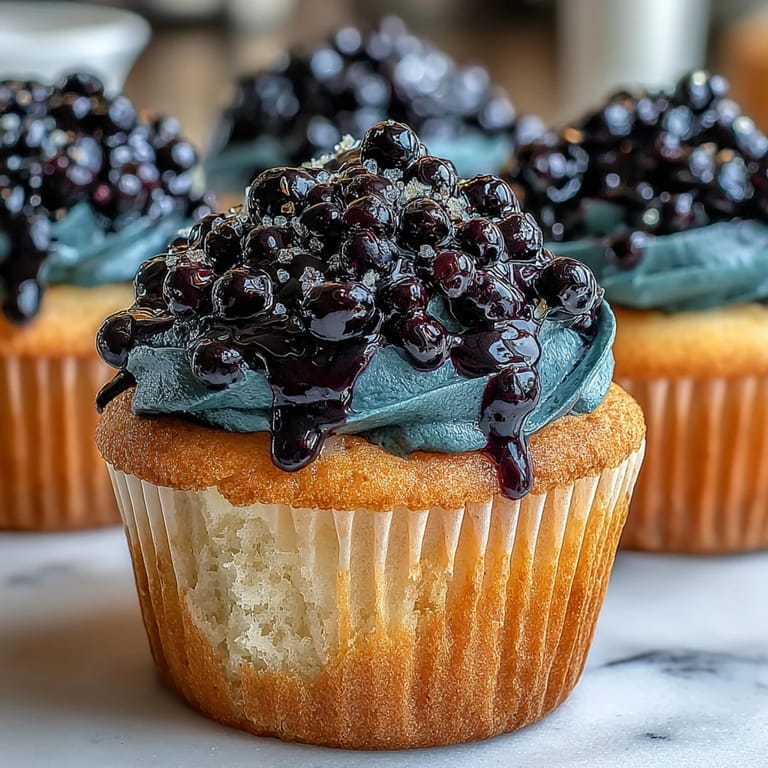
- Once the frosting is fluffy, mix in black currant jam, lemon juice, and salt—beat until fully incorporated and the frosting is light and spreadable. The frosting will lighten in color as you whip air into it, becoming almost mousse-like.
- Frost and finish:
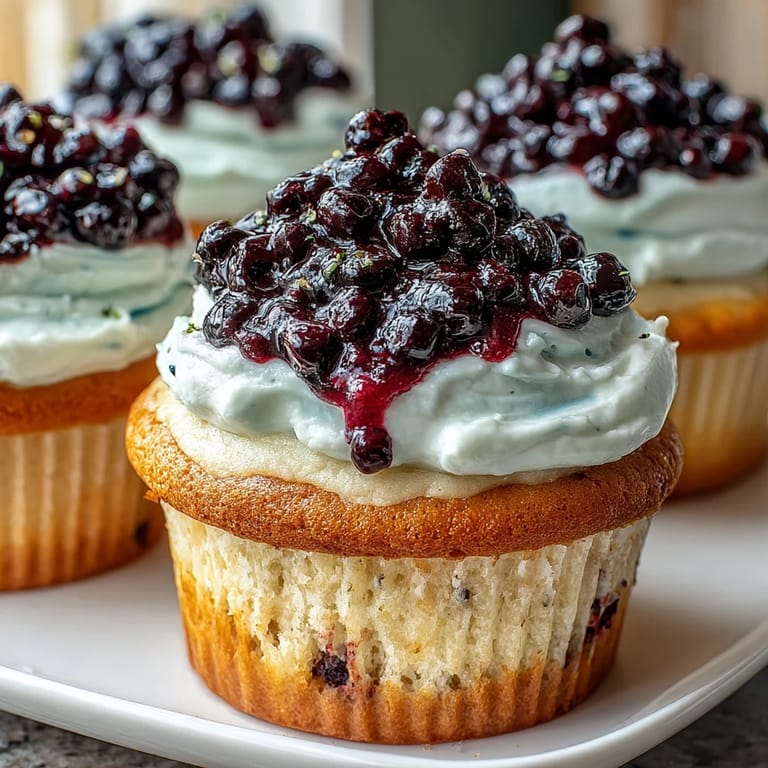
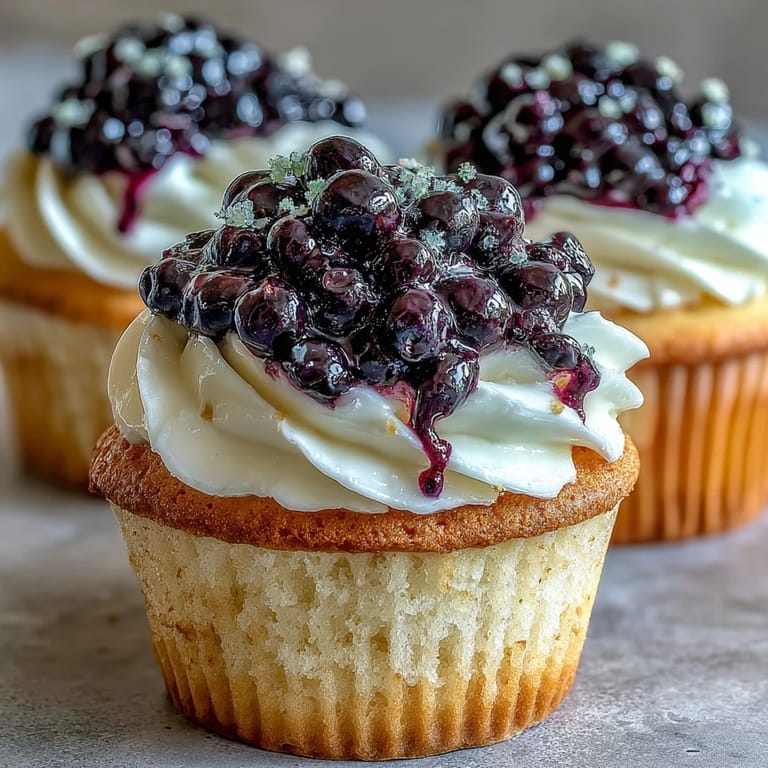
- Once cupcakes are completely cool, frost generously with a small offset spatula or the back of a spoon—the generous approach looks better and tastes better. Garnish with a few fresh black currants or a whisper of lemon zest if you want them to look as good as they taste.
 Pin It
 My sister called me from her kitchen once, mid-bake, panicked because her batter looked thin and oily, convinced she'd ruined everything—I talked her through it while she nervously slid the pan into the oven, and 18 minutes later she texted a photo of perfect, tender cupcakes rising in the tin. Watching her relief transform into pride reminded me why these little cakes matter beyond just tasting good.
Why Olive Oil Changes Everything
Olive oil cupcakes belong in a different category entirely from butter cakes—they're more delicate, more tender, almost velvety in a way that makes people pause and ask what's different. The oil doesn't brown like butter does, which keeps the crumb pale and refined, and it creates a moistness that lasts days longer than traditional cupcakes, though these rarely survive that long anyway. I've learned that using a mild, buttery olive oil matters tremendously; aggressive, peppery oil will taste like salad and overpower the black currant.
The Black Currant Frosting Secret
Black currant frosting sits in this perfect space between tangy and sweet, sophisticated without being pretentious—it's the kind of frosting that makes people think you spent hours in the kitchen when really you spent minutes. The lemon juice is doing quiet work here, brightening the black currant and preventing the frosting from tasting cloying, while the cream cheese adds a slight tartness that feels grown-up and deliberate. If black currant jam is impossible to find, blackberry or raspberry work beautifully, though the flavor profile shifts slightly—blackberry feels more playful, raspberry more floral.
Serving and Pairing
These cupcakes were born for afternoons rather than celebrations, the kind of treat that belongs on a floral plate with Earl Grey tea or a book in your lap. They're equally at home at a proper tea service or tucked into a box for a friend who needs a small moment of something good, and they pair surprisingly well with an off-dry sparkling wine if you're feeling festive. The tartness of the frosting makes them less cloying than traditional sweets, so people rarely feel overstuffed after eating one.
- Serve at room temperature, never straight from the fridge, or the cupcakes will taste dense and the frosting will be too firm to enjoy.
- These keep beautifully covered for three days, though they're best within the first 24 hours when the frosting is still slightly fluffy.
- Make the cupcakes a day ahead and frost them on the morning of serving for the freshest frosting.
 Pin It
 There's something about handing someone a cupcake that tastes like you know them a little better than you did before—like you've translated affection into olive oil and black currant and the effort of staying present in a kitchen. Make these, taste them, share them, and watch how something small becomes an occasion.
Recipe Questions & Answers
- → What makes olive oil cupcakes different from traditional ones?
Olive oil provides a moist texture with a subtle fruity flavor, resulting in a tender crumb and a richer mouthfeel than butter-based cakes.
- → Can I substitute black currant jam with other preserves?
Yes, blackberry or raspberry jam can be used as alternatives to maintain a similar tangy element in the frosting.
- → How do I prevent overmixing the cupcake batter?
Fold the dry ingredients into the wet mixture gently until just combined to keep the cupcakes light and tender.
- → What is the purpose of lemon zest in the batter?
Lemon zest adds brightness and a subtle citrus aroma, enhancing the overall flavor complexity.
- → How should I store these cupcakes for freshness?
Store cupcakes in an airtight container in the refrigerator to preserve the frosting's texture and flavor for up to three days.