 Pin It
 I first discovered this dish during a misty autumn weekend in Oregon, wandering through a farmer's market near Portland where a local chef was arranging wild mushrooms and forest berries in the most beautiful way I'd ever seen. She told me she was inspired by the forest floor itself, and something about that clicked—I wanted to capture that same sense of discovery, that feeling of finding treasure in the woods. When I got home, I spent an afternoon recreating it, and my kitchen filled with the earthy aroma of sautéed mushrooms and fresh herbs. It became my favorite way to celebrate fall and the generosity of the Pacific Northwest.
I remember serving this to my partner on our anniversary dinner last October, plating it on our favorite blue ceramic dishes. They literally gasped when I brought it to the table—not because it was fancy, but because it felt real and alive, like we'd brought the forest inside. We ate slowly that night, and somehow this simple arrangement of mushrooms and herbs became one of our most memorable meals together.
Ingredients
- Mixed wild mushrooms (chanterelle, shiitake, oyster), 200 g: These are the stars—each variety brings its own personality, from the delicate trumpet shape of chanterelles to the meaty texture of shiitake. I learned the hard way that mixing varieties gives you a more interesting flavor landscape. If you can't find wild ones, cremini and button mushrooms work beautifully too, though they're more subtle.
- Olive oil, 1 tbsp: Use a good quality one you actually enjoy tasting—it matters more here than in many dishes since the mushrooms will soak up its flavor.
- Unsalted butter, 1 tbsp: This is what creates those golden, caramelized edges on your mushrooms. The butter brings a richness that oil alone can't achieve.
- Garlic clove, 1 minced: Just enough to whisper in the background without shouting. Don't let it brown or it turns bitter.
- Salt and freshly ground black pepper: Season as you go, not all at once—your mushrooms release moisture and will need adjusting.
- Toasted hazelnuts, 50 g coarsely chopped: These bring an almost sweet nuttiness and satisfying crunch. Toasting them yourself makes all the difference in flavor.
- Toasted walnuts, 30 g coarsely chopped: The earthier counterpart to hazelnuts, adding depth and a slightly bitter edge that balances the berries.
- Fresh blackberries, 80 g: These are tart and sophisticated, not overly sweet. They're the jewels that catch the light on your plate.
- Fresh blueberries, 60 g: Smaller and milder than blackberries, they add pops of color and a gentle sweetness.
- Fresh flat-leaf parsley, 20 g: The backbone of your herb moss—bright, clean, and forgiving. Don't use the curly kind; it won't chop as finely.
- Fresh dill, 10 g: A whisper of anise flavor that somehow says 'forest' to me every single time.
- Fresh chervil or tarragon, 10 g: Chervil is delicate and almost invisible in flavor; tarragon is bolder and more assertive. Choose based on your mood.
- Fresh chives, 1 tbsp finely snipped: The gentlest of the onion family, they add a subtle sharpness without any bite.
- Olive oil for herb moss, 1 tbsp: This coats the herbs and keeps them vibrant and slightly glossy.
- Lemon zest, 1 small lemon: Just the yellow part—the white pith is bitter. A microplane makes this so much easier, and the zest brings brightness that ties everything together.
- Flaky sea salt, pinch: This finishes the herb moss with little bursts of salt flavor and texture.
Tired of Takeout? 🥡
Get 10 meals you can make faster than delivery arrives. Seriously.
One email. No spam. Unsubscribe anytime.
Instructions
- Prepare Your Mushrooms:
- Clean your mushrooms gently with a damp cloth or soft brush—don't soak them or they'll absorb water like tiny sponges. Slice them about a quarter-inch thick, which gives you enough surface area for beautiful browning. Heat your olive oil and butter in a large skillet over medium heat, and when the butter is foaming and fragrant, add your minced garlic. Let it perfume the oil for just 30 seconds, then add your mushrooms all at once. Don't stir them immediately; let them sit for a minute so they begin to develop a golden crust. Then toss gently every couple of minutes until they're deeply browned and tender, about 6 to 8 minutes total. Season generously with salt and pepper, then transfer to a plate to cool slightly. They'll continue to darken as they cool, which is perfect.
- Build Your Herb Moss:
- Finely chop all your fresh herbs together on a cutting board—parsley, dill, chervil or tarragon, and chives. The goal is to create something that looks almost like freshly turned soil, vibrant green and clumping slightly. Transfer to a small bowl and toss gently with olive oil, lemon zest, and a pinch of flaky sea salt. Taste it and adjust—it should taste bright and alive, not heavy. This is your finishing touch, so take a moment to make it feel right.
- Toast Your Nuts (If Not Already Done):
- Spread your hazelnuts and walnuts on a baking tray and toast at 180°C (350°F) for 8 to 10 minutes, until golden and fragrant. You'll know they're ready when your kitchen smells like a cozy autumn afternoon. Let them cool completely, then roughly chop them into varied sizes—some smaller, some in bigger pieces. This variation makes the plate more interesting to explore.
- Arrange Your Forest Floor:
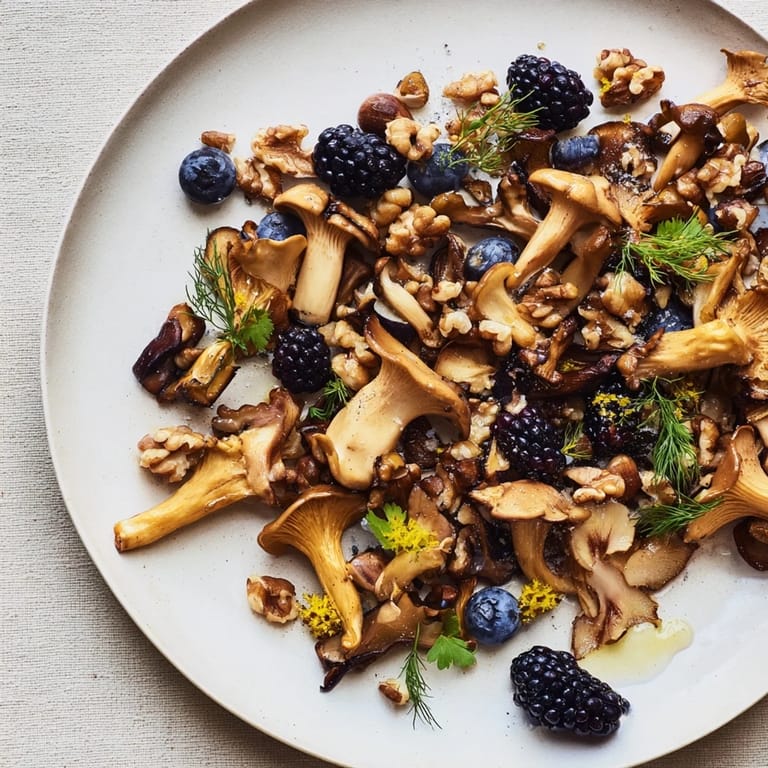
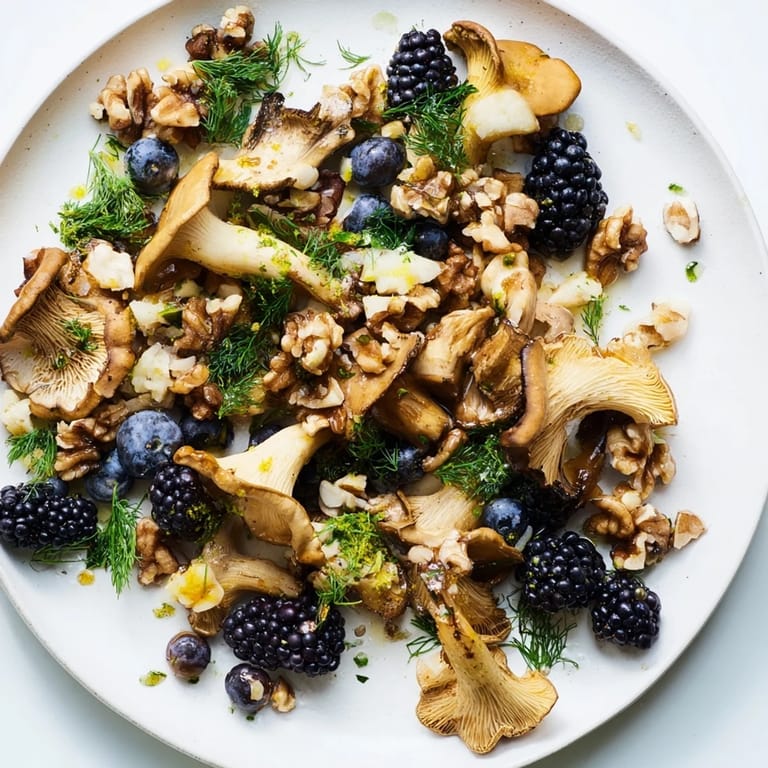
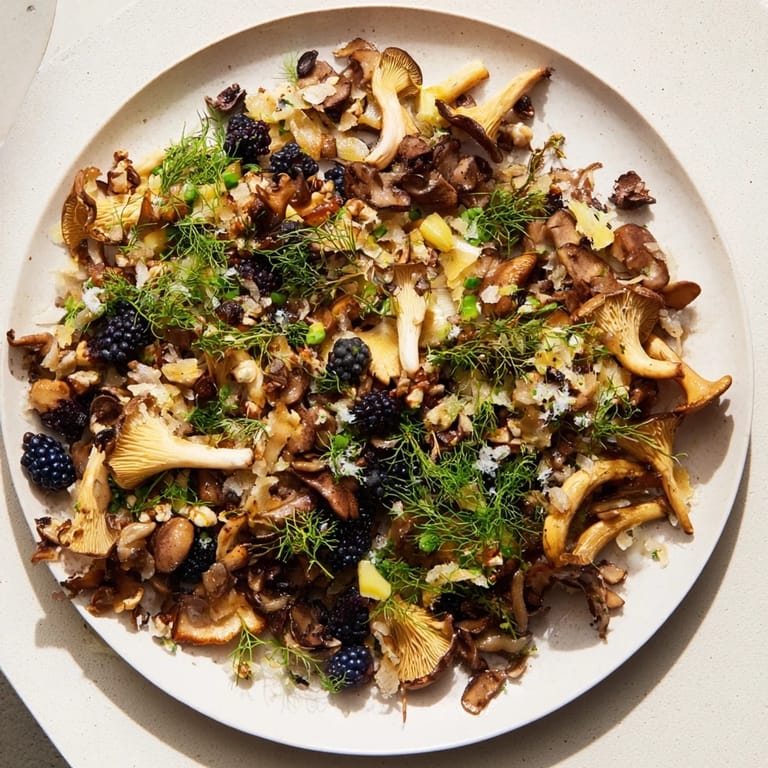
- This is where your instinct matters more than precision. On a large platter or individual plates, begin creating clusters—scatter your cooled mushrooms, then nestle clusters of nuts beside them, and tuck berries into the gaps. Think of it like arranging a woodland scene where things have naturally fallen into place. Don't spread things thinly across the plate; instead, create dense, organic clumps that look like they belong together. Then generously spoon your herb moss around and between these clusters, letting it fill spaces and drape naturally. The green should look abundant, like actual moss covering the forest floor.
- Final Touches:
- If using edible flowers or microgreens, scatter them across the top now—this adds dimension and suggests that something living still inhabits your forest. Serve at room temperature, which is when all the flavors are most alive and clear.
 Pin It
 There's something magical about serving a dish that celebrates where it comes from. When I plate this, I'm thinking about those misty Oregon forests, about the foragers who know exactly where to find these treasures, about how nature has already done the design work—we're just arranging and honoring it. Every time someone takes a bite, I see them pause, taste that combination of earthy and bright, and I know I've shared something real.
Why This Dish Tells a Story
Food from a specific place tastes like memory. This dish tastes like fog rolling through evergreens, like soil after rain, like the exact moment autumn turns into something serious. It's the kind of recipe that doesn't pretend to be something it isn't—it's not trying to be fancy or complicated, just authentic. The beauty comes from the quality of ingredients and the honesty of how they're arranged. That's the Pacific Northwest way—let things speak for themselves, don't overcomplicate.
Customizing Your Forest
This dish is endlessly flexible because forests themselves are. Some seasons I add roasted root vegetables—parsnips and beets add earthiness and a touch of sweetness. Other times I'll include pickled shallots for a little brightness and acid. If someone's vegan, I simply use olive oil instead of butter and the dish loses nothing. I've even added toasted seeds like sunflower or pumpkin when nuts weren't available, and they worked beautifully. Think of this as a template for expressing what grows near you.
Pairing and Serving Wisdom
This works as an appetizer before something light, or as the main event on its own—I've served it both ways depending on the meal. The flavor is delicate enough that it pairs wonderfully with a light Pinot Noir or a crisp dry cider, something that won't overpower the subtle earthiness. If you're serving it at a dinner party, plate everything except the herb moss ahead of time, then add that final green moment just before bringing it to the table—it keeps the herbs from wilting and the moment of presentation feels fresher somehow.
- Have all components cooked and cooled before you start plating—this keeps everything at the perfect room temperature and lets you focus on arrangement rather than rushing
- If you're making individual plates, use the same plating technique on each one but let them be slightly different—they should feel handmade, not industrial
- Taste as you build the layers; the lemon zest in the herb moss is subtle and might need a tiny bit more depending on your lemons
 Pin It
 This is the kind of dish that makes you want to slow down and actually taste your food. It's my reminder that sometimes the most beautiful things are also the most honest.
Recipe Questions & Answers
- → How should the mushrooms be cooked?
Clean and slice the mushrooms, then sauté them in olive oil and butter with minced garlic until tender and golden browned, about 6–8 minutes.
- → Can I substitute the nuts used in the dish?
Yes, pecans or pine nuts can be used instead of hazelnuts and walnuts to maintain the earthy flavor profile.
- → What is the purpose of the herb moss?
The herb moss combines fresh parsley, dill, chervil or tarragon, and chives with olive oil and lemon zest to add a vibrant, fresh note and tie together the forest-inspired flavors.
- → Are there alternative dietary options for this dish?
For a vegan version, simply omit the butter or substitute it with a plant-based alternative without compromising flavor.
- → How should the nuts be prepared before adding?
Toast the nuts on a baking tray at 180°C (350°F) for 8–10 minutes until fragrant and golden, then roughly chop them before use.