 Pin It
 My grandmother used to say that harira was the soup that held our family together, and the first time I made it, I understood exactly what she meant. The kitchen filled with this warm, spiced cloud that smelled like home, like countless afternoons watching her stir the pot with practiced patience. I was skeptical at first—how could tomatoes and chickpeas and cinnamon work together?—but the moment that first spoonful touched my lips, everything clicked. It's the kind of soup that feels like a hug, sweet and savory and deeply comforting all at once.
I served this to friends on a cold November evening, and what started as a casual dinner turned into everyone asking for seconds while we sat around the table talking until the soup went cold. Someone mentioned it tasted like traveling, and that stuck with me—there's something about these layered spices and the tender chickpeas that transports you somewhere warm and unhurried.
Ingredients
- Dried chickpeas: Soaking them overnight yields a creamier texture than canned, though canned absolutely works if you're short on time—just rinse them well to avoid mushy soup.
- Lentils: Use brown or green lentils here; they hold their shape better than red ones, which tend to dissolve into the broth.
- Olive oil: Good quality matters because it's doing real work in the flavor foundation, not hiding behind anything.
- Onion, celery, and carrots: This aromatic base is where the soup's soul begins, so don't skip the slow sauté.
- Garlic: Mince it fine so it distributes evenly and becomes part of the spice layer, not chunks you'll bite into.
- Canned tomatoes: Crushed or whole work equally well; if whole, they'll break down naturally as the soup simmers.
- Ground cumin, cinnamon, ginger, turmeric, and paprika: Toast these spices briefly in the hot oil so they bloom and release their essential oils—this step is everything.
- Vegetable broth: Use a good one with actual flavor, or the soup will taste thin and one-dimensional.
- Tomato paste: A concentrated punch of umami that deepens the entire dish in just a few minutes of cooking.
- Dried apricots: They soften into the broth and add subtle sweetness that balances the spice without being obvious about it.
- Fresh cilantro and parsley: Stir these in at the end to keep their brightness from fading into the warm broth.
- Lemon juice: This is your secret weapon for cutting through the richness and making all the flavors snap into focus.
Tired of Takeout? 🥡
Get 10 meals you can make faster than delivery arrives. Seriously.
One email. No spam. Unsubscribe anytime.
Instructions
- Build the flavor base:
- Heat olive oil in your pot over medium heat, then add the onion, celery, and carrots. Let them soften for 6 to 8 minutes, listening for that gentle sizzle and watching the onion turn translucent—this is where patience pays off.
- Bloom the spices:
- Add minced garlic and all your spices at once, stirring constantly for just one minute until the kitchen smells like a spice market. Don't walk away or you'll miss that crucial moment when the raw spice smell transforms into something warm and fragrant.
- Deepen with tomato:
- Stir in the tomato paste and let it cook for a minute, then add your chopped tomatoes, chickpeas, lentils, and apricots. The soup will look a bit thick and concentrated at this point, which is exactly right.
- Let it simmer:
- Pour in the vegetable broth, bring everything to a boil, then reduce the heat and let it bubble gently for 45 to 50 minutes, stirring occasionally. You'll know it's ready when the chickpeas and lentils are completely tender and the broth has taken on a deep, rich color.
- Finish with brightness:
- Stir in the cilantro, parsley, and lemon juice, then taste and adjust the salt and pepper. The lemon juice will suddenly make all the spices and sweetness come alive in a way that feels almost magical.
- Optional heartiness:
- If you want a thicker, more substantial soup, stir in cooked vermicelli or rice just before serving.
- Serve with warmth:
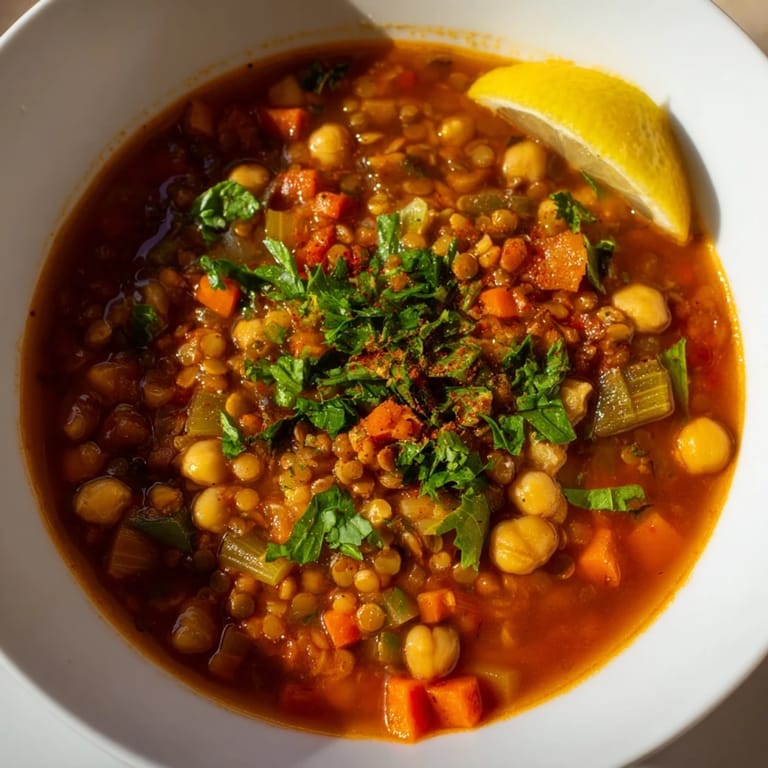
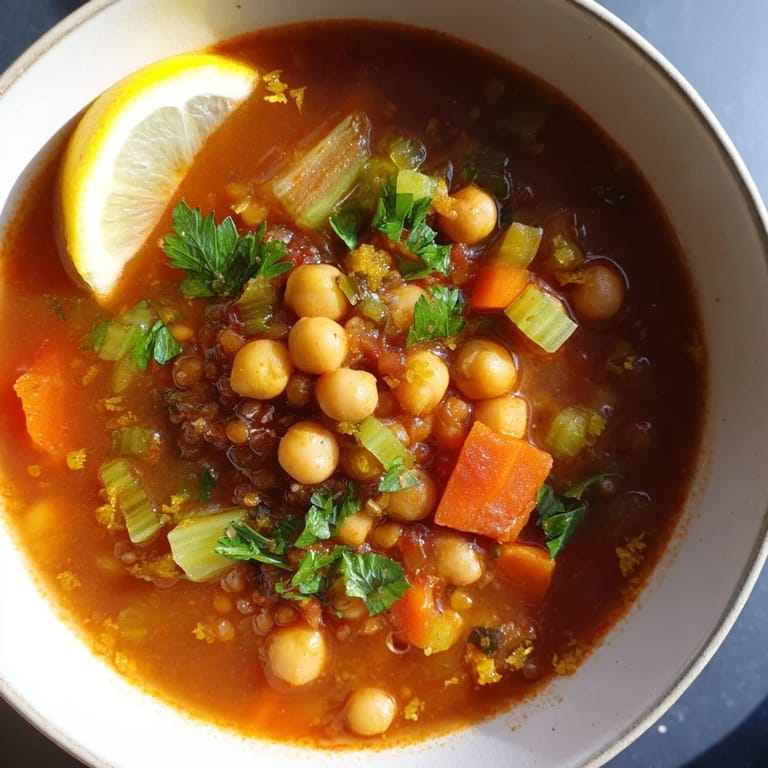
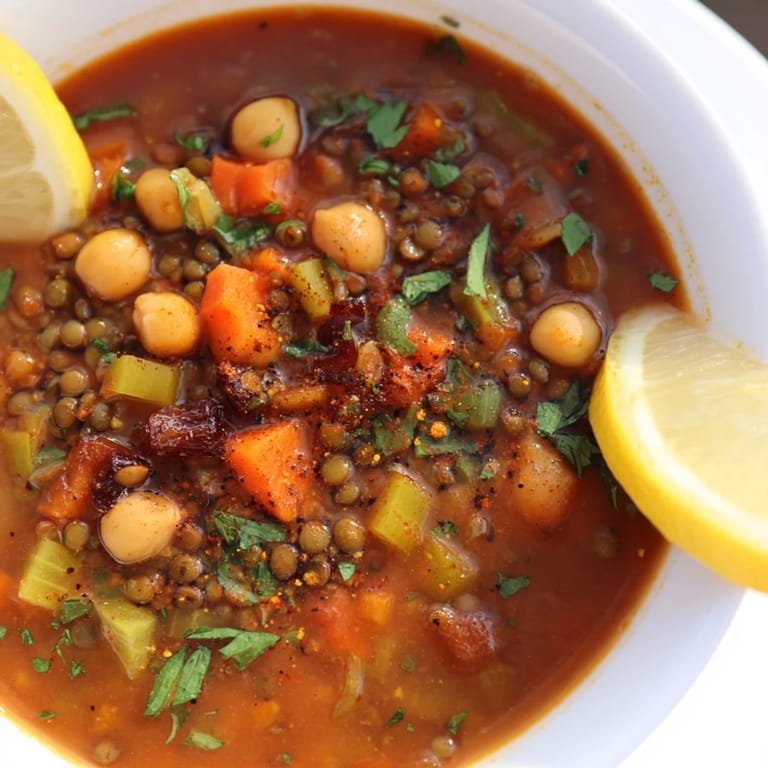
- Ladle into bowls, top with extra fresh herbs and a wedge of lemon, and watch people's faces light up when they taste it.
 Pin It
 I think about the way my neighbor's eyes widened when she tasted this—how she asked for the recipe not because she needed it written down, but because she needed to taste it again and again. That's when I realized this soup wasn't just comfort food; it was a way of saying, 'You matter, and this table, right now, is exactly where you're supposed to be.'
The Spice Story
The first time I made harira, I used the spices separately, stirring them in one at a time, and the result felt disjointed—each spice was shouting instead of singing together. Then I learned to add them all at once to the hot oil with the garlic, and something shifted; they became a unified voice that smells like history and warmth. The cinnamon is there but not sweet, the cumin grounds everything in earthiness, and the ginger gives it a subtle heat that's not about burn but about awakening your mouth. This balance is what makes harira feel so comforting—it's complex but never confusing, spiced but never spicy unless you add that cayenne.
Why Canned Chickpeas Won't Fail You
I used to think dried chickpeas were mandatory, that canned ones were a shortcut for people who didn't really care. Then a friend made this soup with canned chickpeas on a Tuesday night when she had forty minutes instead of an hour, and it was absolutely delicious—slightly creamier even, because canned chickpeas release more starch into the broth. The truth is, soaking dried chickpeas overnight and cooking them gives you more control and a slightly firmer texture, but if you're short on time or didn't plan ahead, canned chickpeas are completely legitimate. Just rinse them thoroughly to wash away the thick canning liquid, and the soup will be just as wonderful.
The Sweet and Savory Dance
What makes harira distinctly North African is its willingness to let sweet and savory coexist without apology. The dried apricots soften into the broth, adding a subtle sweetness that you might not recognize as apricot if you weren't looking for it—it just makes the spices taste more themselves and the tomato taste deeper. The cinnamon reinforces that sweetness without making the soup taste like dessert, while the lemon juice at the end keeps everything sharp and grounded. This balance is why harira works at the table of someone who's fasting, at a celebration feast, or on a random Tuesday when you just need something that tastes like home.
- If the soup tastes too sweet, squeeze in more lemon juice—it's the perfect corrective.
- For a deeper earthiness, add a tiny pinch of saffron or a teaspoon of harissa paste right before serving.
- Cooked vermicelli stirred into the pot just before serving is traditional and makes it feel like an occasion, even if it's just dinner.
 Pin It
 This soup has a quiet way of becoming tradition—the kind of dish you end up making when someone needs feeding, when the weather turns cold, or when you want to remind yourself that simple ingredients cooked with attention can taste like love. Make it often.
Recipe Questions & Answers
- → What legumes are used in this dish?
Chickpeas and lentils form the base, providing a hearty texture and protein.
- → Which spices give this soup its characteristic flavor?
Cumin, cinnamon, ginger, turmeric, paprika, and a hint of cayenne combine for a warm, aromatic taste.
- → Can this dish be made vegan?
Yes, by using plant-based broth and avoiding animal-derived garnishes, it suits vegan diets.
- → What vegetables are included?
Onion, celery, carrots, garlic, fresh cilantro, and parsley contribute flavor and freshness.
- → How can I make the dish heartier?
Adding cooked vermicelli or rice creates a more filling and textured meal.
- → What enhances the sweet and savory profile here?
Dried apricots add a subtle sweetness, balanced by lemon juice’s brightness.