 Pin It
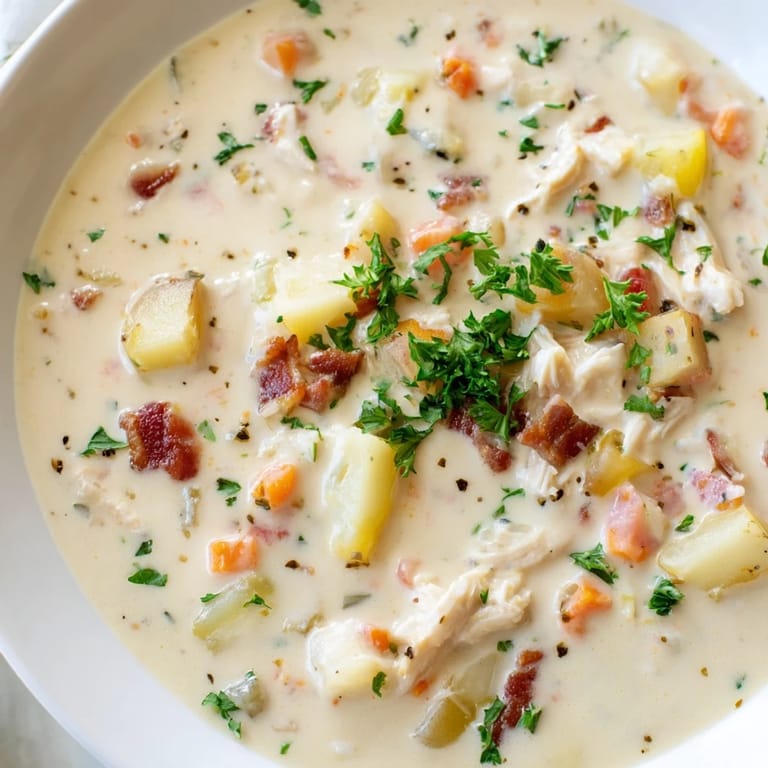
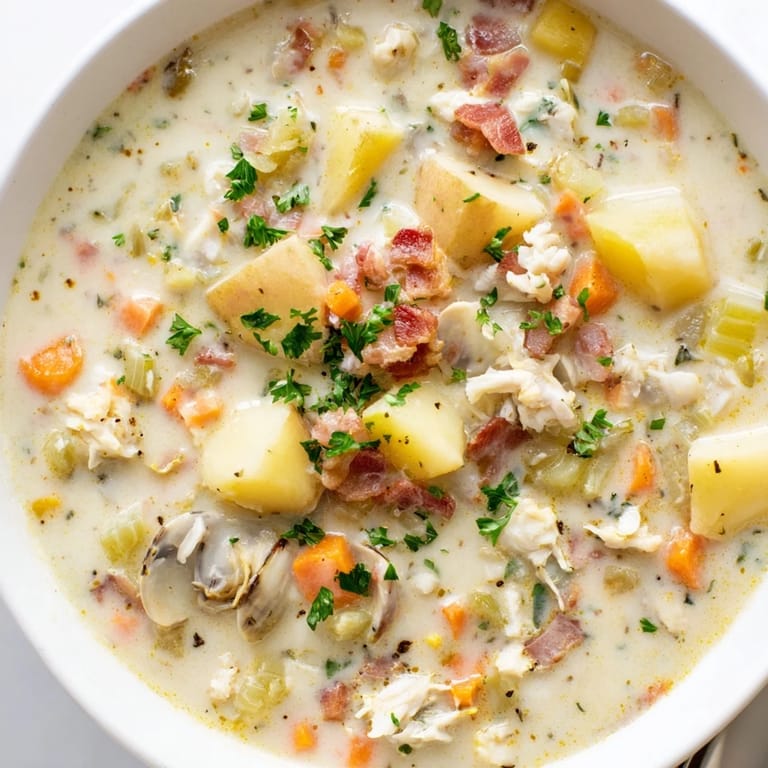
 The first time I made New England clam chowder, I was standing in my kitchen on a gray October afternoon, watching the pot steam as littleneck clams popped open one by one. My grandmother had mentioned it casually over the phone weeks before, how she'd learned to make it from a fishmonger's wife in Boston back in the seventies. I decided to try it without asking for her recipe, just following old instinct and what felt right. That first bowl, with its creamy broth clinging to tender clam pieces and soft potatoes, tasted like I'd somehow gotten something right without even knowing the rules.
I made this for my partner on their birthday, served it in vintage bowls I found at a flea market, and watched their face light up with that specific kind of quiet joy that only happens with food made just for them. They'd never had real clam chowder before, only the canned versions from college dorms, so this felt like finally showing them something that mattered.
Ingredients
- Fresh littleneck clams (2 lbs): Buy them the day you're cooking; they should feel heavy and close tightly when touched. The size matters—littlenecks are perfect, not too small or tough.
- Bottled clam juice (1 cup): This is your insurance policy for briny depth if your steaming liquid isn't quite enough. Always check the label to make sure it's just clams and salt.
- Russet potatoes (2 medium): Their starch helps thicken the broth naturally and they break down just enough without turning to mush.
- Yellow onion, celery, and carrot (1 each, medium): This trio is your aromatic foundation; chop them small so they disappear into creaminess.
- Garlic (2 cloves): Minced fine, it adds whisper-soft depth without announcing itself.
- Heavy cream (1 ½ cups) and whole milk (1 cup): Together they create that signature richness without being overwhelming. Don't skip the milk or it becomes too heavy.
- Unsalted butter (2 tbsp): This carries the flavor of your vegetables into the broth.
- All-purpose flour (2 tbsp): Your thickening agent, combined with butter to make a roux that'll give the chowder body.
- Bacon (2 slices): Rendered bacon fat is where savory magic happens; the smoked bits that stick to the pan are flavor gold.
- Bay leaf and dried thyme: Bay adds subtle structure, thyme brings an herbaceous note that makes you know you're eating something cared for.
- Fresh parsley (2 tbsp): A final brightness that cuts through richness and makes it feel alive.
Tired of Takeout? 🥡
Get 10 meals you can make faster than delivery arrives. Seriously.
One email. No spam. Unsubscribe anytime.
Instructions
- Prepare and steam the clams:
- Rinse your clams under cold running water, scrubbing their shells with your fingers to remove any grit. In a large pot, add the clams and 2 cups of water, bring it to a rolling boil, cover it, and listen for the gentle sound of steam building underneath. After 5–7 minutes, lift the lid carefully—the clams will have cracked open like tiny treasures, releasing their briny juice into the pot.
- Extract the clam meat:
- Let the clams cool just enough to handle, then pop the meat from each shell with a small fork, letting any liquid drip back into the pot. Strain your cooking liquid through cheesecloth or a fine sieve to catch any sand, and chop the clams into rough, bite-sized pieces.
- Build the flavor base with bacon:
- In your Dutch oven, lay out the bacon pieces over medium heat and let them render slowly until crisp and curled, filling your kitchen with that irresistible smoky scent. Remove them with a slotted spoon and set them on a paper towel, but leave every bit of that fat behind.
- Create an aromatic foundation:
- Melt butter into the bacon fat, then add your chopped onion, celery, carrot, and garlic all at once. Stir gently and let them soften for about 5 minutes, until the onions turn translucent and the whole pot smells like a home you want to stay in.
- Make your thickening roux:
- Sprinkle flour over the softened vegetables and stir constantly for about a minute, coating everything in a light paste. This brief cooking removes the raw flour taste and sets up your thickener perfectly.
- Build the broth:
- Pour in your reserved clam cooking liquid and the bottled clam juice slowly, stirring as you go to smooth out any lumps. Scrape the bottom and sides of the pot with a wooden spoon to gather all those browned, flavorful bits that stuck during cooking—that's where the depth lives.
- Cook the potatoes:
- Add the diced potatoes, bay leaf, and thyme, then bring everything to a gentle simmer. Let it bubble quietly for 10–12 minutes until the potatoes are fork-tender but haven't started falling apart.
- Finish gently with clams and cream:
- Lower the heat to the gentlest setting, then stir in the chopped clams, bacon, heavy cream, and whole milk. Simmer for 5–10 minutes, stirring occasionally—the soup will thicken slightly and taste richer with each stir, but never let it come to a boil or the cream can break.
- Taste and season:
- Remove the bay leaf, then taste carefully. Add salt and pepper in small pinches, tasting between each one, because the clam juice is already salty and you don't want to overshoot.
- Serve with warmth:
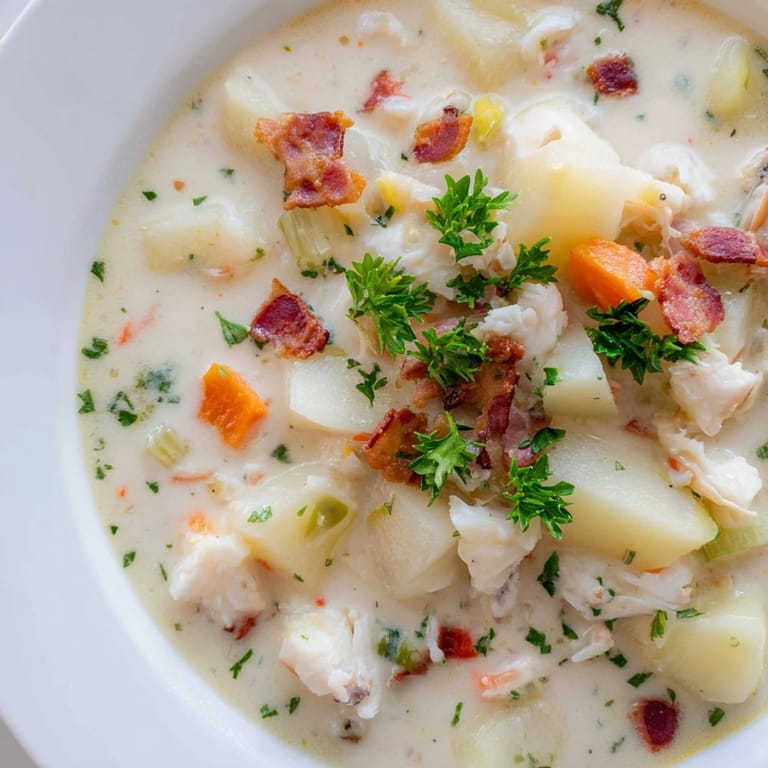
- Ladle into bowls, scatter fresh parsley over the top, and set a sleeve of oyster crackers on the side. The steam will still be rising when you serve it.
 Pin It
 One winter evening, my mother called me while I was finishing a batch of this chowder, and I held the phone to my ear while ladling steaming bowls for myself and a friend who'd stopped by unexpectedly. Hearing her voice reminisce about eating clam chowder at a seaside restaurant when she was young, while the smell of cream and clams and thyme filled my small kitchen, felt like a moment where family and time and food all touched at once.
The Clam Question
Littleneck clams are the sweet spot for chowder—they're big enough to give you real pieces of meat but not so massive that they become chewy. I've learned to buy them from a fishmonger I trust rather than a supermarket when I can, because they've been kept in proper conditions and they're fresher. On the rare day when I can't find littlenecks, I've substituted smaller clams like cherrystones, which works fine as long as you chop them smaller to compensate for their size.
The Thickness Secret
This chowder walks a fine line between soup and stew, and I've learned that your preferred thickness depends entirely on how hungry you are and what bowl you're using. Some nights I want it loose enough to spoon, other nights I want it nearly thick as bisque. The flour-and-butter roux gives you a starting point, but you're in control—mash some potatoes if you want it thicker, add a splash of milk if you want it thinner, and trust your instincts.
Variations and Moments
I've made this recipe a hundred different ways depending on the season and what's in my kitchen. Summer versions feel lighter because I use half-and-half instead of the full cream mixture, and I serve them slightly cooler. Winter versions I make thicker and richer, and I've added a dash of hot sauce on cold nights when I needed that warmth to stay with me longer.
- If you want to lighten it, swap half-and-half for the cream and milk combination without changing a single other step.
- A pinch of smoked paprika stirred in at the very end adds a subtle depth that makes people ask what your secret ingredient is.
- Oyster crackers are optional but they change the whole experience—they soften into the soup and turn it into something you can eat with a spoon and almost forget the crackers were ever there.
 Pin It
 This chowder is the kind of dish that makes people feel taken care of, and that's worth the small effort it takes to make it right. Serve it on days when you want to say something with food instead of words.