 Pin It
 The first time I tasted pastilla, I was caught completely off-guard. Sweet powdered sugar dusting crispy pastry, then—a bite into spiced chicken and eggs that tasted nothing like dessert but everything like magic. I spent months chasing that flavor before finally understanding it wasn't about recreating a restaurant dish; it was about sitting in a friend's kitchen while she layered phyllo with the patience of someone who'd made this a hundred times, explaining how the egg mixture had to be just barely set, how the spices whispered rather than shouted. That's when it clicked: this dish is about balance, timing, and trusting your instincts more than the clock.
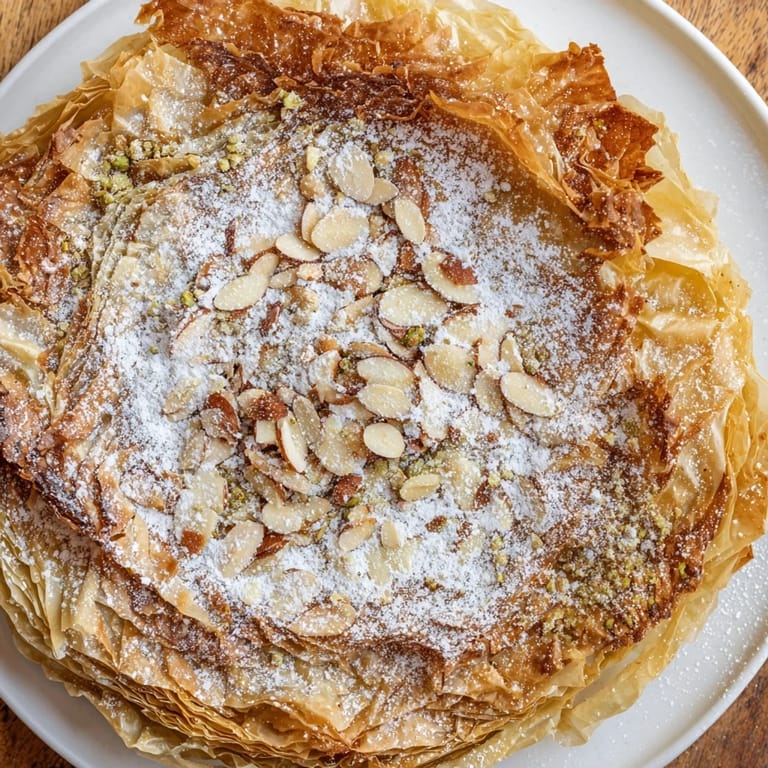
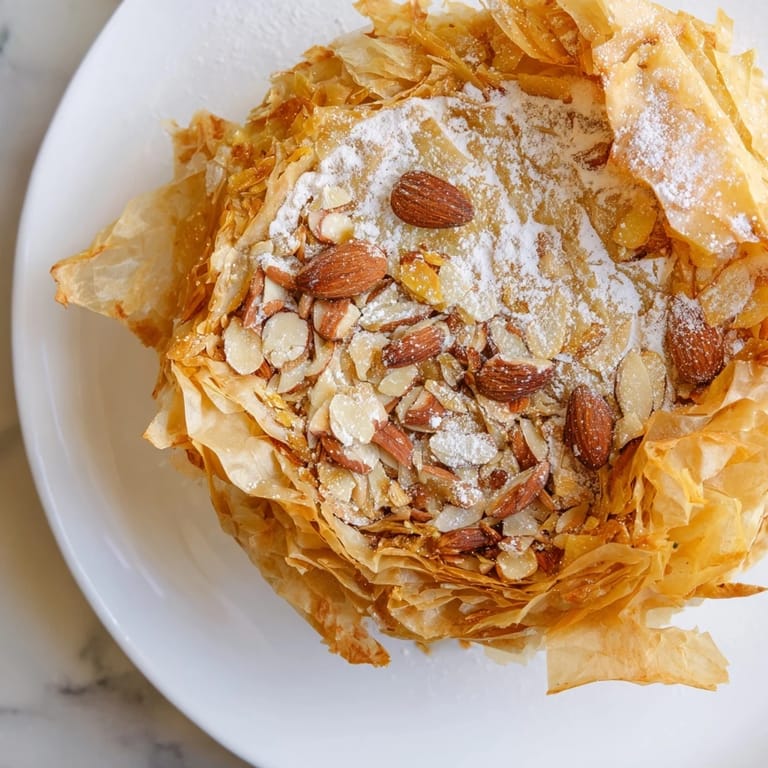
I once made this for a dinner party where someone joked they'd never eat something that sounded like two different desserts fighting each other. By the second bite, they were quiet—the kind of quiet that means a dish just changed someone's mind. The pastilla emerged from the oven bronzed and perfect, and when I dusted it with cinnamon and powdered sugar, the whole table leaned forward. That's the power of this pie: it commands attention without demanding applause.
Ingredients
- Bone-in chicken thighs: Dark meat stays moist during the long simmer and absorbs those spices beautifully—skip the breast meat, it'll dry out before the sauce thickens.
- Ginger, cinnamon, turmeric, nutmeg: These aren't aggressive here; they layer into a warm, almost gentle heat that lets the chicken shine.
- Saffron threads: Not essential, but if you have them, soaking them in warm water first releases their color and earthiness—they're worth the splurge.
- Phyllo pastry: Keep it cold until the moment you use it, and work quickly but without panic; a sheet that tears is still beautiful when butter-brushed.
- Toasted almonds: Toast them yourself just before assembling—they'll add a nuttiness that store-bought versions can't match.
- Fresh herbs: Parsley and cilantro are the final notes of brightness; don't skip or substitute them carelessly.
Tired of Takeout? 🥡
Get 10 meals you can make faster than delivery arrives. Seriously.
One email. No spam. Unsubscribe anytime.
Instructions
- Build your flavor base:
- Heat olive oil and let onions and garlic soften until they're sweet and translucent. This isn't rushing; you're creating the foundation everything else sits on.
- Bloom the spices:
- Add your chicken and spices to those softened aromatics and let them toast together for just a minute or two—you'll smell when it's right, a sudden intensity that fills the kitchen.
- Braise low and slow:
- Cover the pot and let the chicken cook in its own steam and the stock until it's so tender it falls apart when you shred it. This takes about 30–35 minutes, and you'll know it's done when the meat slides off the bone without resistance.
- Reduce your sauce:
- Once the chicken is out, let that cooking liquid bubble gently until it shrinks down to about a cup. It should coat the back of a spoon and taste rich, not watery.
- Bring it together:
- Return the shredded chicken to the pot with the almonds, parsley, and cilantro. This should feel generous, like you're piling flavors on top of flavors.
- Scramble with intention:
- The eggs need to be soft, almost underdone—they'll continue cooking in the oven. Fold them in gently so they stay in small, tender curds.
- Layer the pastry:
- Brush your pan with butter, then lay down phyllo sheets one at a time, brushing each with melted butter. Don't stress about perfect corners; let them hang over the edge—you'll fold them back over the filling.
- Fill and fold:
- Spread that chicken mixture evenly, then fold your overhanging phyllo back over the top like you're tucking a blanket. Layer your final four sheets on top, each one brushed with butter, creating a golden, flaky armor.
- Bake until golden:
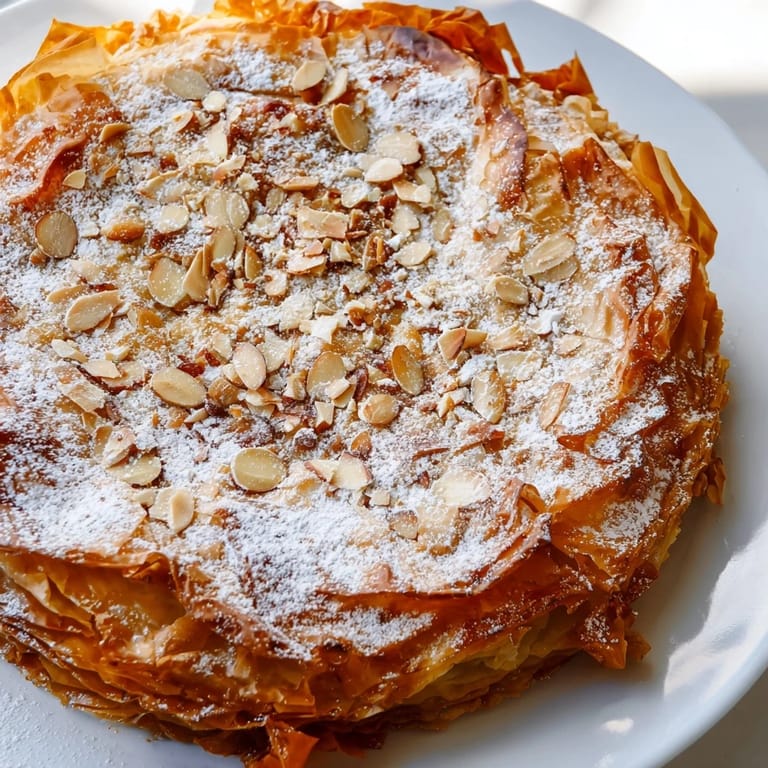
- In a 375°F oven for 35–40 minutes, the pastry should turn a deep, even golden color and sound crisp when you tap it. Let it rest for 10 minutes before slicing—this matters more than you'd think.
- Dust and serve:
- Right before bringing it to the table, dust generously with powdered sugar and cinnamon. This is theater, and it's delicious.
 Pin It
 I remember my friend's grandmother watching me assemble my first pastilla, not offering much commentary until the moment I finished the final phyllo sheet. She tapped the pastry brush against the pan and said, 'Now you understand.' I didn't, not completely, but somewhere between the steam rising from the oven and the smell of toasted almonds meeting caramelized onions, something shifted. That's when I realized this dish is less about technique and more about respecting ingredients enough to let them speak.
Why Phyllo Works Here
Phyllo feels intimidating until you realize it's actually the most forgiving pastry if you stop treating it like delicate crystal. A sheet tears? Butter hides the mistake. You layer it wrong? Butter fixes that too. What phyllo truly does is create contrast—that first crunch against the warm, spiced filling inside is the entire point of this dish. The butter between each layer crisps it into something that sounds as good as it tastes, and the powdered sugar on top plays a visual trick your mouth doesn't see coming.
Timing and Temperature Matter
The oven temperature of 375°F is specific for a reason—hot enough to crisp the pastry before the filling dries out, cool enough that the phyllo browns evenly without burning while the chicken reheats inside. I've made this at 400°F thinking I'd save time, and the top turned dark while the filling stayed lukewarm. Temperature discipline makes the difference between mediocre and memorable. The 10-minute rest after baking is equally important; it lets the structure set so your first slice is clean and proud.
Playing with Fillings and Variations
Once you understand the core technique, this dish becomes a canvas. I've added chopped dried apricots that add a subtle sweetness, or dates for something more assertive. Some cooks use squab or Cornish hen instead of chicken—they're richer, smaller, and feel more traditional if you can find them. The spice blend is flexible too; if turmeric isn't your thing, add more ginger or a pinch of cayenne for heat. What matters is that the filling stays balanced between savory and the cinnamon-sugar finish, and that you taste as you go.
- Dried apricots or dates can be diced and stirred into the filling for a subtle sweetness that plays beautifully against the spices.
- A squeeze of fresh lemon juice at the very end brightens everything and cuts through the richness just enough.
- Toast your almonds mere minutes before assembling to lock in their fragrance and prevent them from becoming bitter.
 Pin It
 This pastilla taught me that the most delicious things in cooking often live in contradiction—sweet and savory, crispy and creamy, simple ingredients transformed into something guests will talk about for years. Make it once, and you'll understand why it's been a showstopper for centuries.
Recipe Questions & Answers
- → What type of meat is best for this dish?
Bone-in chicken thighs provide tender, flavorful meat, but squab or Cornish hen can be used for a traditional touch.
- → How is the filling seasoned?
The filling is infused with a blend of spices including ground cinnamon, ginger, turmeric, nutmeg, black pepper, and optional saffron.
- → What role do the eggs play in this dish?
Soft scrambled eggs are folded into the cooled meat mixture to add richness and help bind the filling before baking.
- → How should the phyllo be handled for best results?
Phyllo sheets are brushed generously with melted unsalted butter and layered to create a crisp, flaky crust when baked.
- → What is the purpose of the powdered sugar and cinnamon topping?
Dusting the baked pie with powdered sugar and cinnamon adds a distinctive sweet note that balances the savory spices.
- → Can the filling be customized?
Chopped dried apricots or dates can be added to the filling for extra sweetness and texture if desired.