 Pin It
 I'll never forget the first time I experienced a proper Mediterranean mezza platter at a small taverna in Athens, surrounded by friends and the warm glow of string lights. The owner's grandmother had just arranged this breathtaking spread before us, and I watched in fascination as everyone naturally gravitated toward different elements, creating this beautiful rhythm of sharing and conversation. That moment taught me that the most memorable meals aren't about perfection—they're about abundance, generosity, and the simple joy of eating together. Now, whenever I create this platter at home, I'm transported back to that evening, and I want everyone around my table to feel that same sense of unhurried togetherness.
I make this platter for almost every gathering now, and what started as a simple appetizer has become the thing people ask me to bring. There's something deeply satisfying about watching a beautifully arranged board disappear, plate by plate, while conversation flows and everyone feels nourished and welcomed.
Ingredients
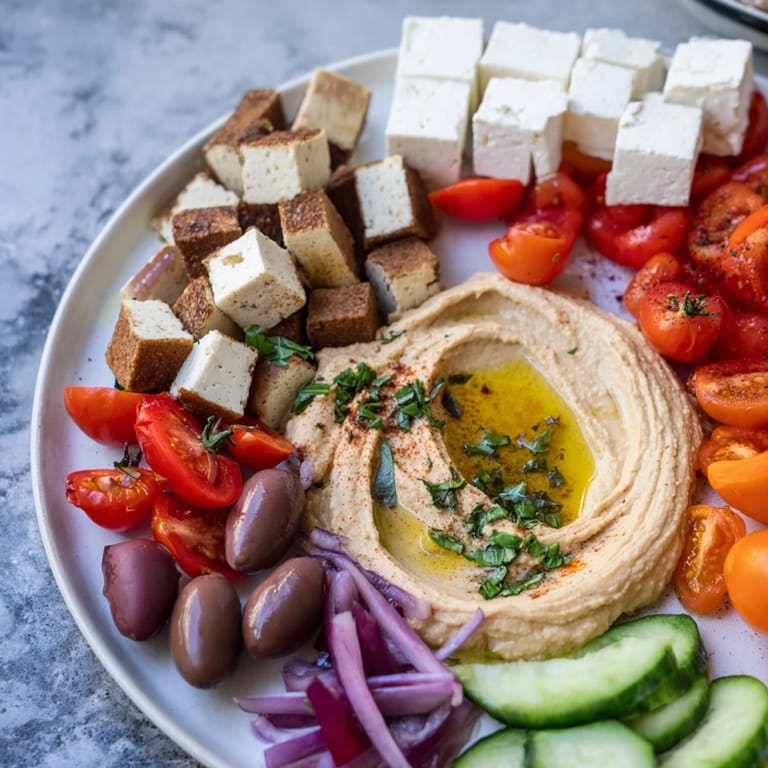
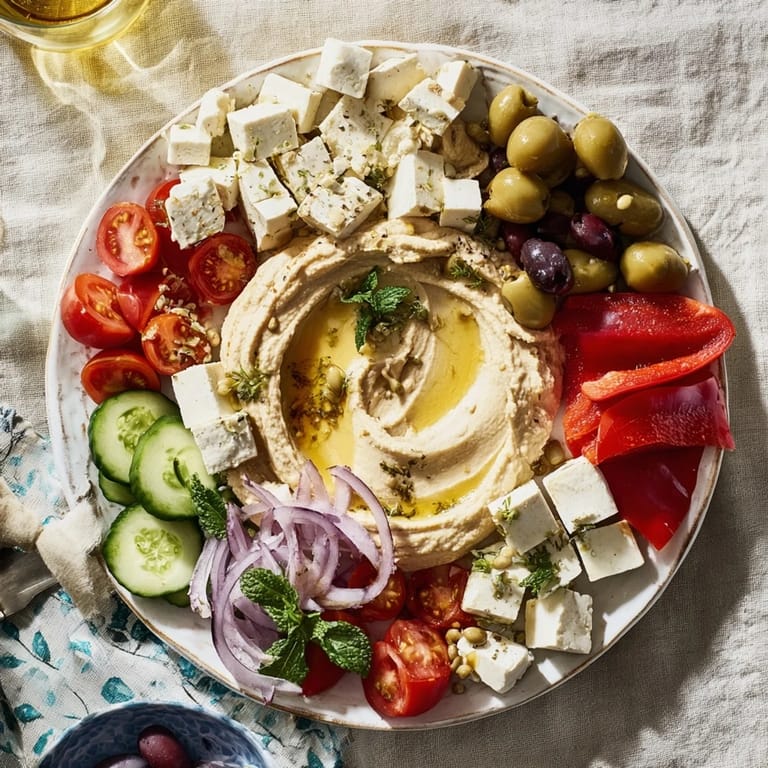
- Classic Hummus (1 cup): This creamy, garlicky base is the heart of any mezza platter. I learned that allowing it to come to room temperature before serving makes it taste so much richer and more voluptuous than straight from the fridge.
- Baba Ganoush (1 cup): That smoky, silky eggplant dip brings a depth that makes people pause and ask what it is. The charred flavor is what makes it special, so don't skip properly charring the eggplant if you're making it fresh.
- Tzatziki (1 cup): Cool, herbaceous, and refreshing, this cucumber and yogurt dip is your palate cleanser. Make sure it's well-chilled so it provides that lovely contrast to the richer dips.
- Feta Cheese (150 g, cut into rustic cubes): I prefer leaving feta in generous chunks rather than crumbles because it invites people to grab a substantial bite. Creamy feta is your friend here—the crumbly kind feels less generous on a platter.
- Cherry Tomatoes (1 cup, halved): Choose the ripest, most flavorful ones you can find. I cut them in half rather than leaving them whole so people can pop them easily, and halving them releases their juice slightly, making them taste more vibrant.
- Cucumber (1 cup, sliced into rounds): The thin rounds feel more delicate and elegant than chunks. I always keep them in ice water until the last moment to ensure they're extra crisp and refreshing.
- Assorted Olives (1 cup): The mix of Kalamata, green, and buttery Castelvetrano olives creates complexity and intrigue. Each variety has its own personality, and together they tell a story of the Mediterranean.
- Roasted Red Bell Pepper (1 roasted pepper, sliced): If you roast these yourself, the flavor deepens beautifully. The slight sweetness and silky texture add a note of indulgence to the platter.
- Red Onion (1 small, thinly sliced): Thin slices soften slightly and add a gentle sharpness that awakens your palate. They're not just decoration—they're a crucial flavor note.
- Pita Breads (2 large, cut into triangles): These are the vehicle for everything else. If you have access to warm pita, that's ideal, but room temperature works beautifully too. Keep gluten-free flatbread on hand for guests who need it—it matters just as much.
- Fresh Parsley (1/4 cup, roughly chopped): I never chop herbs too finely for a platter like this. Rough, generous pieces look abundant and taste fresher because you haven't bruised them.
- Fresh Mint (2 tbsp, torn): Torn by hand rather than cut, so the leaves stay tender and don't blacken. The mint adds brightness and a hint of luxury.
- Extra-Virgin Olive Oil (2 tbsp, for drizzling): This is where good quality truly matters. The olive oil is not just a finishing touch—it's a flavor statement that ties everything together and makes the dips taste even creamier.
- Sumac or Zaatar (1 tsp, optional): If you use it, sumac adds a subtle, beautiful sourness and an earthy spice note that elevates the entire platter. It's the little detail that makes people ask what that special something is.
- Sea Salt and Freshly Ground Black Pepper: Taste as you go and season the dips generously. Many people under-season when creating a platter, but proper seasoning makes everything taste more intentional and alive.
- Marinated Artichoke Hearts (1/2 cup, optional): These add another layer of richness and sophistication. They're already seasoned beautifully, so they require zero additional work.
- Dolmas (1/2 cup, optional): These grape leaves wrapped around rice are a lovely, unexpected addition that feels special and authentic to the Mediterranean.
- Toasted Pine Nuts (1/4 cup, optional): A handful scattered across the platter adds texture and nuttiness. Toasting them yourself changes everything—they go from ordinary to aromatic.
Tired of Takeout? 🥡
Get 10 meals you can make faster than delivery arrives. Seriously.
One email. No spam. Unsubscribe anytime.
Instructions
- Gather Your Canvas:
- Find a large serving platter or wooden board that feels generous and beautiful—this becomes the foundation for your edible art. The size matters because you want room to arrange everything in organic, loose clusters rather than crowding things together.
- Create Your Dip Mountains:
- Spoon your hummus, baba ganoush, and tzatziki into three separate, distinct mounds around the platter, leaving space between them so they become their own focal points. Use the back of your spoon to create slight dimples in the center of each dip, which invites people to dip and also catches a bit of that precious olive oil.
- Anchor With Cheese:
- Place your feta cubes in one generous cluster, perhaps leaving a small amount of space around them so they feel intentional rather than scattered. The feta acts as an anchor point visually and flavor-wise.
- Build With Fresh Vegetables:
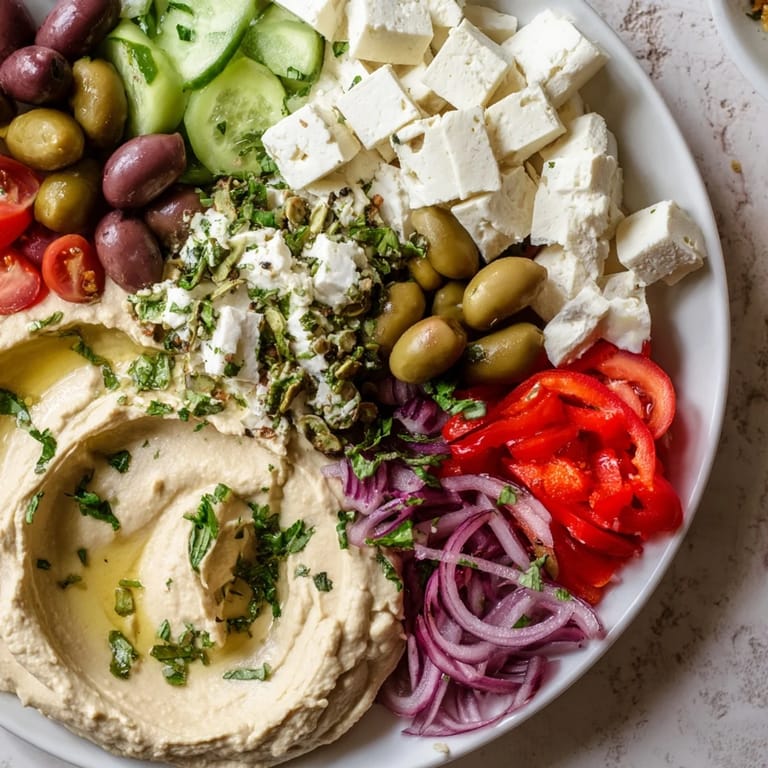
- Now comes the meditative part—arrange your tomatoes, cucumbers, olives, roasted pepper, and red onion in loose, organic mounds around your dips and cheese. Don't overthink this; the beauty comes from a gentle hand and the natural colors speaking for themselves. Group similar items together, but let them flow into each other naturally.
- Position Your Bread:
- Lean your pita triangles against the edge of the platter or create a separate fanned pile—this becomes the practical element that guests will use to scoop and gather the other treasures.
- Scatter the Extras:
- If you're using artichoke hearts, dolmas, and pine nuts, distribute them in small, purposeful clusters throughout the platter, filling any negative space and adding visual interest and variety.
- Drizzle Your Liquid Gold:
- Generously—and I mean genuinely generously—drizzle your best extra-virgin olive oil over the dips, across the cheese, and over some of the vegetables. Watch it settle and catch the light. This isn't stingy; this is celebration.
- Crown With Herbs and Spice:
- Scatter your parsley and mint across the platter, then dust with sumac or zaatar if using. Finish with a final sprinkle of sea salt and freshly ground black pepper. Step back and admire your work—it should look abundant and inviting.
- Serve With Warmth:
- Bring this to the table while everything is still at its freshest, and watch your guests' faces light up. The best part is seeing how they naturally gather around and begin their own exploration of flavors.
 Pin It
 I'll never forget the moment when my usually picky eater sat down at a table with this platter and spent an hour happily moving between different elements, discovering favorites, and building combinations. It wasn't just about the food anymore—it was about independence, exploration, and feeling welcomed to take what you wanted without anyone hovering or insisting. That's when I realized this platter is about so much more than appetizers.
Making It Your Own
The beauty of a mezza platter is that it's infinitely adaptable to what you have, what your guests love, and what speaks to your kitchen. If you're vegan, omit the feta and tzatziki and add grilled vegetables, marinated tofu, or a creamy cashew cheese instead. If you want something heartier, add warm falafel, sliced grilled halloumi, or spiced lamb. If you're working with gluten-free guests, gluten-free flatbread works just as beautifully as pita. The structure remains the same, but your version will be completely your own.
Wine and Pairing Wisdom
The Mediterranean mezza platter practically begs for a crisp white wine or a light rosé—something that cuts through the richness of the dips and cheese while complementing the fresh vegetables. I've learned that Sauvignon Blanc, Verdicchio, or even a good Greek white wine creates this perfect harmony with the flavors on the platter. If wine isn't your thing, sparkling water with fresh lemon, a light herbal tea, or ouzo all work beautifully too. The key is choosing something that feels celebratory and refreshing.
- A crisp wine served cold makes everything taste lighter and more vibrant.
- The acidity in wine helps cleanse your palate between different flavors, so you fully taste each element.
- If you're serving this for a long gathering, offer both wine and non-alcoholic options so everyone feels included.
Building Your Platter Like a Story
Creating a beautiful mezza platter is like telling a story with food. You're inviting people to explore, to discover, to combine elements in their own way. Think about the narrative—start with the creamy comfort of the dips, move through the bright freshness of vegetables, enjoy the salty complexity of cheese and olives, and finish with the warmth of bread. Every cluster on that platter is saying something to your guests: you matter, you're welcome, I want you to enjoy this moment. That intention shines through more than any perfect arrangement ever could.
- Odd numbers of elements (three dips, five vegetable varieties) feel more natural and appetizing than even numbers.
- Contrast is your friend—the creaminess of dips against the crispness of vegetables, the brightness of herbs against the earthiness of olives.
- Leave some breathing room on your platter so it doesn't feel overcrowded; generosity is about quality and intention, not quantity.
 Pin It
 A Mediterranean mezza platter is a gift you give to yourself and everyone around your table—the gift of abundance, simplicity, and connection. Once you create one, you'll find yourself making it again and again because it works every single time.
Recipe Questions & Answers
- → What dips are traditionally included in this platter?
Classics like hummus, baba ganoush, and tzatziki form the creamy base, each adding unique Mediterranean flavors.
- → Can this platter be adapted for vegan diets?
Yes, omitting tzatziki and feta or replacing them with plant-based alternatives makes it suitable for vegans.
- → What breads work best with the mezza arrangement?
Large pita breads are traditional, but gluten-free flatbreads can be used as alternatives without sacrificing taste.
- → How should the platter be served for best presentation?
Arrange ingredients in small, distinct clusters and drizzle olive oil and fresh herbs to enhance both look and flavor.
- → Are there suggested pairings for this Mediterranean selection?
A crisp white wine or a light rosé complements the fresh, vibrant flavors wonderfully.