 Pin It
 My neighbor brought over a warm flatbread last spring, still steaming, the aroma of zaatar so intense it stopped me mid-conversation. She'd just returned from visiting family in Beirut and couldn't wait to share what she'd learned. I took one bite and understood immediately why she kept coming back to that recipe—something about the way the spices clung to the olive oil, the sesame seeds catching the light like tiny toasted gems. That afternoon, she walked me through making it, and I've been making it ever since.
I made these for the first time during a dinner party where someone brought homemade labneh, and suddenly everything clicked into place. The bread soaked up the tanginess perfectly, and people were eating them faster than I could pull them from the oven. That's when I realized this wasn't just a side dish—it was the thing everyone remembered.
Ingredients
- All-purpose flour (2 cups): The foundation that gives you a tender crumb without being too heavy; I've found that measuring by weight keeps results consistent.
- Instant dry yeast (1 teaspoon): Works faster than active dry, so your rise time stays short and manageable.
- Warm water (2/3 cup): Temperature matters here—too hot kills the yeast, too cool and it won't activate, so aim for just warm to the touch.
- Olive oil (2 tablespoons for dough, 1/3 cup for topping): The good oil is for the topping where you'll taste it; the dough oil just needs to be flavorful enough to add richness.
- Zaatar spice blend (1/4 cup): Buy it from a Middle Eastern market if you can; the homemade blends have so much more life than what sits on supermarket shelves for months.
- Toasted sesame seeds (2 tablespoons): Toast them yourself if you have time—the difference between raw and toasted is night and day in terms of flavor and texture.
- Sugar, salt (1 teaspoon each): The sugar feeds the yeast and helps with browning; the salt flavors the dough and keeps the rise from getting out of hand.
Tired of Takeout? 🥡
Get 10 meals you can make faster than delivery arrives. Seriously.
One email. No spam. Unsubscribe anytime.
Instructions
- Gather and bloom your base:
- Combine the flour, yeast, sugar, and salt in a large bowl, then drizzle in the olive oil. The dry ingredients should smell alive and slightly sweet—that's the yeast doing its thing. Gradually pour in the warm water while stirring with your hand, just until a shaggy dough forms that pulls away from the bowl.
- Knead into silk:
- Turn the dough onto a lightly floured surface and knead for 5 to 7 minutes, adding just a whisper of flour if it's too sticky. You'll feel it transform under your hands, becoming smooth and elastic, almost silky—that's when you know it's ready.
- Let it rise in peace:
- Place the dough in an oiled bowl, cover it with a damp cloth, and set it somewhere warm for an hour. By the end, it should have roughly doubled in size, with visible bubbles breaking through the surface—a good sign the yeast has been busy.
- Shape with intention:
- Preheat your oven to 220°C (425°F) and line two baking sheets with parchment paper. Divide the dough into 4 equal pieces, roll each into a ball, then gently flatten into a round about 6 to 7 inches across—don't stress about perfect circles; rustic looks better anyway.
- Create your zaatar paste:
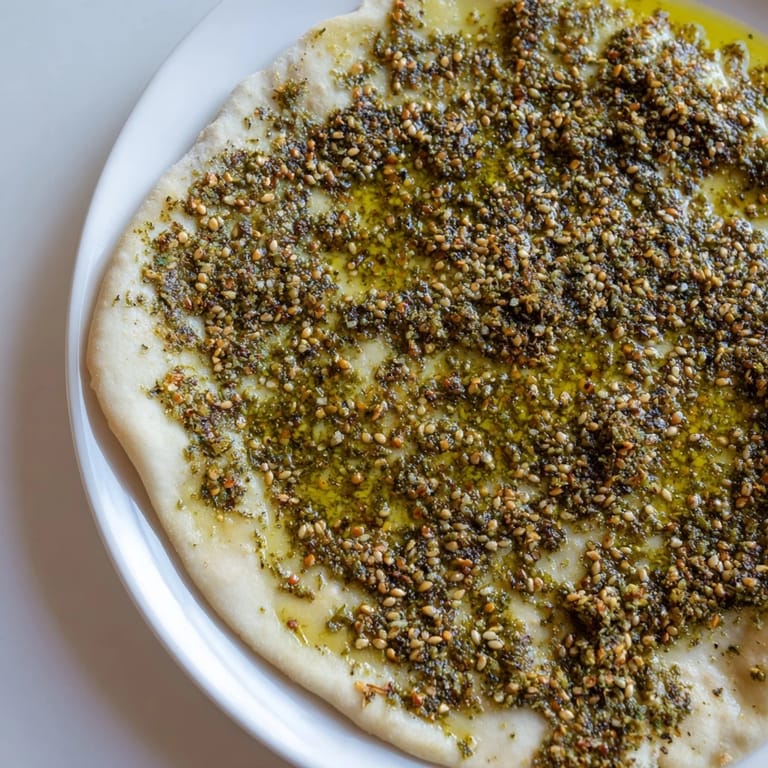
- In a small bowl, stir together the zaatar, toasted sesame seeds, and extra virgin olive oil until it becomes a loose paste that clings together. Taste it if you like—this is your chance to adjust the seasoning before it goes on the bread.
- Top and finish:
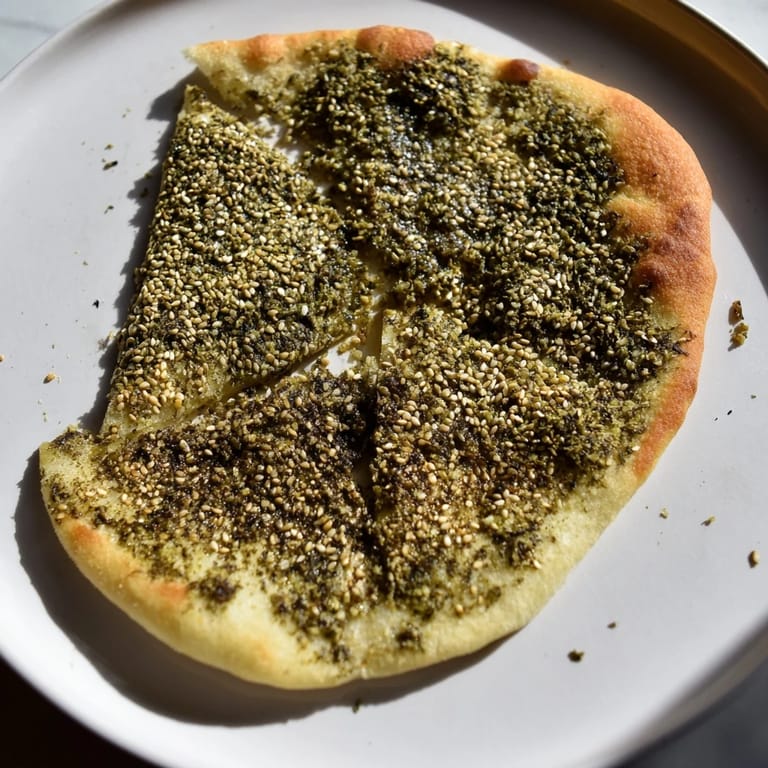
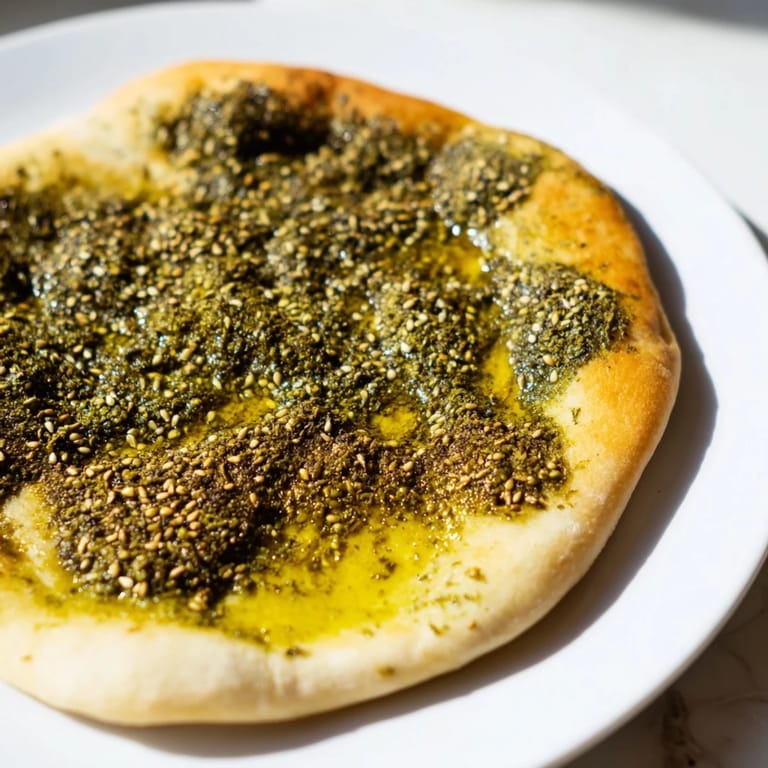
- Spread the zaatar mixture generously over each round, leaving a small border so the edges can turn golden and crispy. Bake for 12 to 15 minutes until the bread is golden and the edges have some char, which means the flavors have concentrated and caramelized.
 Pin It
 I remember serving these at a small gathering where my friend's grandmother was visiting from Syria, and she took one bite, closed her eyes, and nodded with that kind of quiet approval that means everything. She didn't say much, just asked for another one and the recipe, and suddenly I understood that food is how we say things words can't quite capture.
The Magic of Zaatar
Zaatar isn't one thing—it's a conversation between oregano, thyme, sumac, and sesame, each bringing its own voice to the blend. The sumac gives you that subtle tartness without any actual lemon, the thyme and oregano ground it in something warm and Mediterranean, and the sesame adds a toasted depth that keeps you coming back for another bite. When you mix it with good olive oil, you're not just spreading toppings; you're creating a flavor bridge between the bread and everything it will be eaten with.
Timing and Flexibility
One of the kindest things about this recipe is how forgiving it is with timing. If your kitchen is cool, the dough might take 75 minutes to rise instead of 60—that's fine, just let it tell you when it's ready by doubling in size rather than watching the clock. If you're feeding people in a couple hours, you can shape the dough earlier and let it rest on the baking sheets while you finish other things, which actually helps the bread puff up slightly and bake more evenly.
Serving and Storage
These breads shine served warm with thick labneh, good olives, and maybe some sliced tomatoes and cucumber on the side, but honestly they're just as good at room temperature tucked into a basket covered with cloth. They stay soft for a day if kept in an airtight container, and you can even wrap and freeze them before baking, then pull them out when you need something fast that tastes like you spent hours in the kitchen.
- If you want them extra crispy, brush the baked breads lightly with olive oil right after they come out of the oven.
- For a spicy version, mix in a pinch of Aleppo pepper or chili flakes to the zaatar topping.
- Serve with hummus, baba ganoush, or even soft cheese and fresh herbs for an impromptu feast.
 Pin It
 These flatbreads have become my answer to the question "What can I bring?" because they're always welcome, always good, and they say something honest about showing up for people with care. Every time I make them, I think of that first one my neighbor brought, steaming and fragrant, proof that the best recipes are the ones we share.
Recipe Questions & Answers
- → What is the best flour for this bread?
All-purpose flour works well, providing the right gluten structure for a soft yet sturdy flatbread.
- → Can I use fresh yeast instead of dry yeast?
Yes, fresh yeast can be substituted but adjust quantities accordingly and dissolve it in warm water before mixing.
- → How can I achieve a fluffier texture?
Allow the dough to rest for 10 minutes after shaping before adding the topping to help create a lighter texture.
- → Is it necessary to preheat the oven to 220°C?
Preheating to this temperature ensures the bread bakes quickly and develops a golden crisp crust.
- → What are good accompaniments for this bread?
Serve warm with labneh, olives, hummus, baba ganoush, or fresh vegetables for a delicious spread.
- → Can I add spices for extra flavor?
Adding a pinch of chili flakes to the zaatar topping offers a pleasant spicy kick without overpowering the flavors.