 Pin It
 There's a particular moment in any good kitchen when you realize hummus isn't just something you buy in a tub—it's something that tastes entirely different when you make it yourself. I learned this years ago during a lazy weekend afternoon when a friend from Beirut casually pulled out a food processor and showed me how chickpeas and tahini could transform into something so silky it barely needed the plate. The smell of sesame and fresh lemon filled the kitchen, and suddenly I understood why this simple dip shows up on every Levantine table.
I made this for a dinner party once where I was nervous about the menu, and someone asked for seconds of just the hummus before we'd even started the main course. That's when I realized good food doesn't need to be complicated—sometimes it's just about getting the balance right between the tang of lemon, the nuttiness of tahini, and the patience to blend until it's genuinely creamy.
Ingredients
- Chickpeas: Use canned and rinsed for convenience, or cook dried ones if you have the time—either way, they're the foundation that gives hummus its substance and protein.
- Tahini: This is non-negotiable and worth buying good quality; cheap tahini tastes chalky and separates, while the real stuff is luxuriously creamy.
- Lemon juice: Freshly squeezed only—bottled lemon juice tastes like pennies and will disappoint you every time.
- Garlic: One small clove is plenty; garlic hummus should whisper, not shout.
- Cold water: This is your secret weapon for getting the perfect consistency without thinning the flavor.
- Ground cumin: It adds warmth and depth that makes people wonder what you did differently.
- Sea salt: Fine salt dissolves cleanly; you can taste it rather than feel it gritty.
- Extra virgin olive oil: Save this for the drizzle on top where it actually matters for flavor.
- Paprika or sumac: This is pure visual and flavor drama in a pinch—sumac if you can find it for that bright, lemony edge.
- Fresh parsley: The green on top isn't just decoration; it's a little burst of freshness in each bite.
Tired of Takeout? 🥡
Get 10 meals you can make faster than delivery arrives. Seriously.
One email. No spam. Unsubscribe anytime.
Instructions
- Gather everything:
- Before you touch the food processor, make sure your tahini isn't stuck to the bottom of the jar and your lemon is rolled on the counter to release more juice. This takes 30 seconds and changes everything.
- Combine and blend:
- Add chickpeas, tahini, lemon juice, garlic, cold water, cumin, and salt to the food processor. Blend hard, stopping to scrape the sides every 20 seconds or so—the chickpeas need serious encouragement to break down into something silky.
- Adjust the texture:
- If it looks thick and pasty, add cold water one tablespoon at a time and blend again. You're looking for something that holds a soft peak when you drag a spoon through it, not soup.
- Taste as you go:
- Pinch a little on your finger and think—does it need more salt, more lemon brightness, more cumin warmth? Season as you discover what it needs.
- Plate it beautifully:
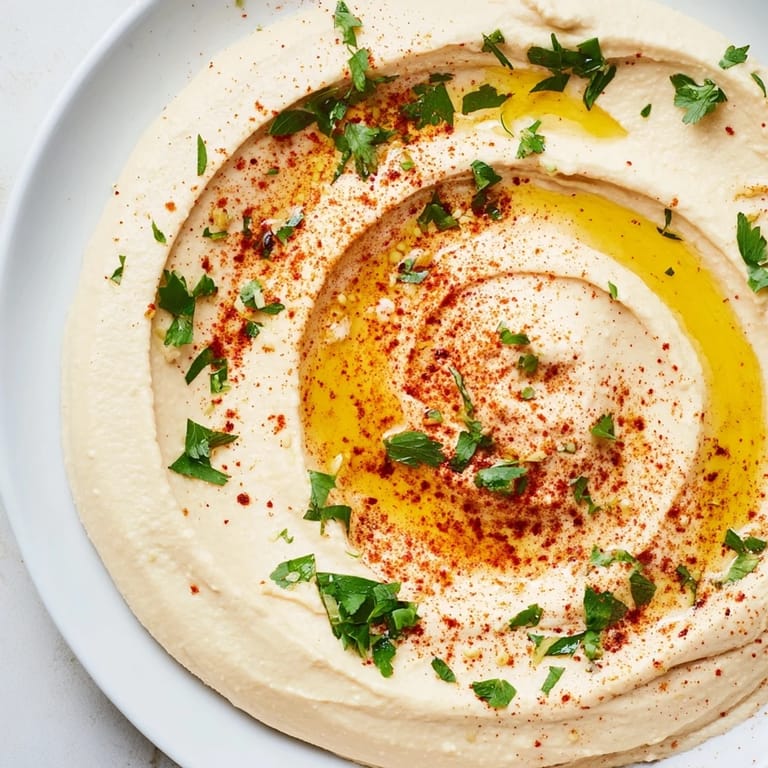
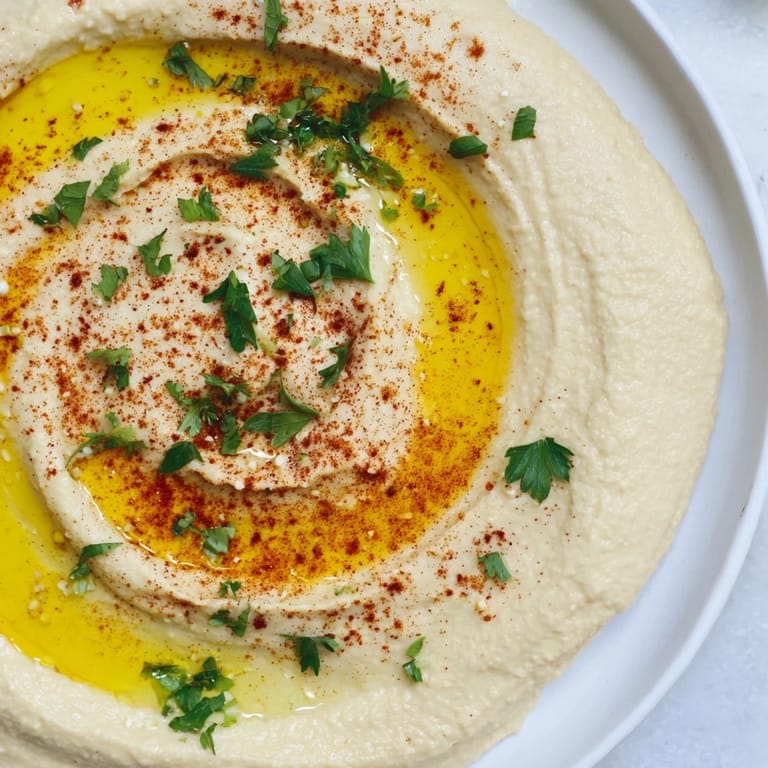
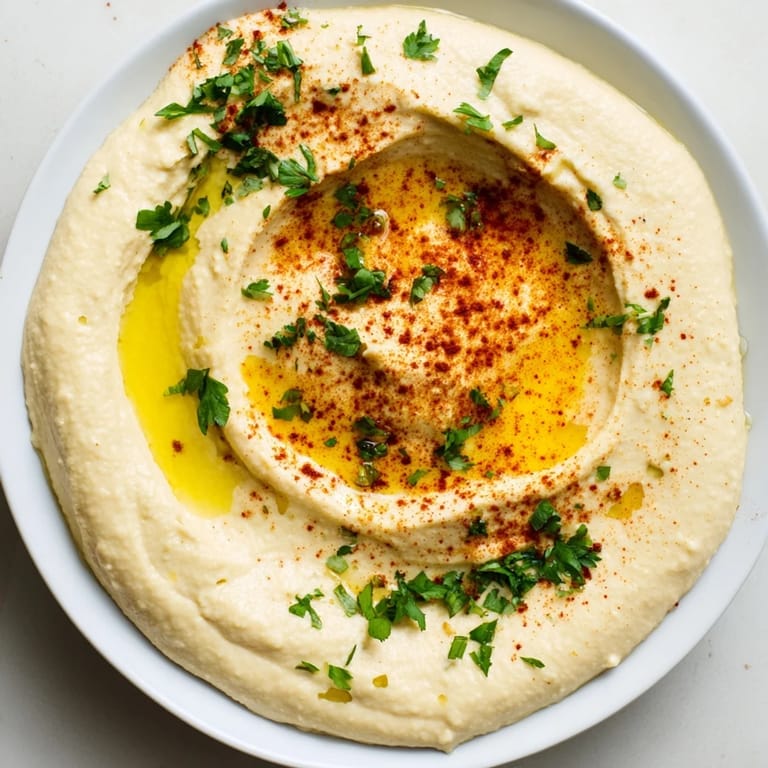
- Spread the hummus into a shallow dish and use the back of a spoon to make a little well in the center, creating ridges. This isn't fancy; it's functional and classic.
- Finish with care:
- Drizzle that good olive oil into the well and around the edges, dust with paprika or sumac, scatter parsley on top, and step back to admire your work before serving it warm or at room temperature.
 Pin It
 The best moment with hummus comes when someone tears off a piece of warm pita, loads it up, and closes their eyes for a second like they've just discovered something. You'll watch that happen, and you'll know exactly why this dish has survived thousands of years.
Why Homemade Tastes Like Home
Store-bought hummus often has stabilizers and gums that make it feel plasticky on your tongue, but when you make it yourself, it's just five or six ingredients doing what they're meant to do. The moment you taste real tahini hitting real chickpeas, you'll understand why people get protective about their hummus recipes. It's not snobbery—it's honestly just better, and the difference is so obvious that you'll never quite forgive yourself for buying it before.
Serving and Sharing
Hummus is meant to be social—it sits in the center of the table and brings people together without asking for anything fancy in return. Warm pita, fresh vegetables, maybe some olives alongside, and suddenly you've created the kind of meal that feels generous without being stressful. It works equally well as an emergency appetizer when someone drops by, or as the anchor of a proper mezze spread when you're cooking for a crowd.
Keeping It Fresh and Customizing It
Hummus stores beautifully for up to four days in the refrigerator as long as you keep it in an airtight container, and the flavors actually improve as it sits. If you find yourself wanting variation, a whisper of cayenne for heat or roasted red peppers blended in are both traditional directions that don't complicate the recipe. This is also your chance to taste and remember that seasoning is personal—what tastes perfect to you might need another squeeze of lemon in someone else's mouth, and that's completely fine.
- Cold hummus is fine, but letting it sit at room temperature for 20 minutes before serving unlocks more flavor.
- If you want to peel the chickpeas before blending for ultra-silky texture, do it while they're still warm from rinsing.
- Hummus keeps up to four days refrigerated, but honestly, it rarely lasts that long once someone discovers you made it.
 Pin It
 This is the kind of recipe that teaches you that sometimes the simplest things, made with attention and good ingredients, become the dishes people actually remember. Make it once, and it becomes yours.
Recipe Questions & Answers
- → What ingredients create the creamy texture?
Chickpeas blended with tahini, lemon juice, and a bit of cold water form the silky and creamy texture.
- → How can the spread be made smoother?
Peeling chickpeas before blending and gradually adding water helps achieve an ultra-smooth consistency.
- → What garnishes enhance the final flavor?
Extra virgin olive oil, a sprinkle of sweet paprika or sumac, and chopped fresh parsley add aroma and visual appeal.
- → How is seasoning balanced in this preparation?
Salt, ground cumin, and fresh lemon juice are adjusted to taste after blending to ensure balanced flavors.
- → What dishes complement this spread best?
It pairs well with warm pita bread, crisp cucumber slices, or carrot sticks for a refreshing texture contrast.
- → Is this suitable for special dietary needs?
This blend is naturally vegan, gluten-free, and dairy-free, making it friendly for many dietary preferences.