 Pin It
 There's something about the smell of falafel hitting hot oil that takes me straight back to a bustling market in Beirut, where an elderly vendor named Um Hassan would fry batch after batch with practiced ease, the golden balls emerging crispy and perfect every single time. I spent an afternoon watching her work, asking questions in broken Arabic, and she finally handed me her secret: use whole dried chickpeas, never canned, and know the exact moment when the mixture feels like damp sand in your palms. That lesson stuck with me, and now whenever I make these at home, I chase that same golden-brown perfection she achieved so effortlessly.
I learned the real power of homemade falafel when I brought a container to a potluck and watched people go silent between bites—not because anything was wrong, but because they were tasting something genuine for the first time. One friend asked if I'd bought them from somewhere special, and I realized that most people have only ever had the dense, heavy versions from the grocery store freezer aisle. That moment made me understand that this recipe isn't just about technique; it's about texture and flavor that you simply can't replicate without starting with whole chickpeas and fresh herbs.
Ingredients
- Dried chickpeas (1 cup): Must be soaked overnight and kept whole—canned chickpeas are too soft and will make mushy falafel instead of crispy ones.
- Fresh parsley and cilantro (1.5 cups combined): These herbs are the soul of the recipe; use them generous and fresh, as they brighten every bite.
- Onion and garlic (1 small onion + 3 cloves): Finely mince these into the processor so they distribute evenly and create an aromatic base.
- Cumin and coriander (2 tsp + 1 tsp): These ground spices are where the warm, earthy Levantine flavor comes from; toast them in a dry pan first if you want even more depth.
- Baking powder (1 tsp): This helps the falafel puff slightly during frying, creating that delicate interior texture.
- All-purpose flour or chickpea flour (3 tbsp): Use just enough to bind; too much makes them dense and heavy.
- Vegetable oil (for frying): Choose a neutral oil with a high smoke point like sunflower or peanut oil.
Tired of Takeout? 🥡
Get 10 meals you can make faster than delivery arrives. Seriously.
One email. No spam. Unsubscribe anytime.
Instructions
- Soak the chickpeas:
- Rinse dried chickpeas under cold water and place in a large bowl, covering them generously with cold water. Let them sit overnight or up to 12 hours—they'll double in size and become tender enough to pulse but firm enough to hold their shape. Drain well and pat completely dry before moving forward.
- Build the mixture:
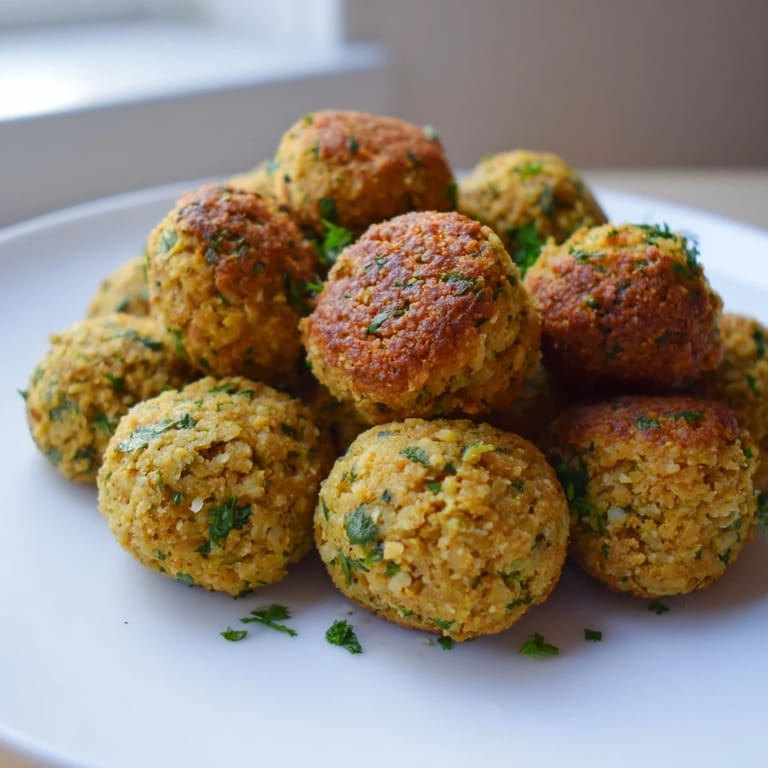
- Combine drained chickpeas, chopped onion, garlic, parsley, and cilantro in a food processor, pulsing until the texture is coarse and crumbly—almost like damp sand. You want to feel small bits of herbs and chickpea throughout, not a smooth paste.
- Season and blend:
- Sprinkle cumin, coriander, cayenne (if using), baking powder, salt, pepper, and flour over the mixture, then pulse gently just until combined. Scrape the bowl, mix by hand to ensure everything is evenly distributed, and taste for seasoning.
- Shape with damp hands:
- Wet your hands slightly and form the mixture into balls about 1½ inches in diameter, working gently so they hold together without becoming too compact. If the mixture feels too loose and won't hold shape, sprinkle in a bit more flour and fold it in.
- Heat oil to temperature:
- Pour about 2 inches of vegetable oil into a deep pot and warm it to 350°F (175°C), using a thermometer to check. The oil should shimmer and move freely but not yet be smoking.
- Fry in batches:
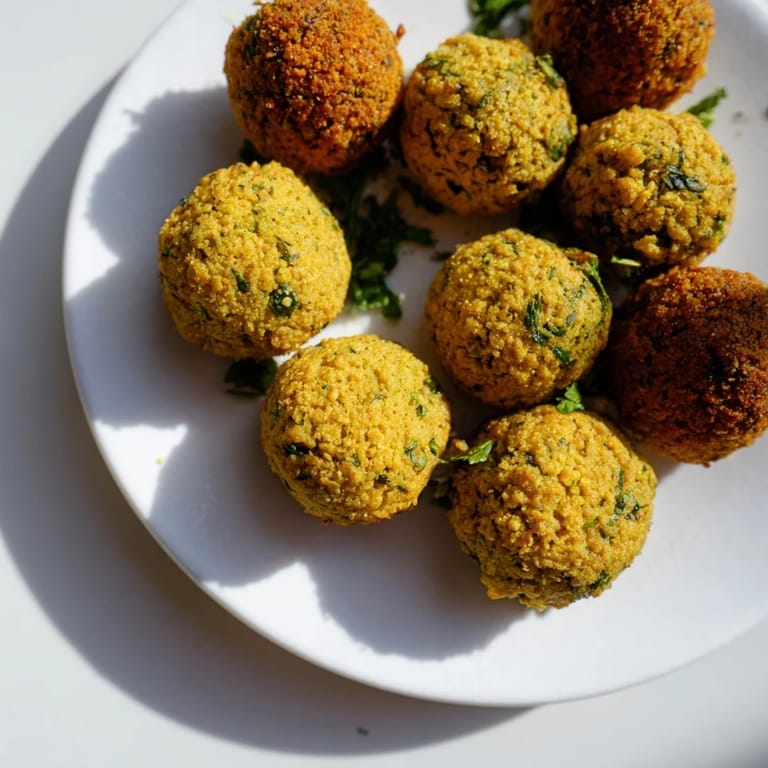
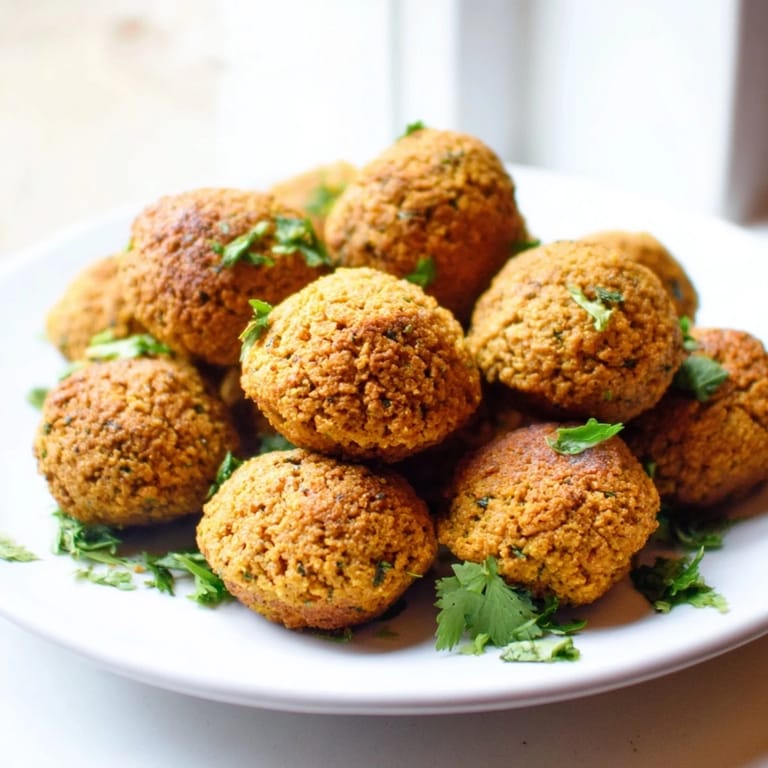
- Carefully place 4–5 falafel into the hot oil and fry for 3–4 minutes, turning them gently with a slotted spoon halfway through so they brown evenly. They're done when they're a deep golden-brown, almost mahogany, with a crisp exterior.
- Drain and serve:
- Transfer fried falafel to a paper towel–lined plate to cool slightly, allowing excess oil to drain. Serve warm in pita bread with tahini sauce, fresh tomatoes, cucumbers, and pickles, or on a mezze platter alongside hummus and tabbouleh.
 Pin It
 I once made these for a dinner party and got so caught up in conversation that I forgot to turn off the heat under the oil. My partner noticed the smell shifting and gently pulled me back to reality just in time—one second longer and the batch would have burned. That near-miss taught me that falafel demands your presence and attention; they fry fast, and watching them is part of the meditation of the process.
The Secret of Whole Chickpeas
Canned chickpeas are convenient, but they're simply too soft for falafel. The soaking step isn't just tradition; it's the difference between biting into something light and crispy versus something that feels heavy in your mouth. When you soak whole dried chickpeas, their structure changes—they soften just enough to bind when processed, but they keep a slight firmness that creates that perfect contrast between the exterior crust and the fluffy interior. Once you make them this way, you'll never want to go back.
Herbs: The Unexpected Star
Many recipes skimp on fresh herbs, but they're truly what make Levantine falafel taste alive and bright. Parsley and cilantro aren't just garnish here; they're building blocks of flavor that travel through every bite. I've learned that the fresher and more generous you are with these herbs, the more people will be surprised by how vibrant the falafel tastes. Don't measure too carefully—if you have extra herbs, use them all, and if your parsley looks especially verdant at the market, buy an extra handful.
Temperature and Oil Wisdom
The magic happens between 350°F and 360°F, and I learned this through trial and error on my stove. Too low, and you'll watch them sink like stones and absorb oil; too high, and they brown in seconds while staying raw inside. Get yourself an instant-read thermometer if you don't have one—it's the single best investment for making fried foods at home. One more thing: never skip letting the oil come back up to temperature between batches, or your second round will be oily and pale.
- Keep a slotted spoon nearby and be gentle when turning them; they're delicate until they're fully crisp.
- If you're frying for a crowd, keep finished falafel warm on a wire rack rather than piling them on paper towels, which can trap steam and make them soggy.
- Fresh falafel should be served warm and eaten within a few hours, but they freeze beautifully raw and can be fried straight from the freezer if needed.
 Pin It
 These falafel have a way of bringing people together—whether crammed into warm pita at a casual lunch or arranged on a platter for sharing, they taste like home and hospitality no matter where you make them. Every time you fry a batch, you're honoring a long tradition of Middle Eastern cooking and creating a moment of real, genuine flavor.
Recipe Questions & Answers
- → What is the best soaking time for chickpeas?
Soaking dried chickpeas for 8–12 hours softens them, ensuring the right texture for crispy falafel balls after cooking.
- → Can these balls be baked instead of fried?
Yes, brush them with oil and bake at 400°F (200°C) for 20–25 minutes, turning halfway for a tender yet slightly crisp finish.
- → What herbs enhance the flavor of these balls?
Fresh parsley and cilantro provide bright, fresh notes that complement the warm spices and chickpeas beautifully.
- → How do spices like cumin and coriander affect the taste?
Cumin and coriander add a warm, earthy depth, creating a rich, aromatic profile that defines the Levantine flavor.
- → What is the ideal oil temperature for frying?
Maintain the oil at 350°F (175°C) to achieve a perfectly golden and crisp exterior without absorbing excess oil.
- → Are there gluten-free options for binding?
Yes, substituting all-purpose flour with chickpea flour works well as a gluten-free binder while complementing the legume base.