 Pin It
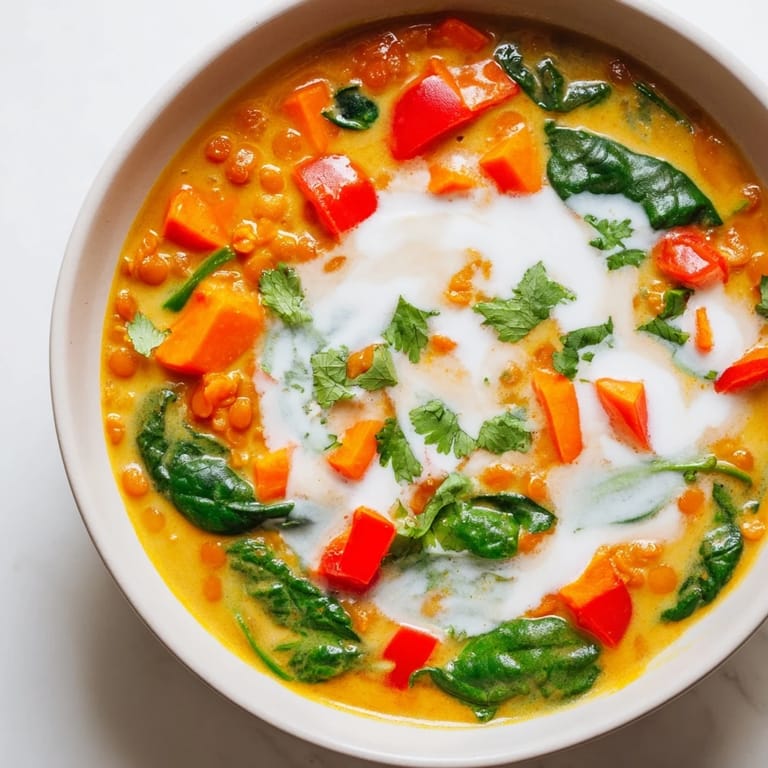
 There's something about the smell of red curry paste hitting hot oil that stops me mid-breath. I discovered this soup on a rainy Tuesday when I was rummaging through my pantry, wanting something warm and substantial but not heavy. The combination of coconut milk and lentils felt like an accident waiting to happen, but it turned into one of those dishes I make without thinking now, the kind that fills your kitchen with the kind of steam and spice that makes you forget what season it is.
I made this for my neighbor last winter after she mentioned craving something warm and nourishing. Watching her take that first spoonful, eyes closing slightly at the spice and creaminess, made me realize why this soup has become my default answer to the question "what are you making?". It's humble enough to eat alone on the couch but interesting enough to feel like you're treating yourself.
Ingredients
- Red lentils: They dissolve slightly into the broth, creating a natural creaminess without any dairy. Rinsing them matters more than you'd think—it removes excess starch and keeps the soup clear.
- Onion, garlic, and ginger: This trio is non-negotiable; the ginger especially brings a subtle heat that plays beautifully with the curry paste.
- Red bell pepper and carrot: They add sweetness and body. Don't skip them thinking they're just filler—they're building flavor.
- Baby spinach: Added at the very end, it wilts into the hot broth and adds iron without turning the soup dark and muddy.
- Coconut milk: Use full-fat; the light version leaves the soup tasting thin and one-dimensional. Shake the can well before opening.
- Red curry paste: The heart of this soup. Thai curry pastes vary wildly in heat, so taste as you go. I usually start with two tablespoons and add more if needed.
- Vegetable broth: Good broth makes the difference between soup that tastes like boiled vegetables and soup that tastes intentional.
- Lime juice: Never skip this final squeeze. It wakes up every flavor and cuts through the richness.
Tired of Takeout? 🥡
Get 10 meals you can make faster than delivery arrives. Seriously.
One email. No spam. Unsubscribe anytime.
Instructions
- Build your flavor base:
- Heat the oil in a large pot over medium heat, then add the diced onion. Let it soften for three minutes until it starts to turn translucent and smell sweet. Once you add the garlic and ginger, you'll know it's right when the kitchen smells like a Thai restaurant—that's when you know the aromatics are awake.
- Toast the curry paste:
- This step seems small but it matters tremendously. Stir in the curry paste and turmeric, letting them cook for a minute or two in the oil. This releases the essential oils and transforms the paste from sharp and one-note to warm and complex.
- Soften the vegetables:
- Add the harder vegetables—carrot, bell pepper, and zucchini if using—and give them a couple minutes in the spiced oil. They'll start to absorb the flavor while still keeping their shape.
- Bring it together:
- Add the rinsed lentils, coconut milk, and broth. Stir well and bring everything to a boil, then immediately drop the heat and let it simmer gently for 20 to 25 minutes. You're waiting for the lentils to soften enough to break easily with a spoon but not so much that they've completely dissolved.
- Finish with brightness:
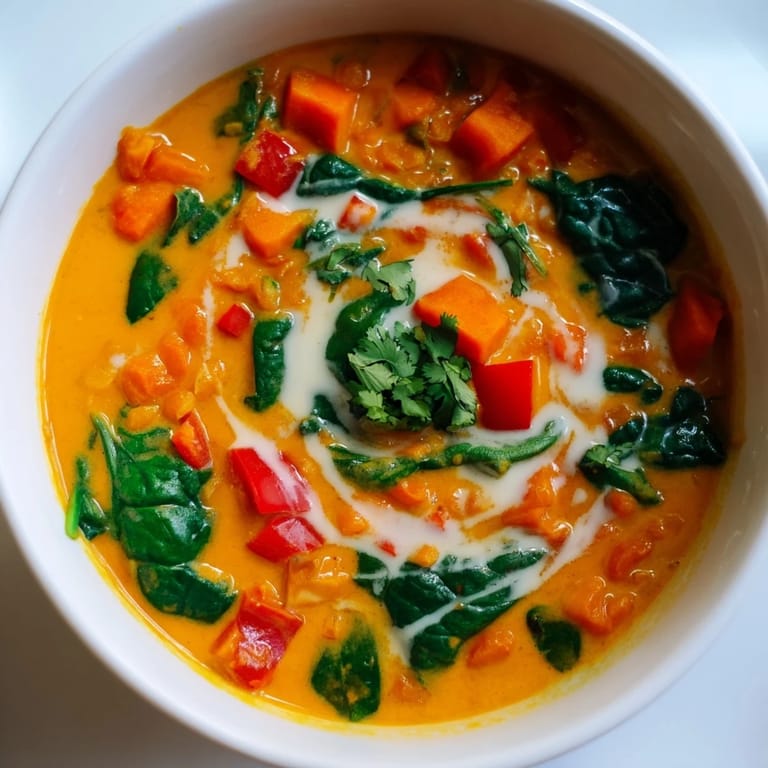
- Stir in the spinach and let it wilt for about two minutes. Add the lime juice last—it should brighten everything without making the soup taste citrusy. Taste and adjust salt as needed.
 Pin It
 The first time someone told me this soup made them feel better, really better, not just warm-in-the-belly but actually better, something clicked. Food that heals isn't always fancy. Sometimes it's just the right vegetables talking to the right spices, and you paying attention.
Flavor Balancing Act
Red curry soup is a conversation between heat, creaminess, and acidity, and you control how loud each voice gets. If the soup tastes one-dimensional when you finish it, it's usually missing one of these elements. Too rich? Add more broth or a squeeze more lime. Too sharp? A splash more coconut milk smooths it out. Too mild? Add the extra curry paste and let it cook for a minute to bloom. This soup teaches you to taste as you cook and trust your instincts.
What to Serve It With
Jasmine rice is the traditional pairing—it's delicate enough not to compete with the soup but substantial enough to make it a complete meal. Naan works beautifully too, especially if you tear it and use it to scoop up the broth. Even crusty bread has a place here. Some nights I eat it alone with nothing but the cilantro and lime wedges, which is equally satisfying in its simplicity.
Storage and Making Ahead
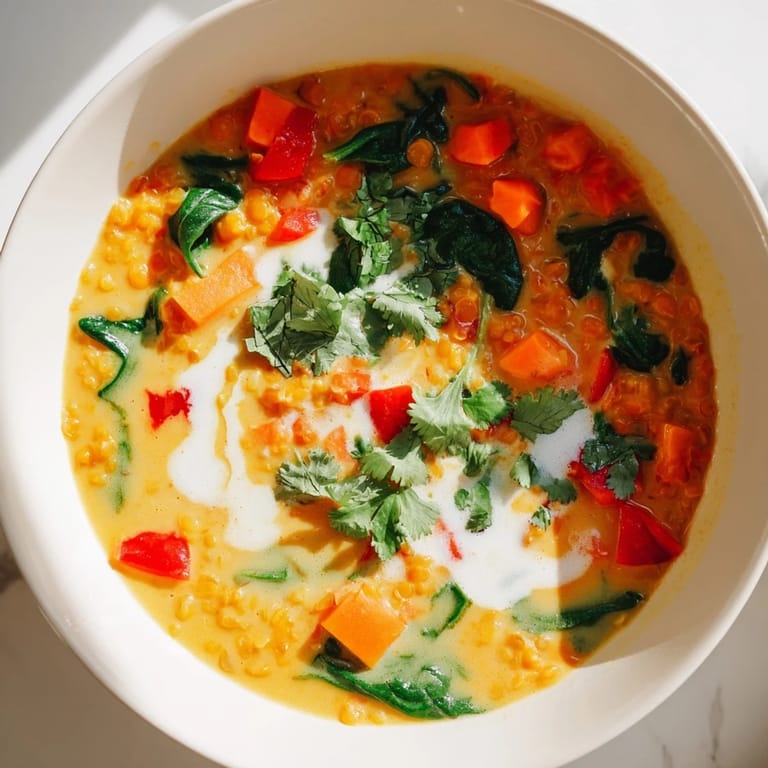
This soup actually improves slightly if you make it a day ahead; the flavors settle and deepen overnight. Store it in an airtight container in the refrigerator for up to four days, or freeze it for up to three months (the lentils hold up beautifully). When reheating, add a splash of broth or water since the soup will thicken as it sits, and stir in fresh cilantro and lime juice right before serving to restore that brightness.
- Don't add the spinach before storing; wilt it fresh when you reheat instead.
- Keep the cilantro and lime separate so they stay vibrant and aren't lost to refrigeration.
- This is the kind of soup that tastes even better as leftovers, so make a double batch without guilt.
 Pin It
 This soup reminds me that the best meals aren't always the most complicated ones—they're the ones that taste like someone cared, and that's a promise this recipe keeps every single time.
Recipe Questions & Answers
- → What type of lentils work best?
Dried red lentils are ideal as they cook quickly and soften to create a creamy texture.
- → Can I adjust the spice level?
Yes, adjust red curry paste quantity to taste or add fresh chili for extra heat.
- → Is it possible to make a soy-free version?
Substitute soy sauce with coconut aminos to avoid soy allergens while keeping the savory flavor.
- → What vegetables complement this dish?
Onion, garlic, ginger, carrot, bell pepper, zucchini, and spinach work harmoniously for balanced flavors and texture.
- → How do I garnish this dish?
Fresh cilantro and lime wedges add brightness and a fresh finish to the curry.
- → Can I serve this with sides?
Steamed jasmine rice or naan bread pairs wonderfully to make a filling meal.