 Pin It
 I still remember the first time I assembled a proper French charcuterie board at my cramped apartment in the 6th arrondissement. It wasn't the fancy restaurants or the Michelin-starred meals that made me fall in love with French food—it was an evening spent with friends, arranging slices of Brie and Comté on a simple white platter, watching their faces light up as they built their first bite. That night taught me that French bistro elegance isn't about complexity; it's about intention, quality, and the joy of shared moments around beautifully arranged food.
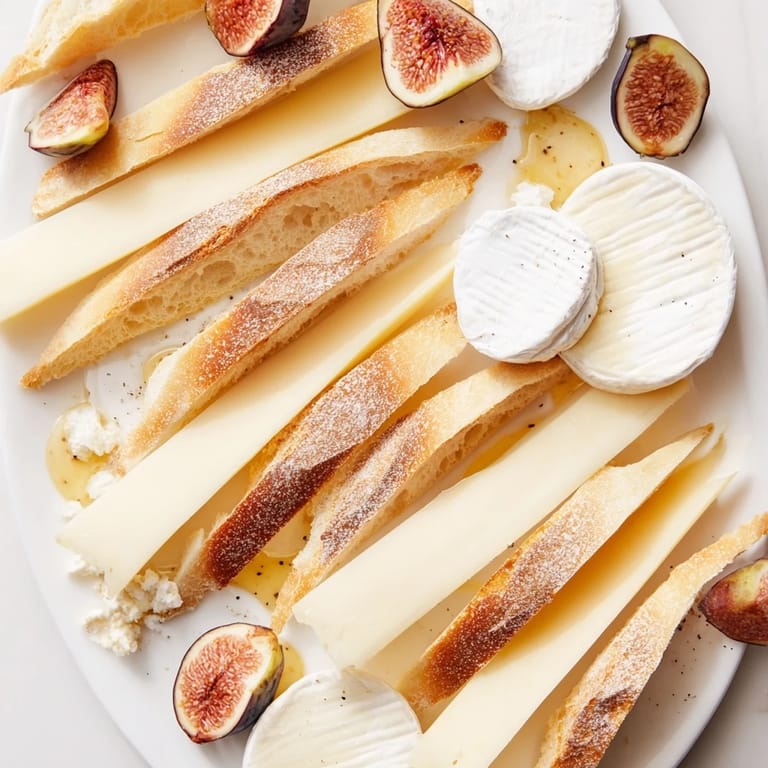
I once brought a version of this to a dinner party where everyone was stressed about the meal. Instead of elaborate dishes, I showed up with a beautiful platter of baguette slices, fanned cheeses, and honeyed accompaniments. The relief on the host's face was immediate—suddenly, the whole evening shifted. People stopped rushing and started lingering, picking thoughtfully, savoring each combination. That's when I realized this wasn't just food; it was permission to slow down.
Ingredients
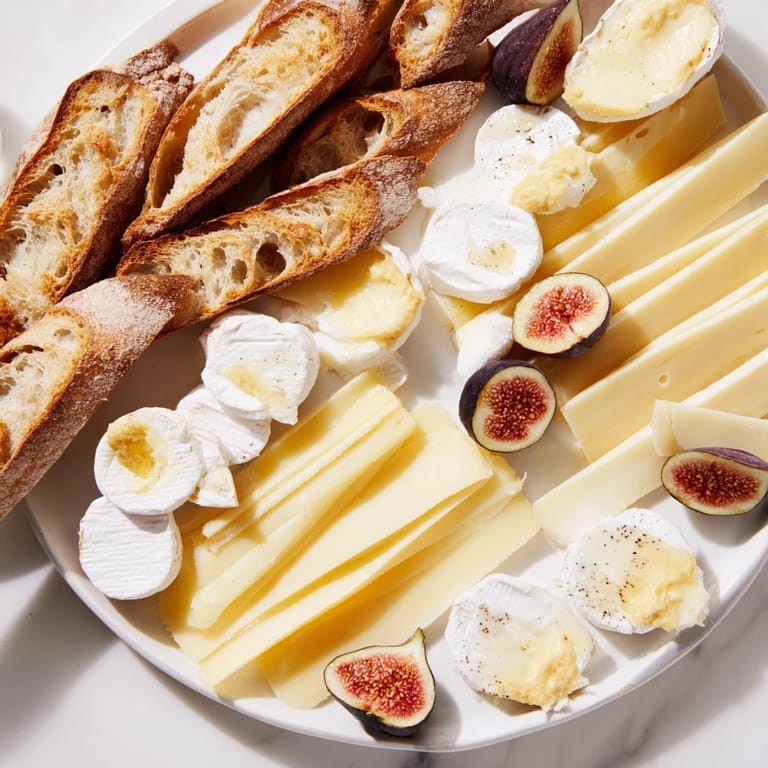
- 2 long fresh French baguettes: The foundation of everything. Choose a baguette with a crispy crust and an open, airy crumb. Slice them diagonally at about a quarter-inch thickness—this angle creates visual elegance and gives you more surface area for toppings. Fresh matters here; a day-old baguette loses its charm.
- 150 g Brie cheese, sliced and fanned: This is your creamy anchor. Let it sit at room temperature for twenty minutes before slicing so the knife glides cleanly. The fanning technique—overlapping slices in a gentle arc—is pure visual poetry and signals that you care about presentation.
- 150 g Comté cheese, sliced and fanned: Nutty, complex, and slightly firm, Comté balances the softness of Brie. It's the cheese that makes people pause and ask what they're tasting. Keep it separate from the Brie so each flavor gets its moment.
- 100 g Chèvre (goat cheese), sliced: Tangy and bright, goat cheese adds a necessary acidity. If it's too crumbly to slice, simply spoon small dollops onto the platter instead—it's just as elegant and much less frustrating.
- 12 fresh figs or grapes: These provide sweetness and textural contrast. Figs feel more luxurious if you're shopping in season; otherwise, halved grapes work beautifully. The fruit isn't just decoration—it's the finishing note that makes each bite sing.
- 50 g unsalted butter, softened: Never salted butter here. You want to taste the sweet, cultured butter flavor without any competing salt. This is the bridge between bread and cheese, and it deserves attention.
- 2 tbsp high-quality honey: This isn't an afterthought. Spend a few extra euros on honey that tastes like something—perhaps lavender or chestnut. You'll taste the difference in every drizzle.
- 1 tbsp whole grain Dijon mustard: The secret weapon. That grainy texture and sharp tang cuts through the richness and wakes up your palate. It's what makes people say, 'What is that?' in the best way.
- Flaky sea salt and freshly ground black pepper: Season as you go, tasting as you build. Salt intensifies the cheese flavors; pepper adds a gentle spice that shouldn't be overwhelming.
Tired of Takeout? 🥡
Get 10 meals you can make faster than delivery arrives. Seriously.
One email. No spam. Unsubscribe anytime.
Instructions
- Slice Your Baguettes with Purpose:
- Using a sharp bread knife, cut the baguettes at a thirty-degree angle, creating pieces about quarter-inch thick. The diagonal cut isn't just prettier—it's practical, giving you more bread surface to work with. As you slice, listen for that satisfying crackle of the crust. Arrange the slices around the outer edge of your platter, leaving generous space between each slice. This negative space is intentional; it's what separates an elegant platter from a crowded one.
- Fan the Cheeses with Intention:
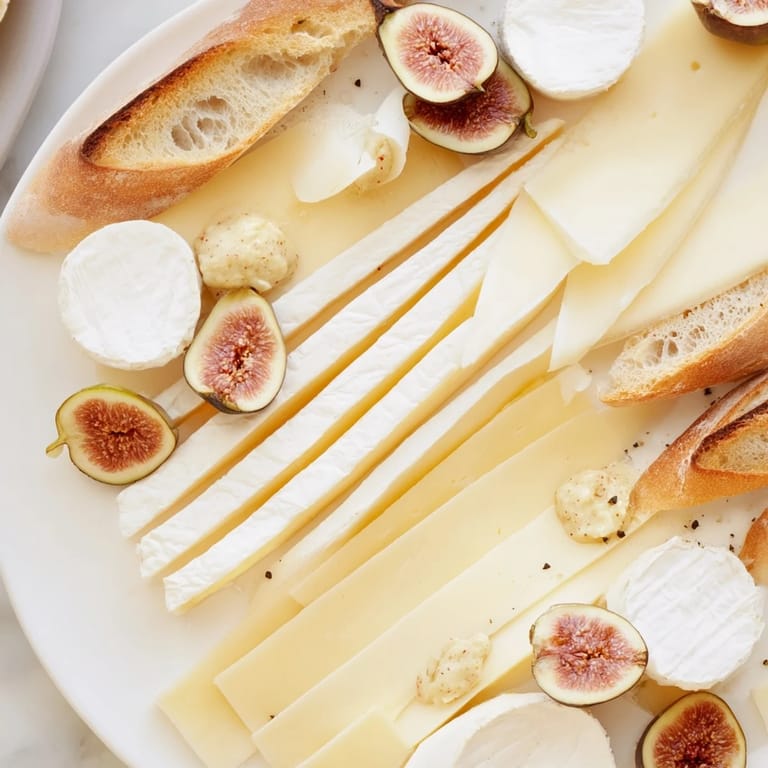
- Start with the Brie. Slice it into thin pieces—about an eighth-inch thick—and arrange them in an overlapping arc, like a hand of playing cards spread across a table. Your slices should catch the light. Group the Comté separately, fanning it in its own section. This keeps each cheese visually distinct and allows guests to taste them individually. If your goat cheese is too soft to slice cleanly, simply spoon small dollops in a neat line—it's just as sophisticated.
- Compose the Fruit and Elements:
- Place small clusters of your figs or grapes in gaps between the cheeses. Three or four pieces together look more intentional than scattered singles. Now for the magic: place small ramekins or spoon the butter, honey, and mustard directly onto the platter in different areas. These aren't hidden; they're showcased as essential components of the experience.
- Season with Restraint:
- Lightly sprinkle sea salt and black pepper over the cheeses. This is where restraint matters. You're not seasoning; you're accenting. A few grains catch the light and hint at what's to come. If you're using fresh herbs, just a sprig or two of thyme tucked into a corner adds a whisper of fragrance.
- Step Back and Let It Breathe:
- Before serving, take a moment to really look at your platter. Adjust any slices that feel crowded. The goal is for each element to feel like it earned its place. Then serve immediately, encouraging your guests to build their own combinations—to choose bread, then cheese, then fruit, then condiment, creating their perfect bite.
 Pin It
 One evening, I watched someone take a slice of baguette, spread it with softened butter, add a thin layer of Brie, a small dollop of honey, and a tiny smudge of mustard. Then they added a single grape. When they closed their eyes after that first bite, I knew I'd done something right. That moment—the realization that the simplest things, arranged with care, can feel profound—is why I keep making this platter.
Building the Perfect Bite
The beauty of this platter is that it's not about rules; it's about exploration. Some guests will create sweet combinations, pairing cheese with figs and honey. Others will go savory, building bread and cheese with just a whisper of mustard. Watch which combinations people gravitate toward—you'll learn their palates, and next time you can anticipate their preferences. This is how you move from just serving food to creating an experience where everyone feels seen.
The Art of Negative Space
French plating has always understood that what you leave out is as important as what you include. When you arrange this board, resist the urge to fill every inch. Space lets each element shine. It also makes the platter feel generous rather than crowded—there's room to move, to choose, to breathe. This isn't minimalism for its own sake; it's a design principle that actually makes food taste better because you're not overwhelmed by quantity.
Wine Pairings and Timing
A chilled glass of Sancerre with its crisp acidity cuts through the richness beautifully, or if you want to feel particularly French, a dry Champagne elevates the entire experience. Timing matters too. Prepare this platter no more than thirty minutes before serving. Any longer and the bread begins to dry, the cheese hardens, and the whole thing loses its moment. This is food meant to be enjoyed at its peak, in the moment, with people you enjoy.
- Chill your wine glasses in the freezer before guests arrive—that small gesture signals care
- Have small plates and napkins visible but not dominating the tablescape
- Encourage people to start eating freely rather than waiting for formal service
 Pin It
 This platter is my favorite thing to make when I want to honor my guests without exhausting myself. It says: your presence matters enough that I've chosen carefully, arranged thoughtfully, and created something beautiful for you to enjoy together.
Recipe Questions & Answers
- → What type of bread works best for this platter?
Fresh, long French baguettes sliced diagonally are ideal for a crisp, airy base that complements the cheeses.
- → Can I substitute the cheeses?
Yes, similar soft and semi-firm cheeses with distinct flavors work well, but maintaining a balance of creamy and nutty textures is recommended.
- → How should the figs or grapes be prepared?
Use fresh whole figs or seedless grapes arranged in small clusters to provide sweetness and a burst of fresh flavor.
- → What is the purpose of the honey and mustard dollops?
They add layers of sweet and tangy flavor that enhance the natural taste of the cheeses and bread.
- → How can I elevate the presentation of this platter?
Garnish with fresh herbs like thyme or rosemary and use a large platter to create negative space for an elegant visual impact.