 Pin It
 The first time I built a board around a wine theme rather than just throwing things together, I realized how much the story of a dish matters. I'd picked up a wedge of Drunken Goat cheese at a market—that deep crimson hue caught my eye—and suddenly I wanted everything to speak the same language. Red wine, bold flavors, a visual statement. That afternoon became less about feeding people and more about creating something they'd remember.
I made this for a dinner party on a rainy October evening when everyone seemed tired of the same old appetizers. The moment I set the board down, the conversation shifted. People circled around it, reaching for combinations they'd never tried together—the sharp bite of the salami with the creamy, wine-touched goat cheese, the pomegranate seeds popping between the cured meats. That board became the entire event, really.
Ingredients
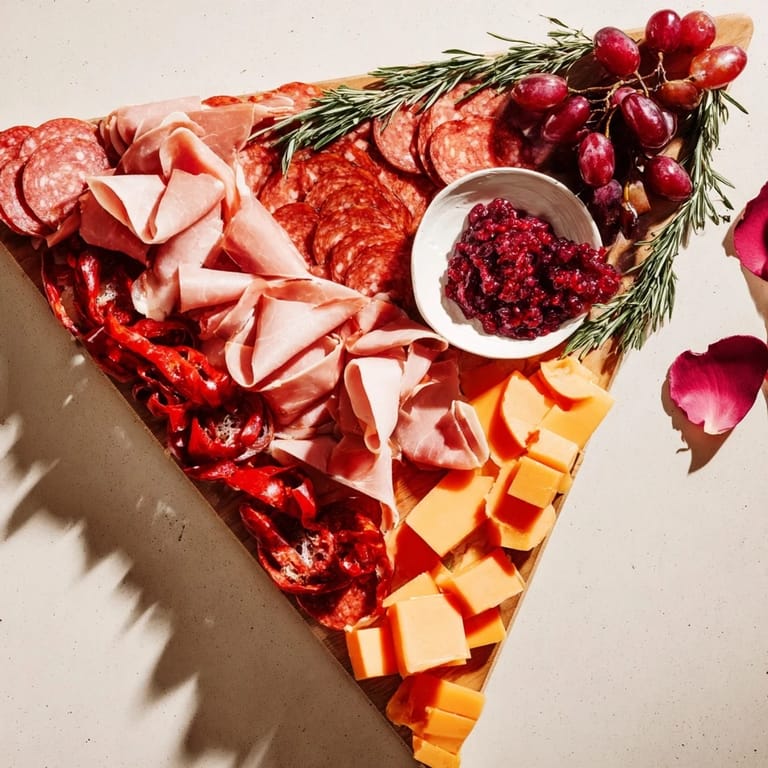
- Prosciutto (100 g): Paper-thin and salty, it drapes better when you let it come to room temperature first, and its delicate flavor doesn't get lost against the wine-soaked cheeses.
- Bresaola (100 g): The deepest color on the board and the most tender—slice it ultra-thin if you haven't already, and fan it out so it catches the light.
- Spicy Chorizo (100 g, thinly sliced): This is your heat and your oil—it seasons everything around it, so a little goes a long way, and the red paprika adds to the whole crimson story.
- Smoked Beef Salami (80 g): The workhorse that brings smokiness and structure; it holds its shape and keeps tasting good for hours.
- Drunken Goat Cheese (150 g, sliced): The star—creamy, tangy, and genuinely stained by red wine, it tastes like wine country in every bite, and the slices should be thick enough to hold their shape.
- Red Wine Cheddar (150 g, cubed): Sharper than the goat cheese and more substantial, these cubes stay firm and don't dissolve into the other flavors.
- Merlot BellaVitano (100 g, sliced): This aged cheese brings a crystalline texture and a subtle wine note that echoes throughout the board.
- Red Grapes (1 small bunch, washed): They're sweet relief between the salty and savory, and they should be completely dry before you place them so they don't make anything soggy.
- Pomegranate (1 medium, seeds removed): The jewel-like arils add not just color but a sharp, fruity burst that wakes up every bite.
- Red Onion Jam (1 small jar): A secret weapon that ties everything together with sweet-sharp complexity; a tiny spoonful on a cheese changes everything.
- Roasted Red Peppers (1 cup, sliced): Buy them jarred if you can—they're soft, they're already cooked, and they add sweetness without effort.
- Dried Cranberries (1 small handful): They chewy against the creamy and smooth against the cured, and they never dry out the board.
- Baguette (1, sliced): Toast the slices lightly if you're not serving immediately—it gives them backbone and keeps them from absorbing moisture.
- Red Beet Crackers (1 box): These bring earthiness and an unexpected sweetness, plus they're sturdy enough to hold a proper amount of cheese and meat.
- Fresh Rosemary Sprigs: Tear a few as you place them so the kitchen smells incredible, and leave some whole for the visual.
- Edible Rose Petals (optional): If you use them, add them last, right before serving, so they stay vibrant and don't bruise against the other elements.
Tired of Takeout? 🥡
Get 10 meals you can make faster than delivery arrives. Seriously.
One email. No spam. Unsubscribe anytime.
Instructions
- Set your stage:
- Lay out your triangular board on the counter where you can walk around it. This is crucial—you're building a landscape, not filling a container, so you want to see the whole thing as it takes shape. Take a breath and remember that imperfection is what makes it beautiful.
- Arrange the meats with intention:
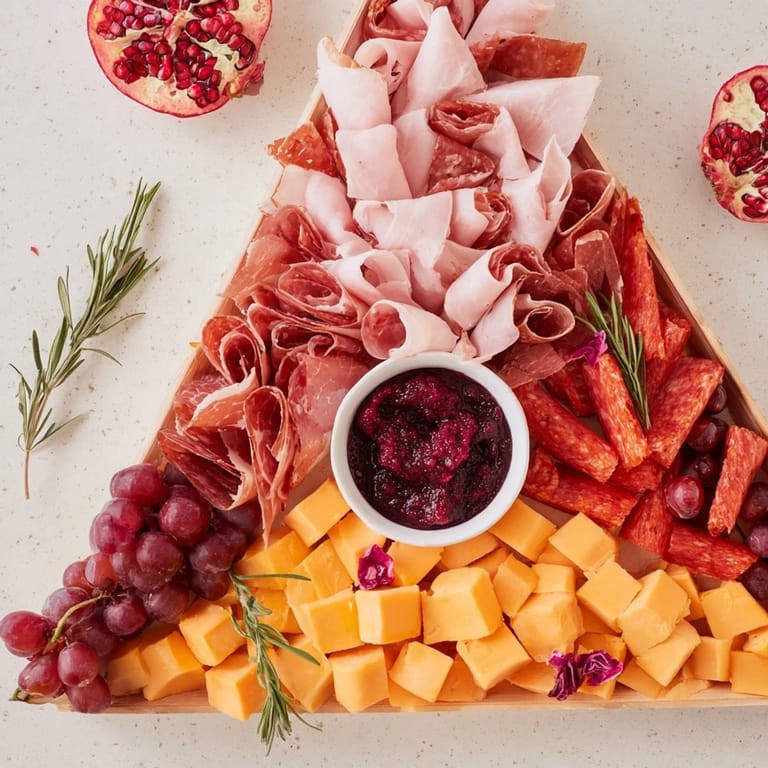
- Fold the prosciutto into loose quarters and arrange them in one section, keeping the folds soft so they catch light. Roll the bresaola into cylinders and group those nearby, then fan out the chorizo slices slightly so the red paprika shows. The salami can stay as individual rounds or you can fold them too—whatever feels right. Keep textures together because the eye needs some rest.
- Create cheese clusters:
- Slice the Drunken Goat and fan it out like cards, then stack the Red Wine Cheddar cubes into a small pyramid, and finally lay down the Merlot BellaVitano slices in another cluster. Each cheese should sit in its own neighborhood, but close enough that someone can grab a piece of each at once if they want to.
- Scatter the sweet and bright:
- Drop the red grapes in gaps—they roll and fill spaces naturally. Sprinkle pomegranate seeds throughout like you're being generous but not wasteful. Toss the cranberries around in small clusters, and place red pepper slices standing up so they look architectural. You're filling in negative space, but you're also creating visual rhythm.
- Anchor with bread and crackers:
- Lean baguette slices against the cheeses like they're protecting them, and scatter beet crackers around the edges and in any open spaces that feel empty. This is the point where the board suddenly feels complete.
- Top with aromatics and color:
- Break up the rosemary sprigs and place them across the board, tucking some under edges so they look natural. If you're using edible rose petals, add them now in small clusters—they're delicate and they'll bruise if you handle them too much. Set the jar of red onion jam in a small clear bowl or ramekin somewhere that's easy to reach, maybe near the cheeses.
- Serve immediately:
- Bring the board to the table at room temperature. The cheeses are best when they're not cold, the cured meats are slicier and more flavorful when they've warmed up slightly, and the whole experience is about tasting the wine that went into everything.
 Pin It
 The memory that stays with me is watching my friend's partner—who usually skips appetizers—go back to that board three times. They were quiet about it, just kept returning, trying new combinations, and finally asked where I found the Drunken Goat. That's when I knew it wasn't about the ingredients, it was about permission to eat something beautiful.
Why Wine-Soaked Cheeses Matter
The first time I tasted a wine-soaked cheese, I understood why charcuterie boards had become more than just leftovers on a board. These aren't regular cheeses bathed in wine—they're cheeses that have genuinely absorbed the tannins and fruit notes, so they taste like a conversation between the dairy and the vintage. It changes how you pair things because suddenly that sharp cheddar isn't competing with the wine, it's echoing it. The Drunken Goat, in particular, gets this tangy-smooth quality that nothing else achieves.
Building the Visual Narrative
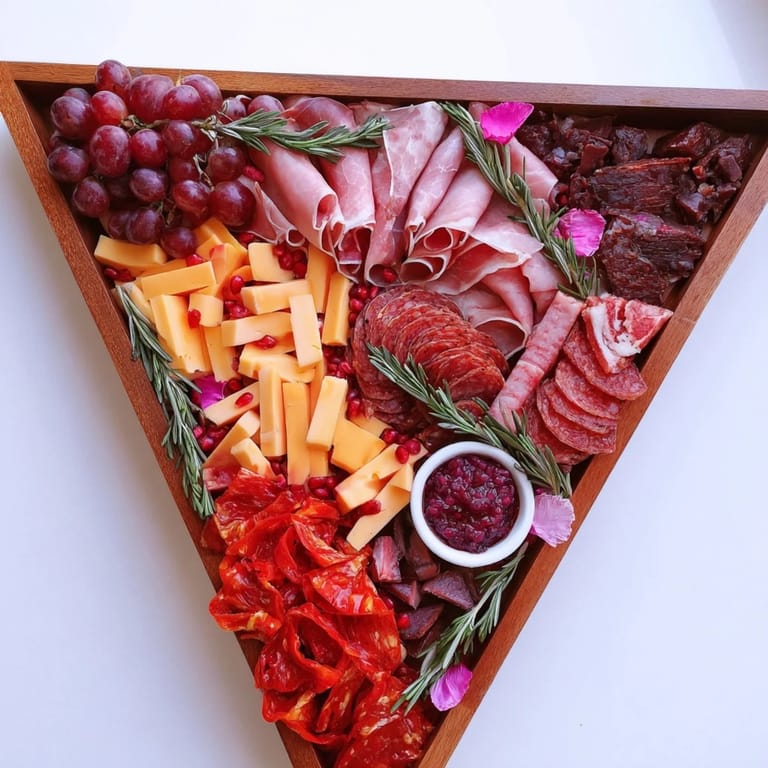
A charcuterie board should tell a story without words. The Crimson Crest works because every element speaks the same visual language—deep reds, rich hues, the occasional pop of brightness from the grapes and pomegranate. But it's not about matching; it's about creating layers. The wavy prosciutto against the neat rounds of salami, the cubed cheese next to the sliced, the soft jam next to the hard cracker. This contrast is what makes people want to taste everything instead of just grabbing one thing.
Pairing and Serving Wisdom
I've learned that the best boards exist somewhere between planned and spontaneous. You choose your elements deliberately, but the arrangement should feel alive, not fussy. The Crimson Crest asks for a bold red wine—something with enough tannin and body to stand up to the cured meats and the wine-soaked cheeses without disappearing. A Cabernet Sauvignon or Malbec will sing here, but so will a Valpolicella if you want something slightly lighter. The point is to match intensity: bold food, bold wine, bold company.
- Taste one element at a time first, then start combining—the red onion jam with bresaola, the pomegranate with the goat cheese.
- If you're feeding six, set out small plates and napkins upfront so people don't feel like they're being messy, which somehow makes everything taste better.
- Everything on this board tastes better after the first thirty minutes when the room temperature softens the cheese and the flavors start to blend on the board itself.
 Pin It
 This board isn't about impressing people with technique—it's about giving them permission to slow down and taste something thoughtfully. That matters more than you'd think.
Recipe Questions & Answers
- → What types of meats are included in The Crimson Crest board?
The board features cured red meats like prosciutto, bresaola, spicy chorizo, and smoked beef salami, each arranged for variety in texture and flavor.
- → How are the cheeses prepared for the board?
Cheeses such as Drunken Goat, Red Wine Cheddar, and Merlot BellaVitano are soaked in red wine, sliced or cubed, and arranged adjacent to the meats for easy pairing.
- → What accompaniments complement the meats and cheeses?
Fresh red grapes, pomegranate seeds, red onion jam, roasted red peppers, dried cranberries, baguette slices, and beet crackers provide sweetness, tang, and crunchy contrasts.
- → Are there garnish options for enhancing presentation and aroma?
Fresh rosemary sprigs and edible rose petals are added to deliver herbal notes and vibrant color, enhancing both appearance and flavor.
- → Can this board be adapted for dietary restrictions?
Yes, gluten-free crackers can replace traditional ones, and cheese or meat selections can be altered to suit specific allergies or preferences.
- → What serving tools are recommended?
A large triangular serving board, cheese knives, small bowls for jams, and serving tongs help present and serve the components neatly.