 Pin It
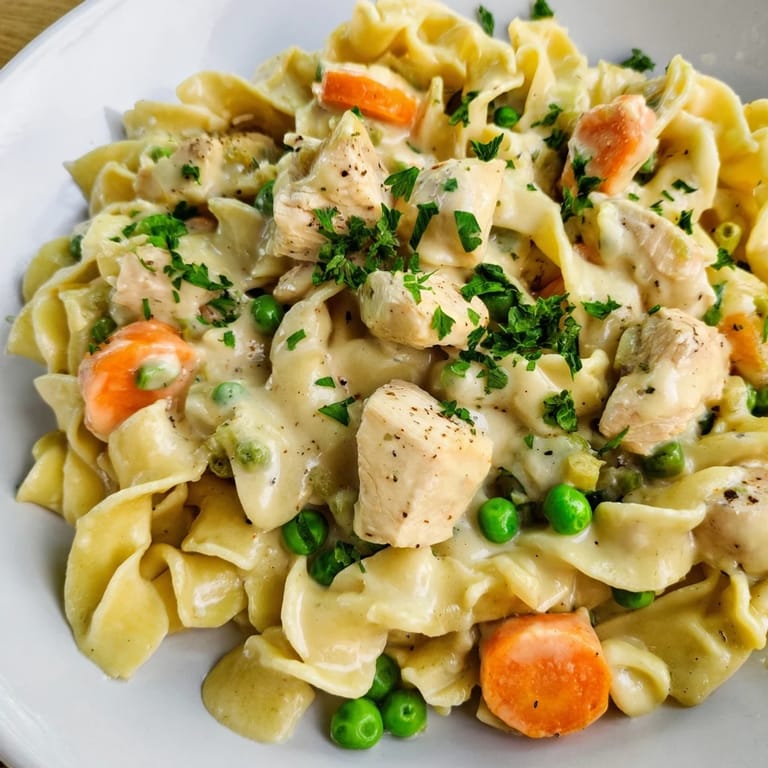
 There's something about the smell of butter hitting a hot pan that makes everything feel manageable, even on a Tuesday when nothing else has gone right. Years ago, I watched my neighbor make this dish while I sat at her kitchen counter nursing a cold, and the way those egg noodles disappeared into cream sauce felt like the answer to a question I hadn't quite asked yet. Now it's become the recipe I turn to when I need something that feels both easy and intentional, the kind of meal that tastes like someone actually cared while making it.
I made this for my roommate the first week we moved in together, back when our kitchen was still mostly unpacked boxes and good intentions. She came home to the sound of noodles boiling and just stood there breathing it in, and I realized right then that cooking for someone is really just a quiet way of saying you're glad they're here.
Ingredients
- Boneless, skinless chicken breasts or thighs (500 g): Thighs stay juicier through cooking, but breasts work fine if that's what you have—just don't walk away while they're browning.
- Unsalted butter (2 tbsp) and olive oil (1 tbsp): The combo gives you a higher smoke point and better browning without the burnt-butter bitterness.
- Yellow onion (1 medium), finely chopped: The foundation of flavor here; take a moment to dice it small so it melts into the sauce.
- Garlic cloves (2), minced: Add these after the harder vegetables soften, or they'll turn acrid and regretful.
- Carrots (2 medium) and celery (2 stalks), sliced: These aren't just filler—they sweeten the sauce and give you little pockets of texture.
- All-purpose flour (2 tbsp): This is your thickening agent; stir it in thoroughly so you don't end up with floury lumps.
- Low-sodium chicken broth (480 ml), whole milk (240 ml), and heavy cream (120 ml): The holy trinity of richness; low-sodium lets you season to taste instead of fighting the broth.
- Dijon mustard (1 tsp), dried thyme (1 tsp), dried parsley (1/2 tsp), and paprika (1/2 tsp): These make you sound like you actually know what you're doing.
- Wide egg noodles (250 g): They catch the sauce better than thin ones; trust this.
- Frozen peas (60 g): They thaw in the residual heat and stay bright; fresh ones tend to disappear into mushiness.
- Fresh parsley (2 tbsp), chopped: A small finish that makes people notice you tried.
Tired of Takeout? 🥡
Get 10 meals you can make faster than delivery arrives. Seriously.
One email. No spam. Unsubscribe anytime.
Instructions
- Season and sear the chicken:
- Pat your chicken pieces dry before they hit the pan—moisture is the enemy of browning. Salt and pepper them generously, then listen for that immediate sizzle when they meet the hot butter and oil; that sound means you're doing it right.
- Build your flavor base:
- Once the chicken is golden and set aside, the same pan gets softer vegetables first. The onion, carrots, and celery need a few minutes to surrender their sharpness before garlic joins the party.
- Make the roux:
- Create the sauce:
- Whisk smoothly and patiently as you add the broth and cream; rushing this step rewards you with lumps. Watch for the moment it thickens—it'll look suddenly glossier and coat the back of a spoon.
- Finish and combine:
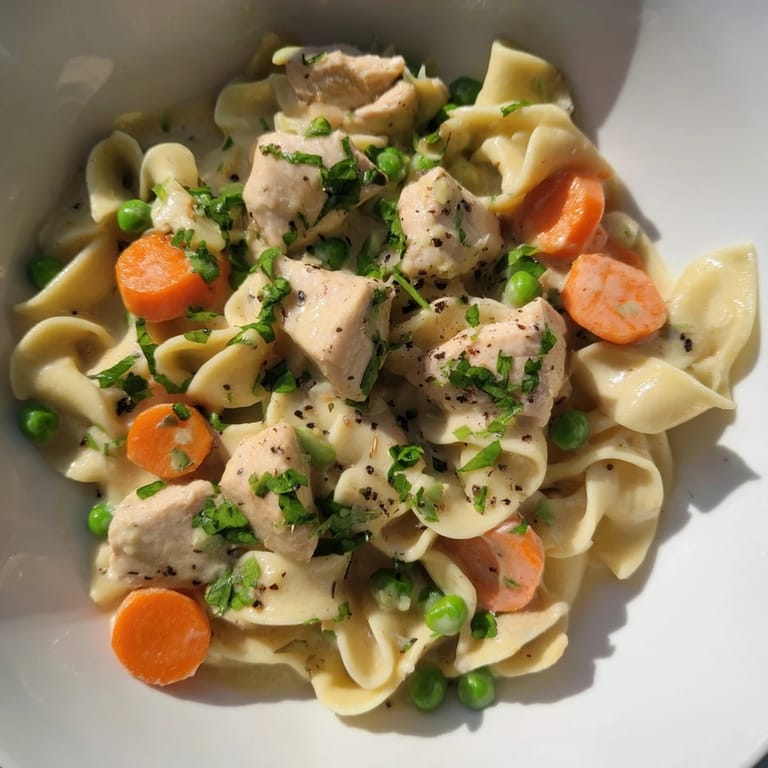
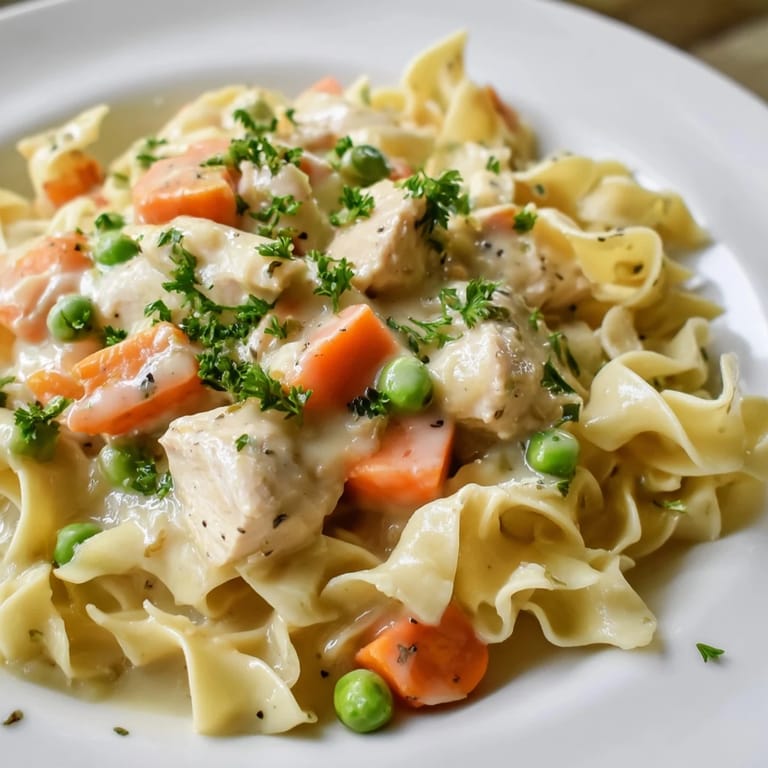
- The chicken goes back in, then the noodles, then you toss it all together like you're tucking people into something warm. A handful of fresh parsley on top isn't fancy—it's just the difference between 'nice dinner' and 'you remembered I like green on my plate.'
 Pin It
 This dish became something sacred to me the night I made it for my sister right after her divorce. She didn't want to talk, just wanted to eat something that didn't come from a takeout container, and somewhere between the first and third bite, she actually smiled. Food can't fix heartbreak, but it can sit beside someone in it.
Variations That Actually Work
A splash of white wine in the vegetable pan adds depth and sophistication without making the dish feel fussy. If you're rushing, rotisserie chicken from the store cuts your hands-on time almost in half and tastes nearly as good as starting from scratch. Mushrooms sautéed separately and stirred in at the end give you an earthiness that makes people wonder what your secret ingredient is.
Make-Ahead and Storage
This meal improves after a day in the refrigerator when the flavors have had time to get to know each other. Reheats gently on the stove with a splash of extra cream to refresh the sauce, never in the microwave where it'll seize up and resent you. It freezes beautifully for up to three months if you store it in an airtight container and don't panic when it looks separated as it thaws—gentle heat brings it back to silky.
What to Serve Alongside
A simple green salad with sharp vinaigrette cuts through the richness without asking for extra dishes or effort. Steamed broccoli adds color and nutrition if anyone's paying attention, and crusty bread is almost mandatory for soaking up every last drop of sauce. The beauty of this dish is that it doesn't need much—it already knows it's enough.
- A squeeze of lemon juice on your plate brightens everything without changing the fundamental nature of comfort.
- Grated Parmesan on top is optional but feels very European and slightly smarter than it probably is.
- Finish with black pepper from a fresh grind, not the pre-ground stuff that tastes like tired cardboard.
 Pin It
 This is the kind of recipe that proves you don't need complexity to make someone feel cared for. Make it, taste it, adjust it to your kitchen and your people, and let it become yours.
Recipe Questions & Answers
- → What cut of chicken works best for this dish?
Boneless, skinless chicken breasts or thighs cut into bite-sized pieces work well, offering tenderness and quick cooking.
- → Can I use dried herbs instead of fresh ones?
Yes, dried thyme and parsley provide great flavor when fresh herbs aren’t available. Adjust quantities to taste.
- → How do I achieve a creamy, thick sauce?
Begin with a roux by cooking flour in butter, then gradually whisk in broth, milk, and cream. Simmer until thickened.
- → Are egg noodles necessary, or can another pasta be used?
Wide egg noodles give a tender texture, but other pasta like fettuccine or pappardelle can be substituted for similar results.
- → What vegetables enhance the flavor in this dish?
Sautéed onions, carrots, celery, and garlic create a savory aromatic base, complemented by fresh parsley and peas.
- → Can this dish be prepared ahead of time?
Yes, it reheats well and flavors meld when stored overnight, though noodles may absorb some sauce and soften further.