 Pin It
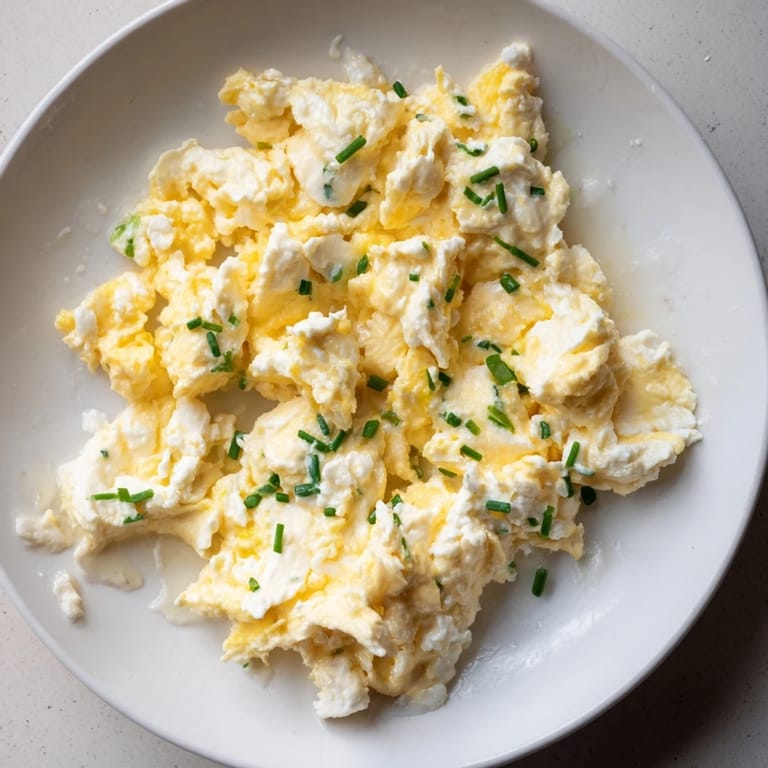
 There's a Tuesday morning I won't forget, when a friend mentioned her gym trainer's breakfast hack over coffee—cottage cheese stirred into scrambled eggs for extra fluff and protein. I was skeptical at first, honestly. But that same week, I tried it and something clicked. The cottage cheese melts into the eggs, creating this impossibly creamy, cloud-like texture that regular scrambled eggs just can't match. Now it's my go-to when I want breakfast to feel substantial without the heaviness.
I made this for my partner after he complained about his usual protein shakes tasting like chalk. He took one bite and got quiet—the good kind of quiet where you know something hit right. He's eaten it almost every morning since, which is saying something from someone who usually skips breakfast entirely.
Ingredients
- Eggs: Four large ones give you the base, and their richness is what lets the cottage cheese shine without getting watery.
- Cottage cheese: Full fat is non-negotiable here—it melts smooth and creamy, whereas low-fat versions sometimes stay grainy no matter how much you whisk.
- Milk or cream: Just a tablespoon keeps things silky and adds the moisture needed for that cloud texture.
- Salt and pepper: Don't skip the grinding—freshly cracked pepper tastes sharper and cleaner against the richness.
- Unsalted butter: One tablespoon is exactly enough to coat the pan without pooling or making things heavy.
- Chives or parsley: A optional garnish, but that green brightness at the end transforms it from breakfast to something you'd serve guests.
Tired of Takeout? 🥡
Get 10 meals you can make faster than delivery arrives. Seriously.
One email. No spam. Unsubscribe anytime.
Instructions
- Whisk your mixture until it gets slightly frothy:
- Combine the eggs, cottage cheese, milk, salt, and pepper in a bowl and whisk until you see tiny bubbles forming and the cottage cheese is mostly broken down. The air you're beating in is part of what makes these eggs so fluffy.
- Melt the butter low and slow:
- Heat your nonstick skillet over medium-low heat and add the butter. Wait until it's melted and just starting to bubble lightly—this temperature keeps the eggs from cooking too fast and getting rubbery.
- Pour and pause for a few seconds:
- Pour the egg mixture into the skillet and let it sit completely still for about 20 seconds. This is when the bottom starts to set slightly, creating a foundation for the creamy curds you're about to form.
- Stir gently from the edges inward:
- Using a spatula, push the cooked edges toward the center with slow, deliberate motions. You're not scrambling aggressively—you're folding and turning the mixture gently, which keeps those curds large and creamy instead of small and dense.
- Cook until just set but still soft:
- Keep stirring occasionally for another 2 to 3 minutes until the eggs look mostly set but still slightly glossy and wet on the surface. The moment it looks barely done, take it off heat—carryover cooking will finish it perfectly.
- Plate immediately and garnish:
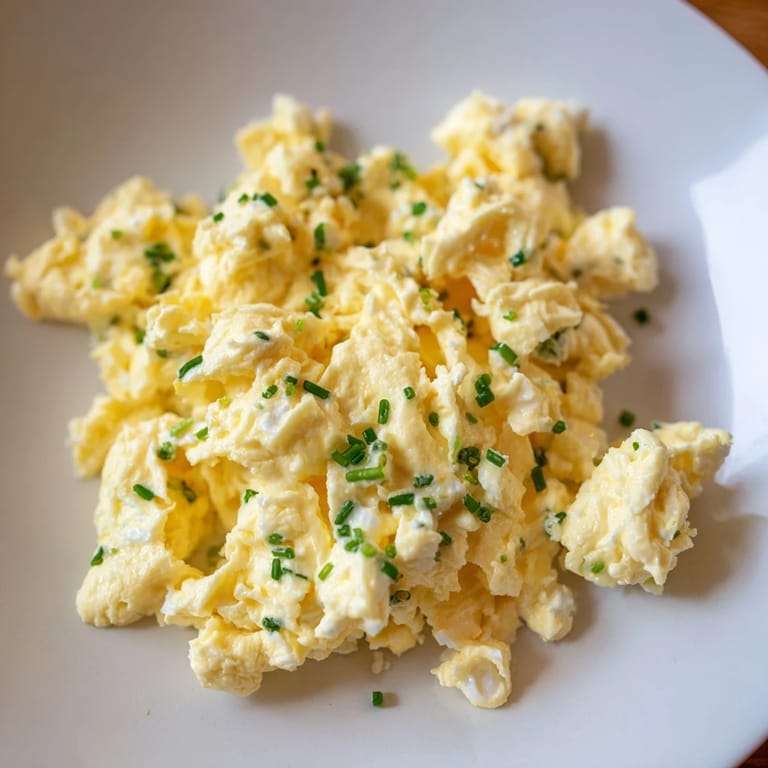
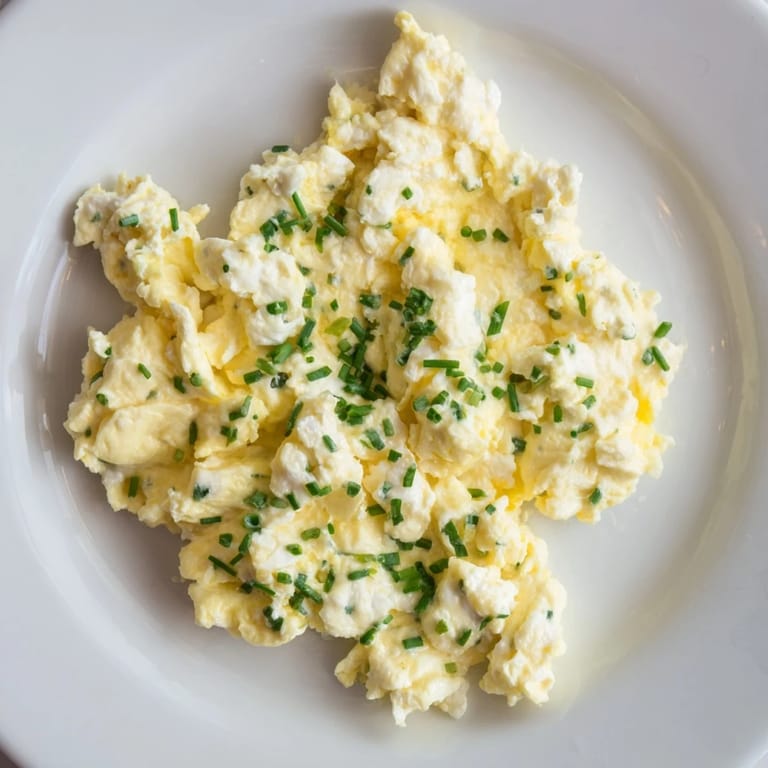
- Transfer to your plate right away and add chives or parsley if you have them. Fresh green on warm creamy eggs is a small thing that feels nice.
 Pin It
 My mom watched me make this once and tasted it without comment, which worried me. Then she asked for the recipe on a note card and I knew it mattered. Breakfast isn't usually the meal that brings people together, but somehow these eggs do.
Why Cottage Cheese Changes Everything
Most scrambled eggs rely on low heat and constant stirring to stay tender, but they still end up dry if you're not paying close attention. Cottage cheese works like insurance—it adds fat and moisture that spreads through the eggs as they cook, making it nearly impossible to mess up. The texture becomes something between scrambled eggs and soft curd, which sounds strange until you taste it.
The Best Add-ins and Variations
The base recipe is perfect on its own, but I've learned a few combinations that feel special. A handful of sautéed spinach folded in at the end adds color without changing the flavor much. Smoked salmon torn into pieces tastes elegant and feels like brunch without extra effort. Sometimes I use crumbled feta or sharp cheddar instead of just garnishing with herbs, which makes it richer and more substantial.
Serving Ideas That Make It a Meal
These eggs are rich enough to be the star, so you don't need much. Whole-grain toast on the side lets you scoop up every creamy bite, and a ripe avocado sliced next to it makes mornings feel worth waking up for. Sometimes I serve them with a quick side salad if I'm trying to eat more vegetables, and the cool greens balance the warmth perfectly.
- Pair with buttered toast cut into soldiers for dipping if you're feeling a little fancy.
- A side of fresh fruit—berries or melon—keeps things balanced and bright.
- Coffee alongside these eggs is non-negotiable, as the richness pairs perfectly with bitter warmth.
 Pin It
 This breakfast has become the thing I reach for on mornings when I need to feel taken care of, even if I'm taking care of myself. That might sound dramatic for scrambled eggs, but it's honest.
Recipe Questions & Answers
- → How does cottage cheese affect the eggs?
Cottage cheese adds moisture and creaminess, resulting in a fluffier, softer texture in the cooked eggs.
- → What cooking method ensures fluffy eggs?
Cooking the eggs gently over medium-low heat while stirring occasionally helps keep them tender and fluffy.
- → Can I use different herbs for garnish?
Yes, herbs like parsley or chives complement the creamy eggs well and add fresh flavor.
- → Is full-fat cottage cheese recommended?
Full-fat cottage cheese enriches the eggs with creaminess, but low-fat options can be used for a lighter dish.
- → What optional add-ins enhance flavor?
Shredded cheddar, feta, sautéed spinach, tomatoes, or smoked salmon can be folded in for extra taste and texture.