 Pin It
 There's something about the first crisp October morning that makes me want to roast a whole butternut squash. I was standing in the farmer's market, holding one of those awkwardly heavy gourds, when an older woman behind me said, 'That one's perfect—don't let it intimidate you.' So I didn't. That soup changed how I thought about comfort food, transforming something rough and hard into something velvety enough to pour into a bowl.
I made this for my sister the night before she moved across the country, and we ate it straight from the pot while sitting on her kitchen floor surrounded by boxes. The sage and nutmeg filled that empty apartment with warmth, and suddenly the goodbye felt less sad. She's made it at her new place now, and she texts me photos of her bowl with those roasted seeds on top.
Ingredients
- Butternut squash, 1 large (about 2.5 lbs), peeled, seeded, and cubed: This is the star—roasting brings out its natural sweetness and creates those caramelized edges that make the finished soup taste deeper and richer.
- Yellow onion, 1 medium, chopped: It disappears into the soup but builds a savory base that keeps everything from feeling one-note.
- Garlic, 2 cloves, minced: Just enough to whisper through the final bowl, not shout.
- Vegetable broth, 4 cups: Use a broth you'd actually drink on its own—it matters more than you'd think.
- Olive oil, 2 tbsp: Split between roasting the squash and sautéing the aromatics for balanced flavor.
- Sea salt, 1 tsp: Added in stages so you can taste your way to the right amount.
- Black pepper, 1/4 tsp: Ground fresh if you have a grinder—it tastes noticeably different.
- Nutmeg, 1/2 tsp ground: This is the secret ingredient that makes people ask what you added; don't skip it or reduce it.
- Sage, 1 tsp dried or 1 tbsp fresh, chopped: Fresh sage is more delicate and herbaceous, while dried sage leans earthy and warm—pick based on what you have.
- Heavy cream or coconut milk, 1/4 cup optional: A swirl at the end softens the earthiness and makes it feel like a proper dinner.
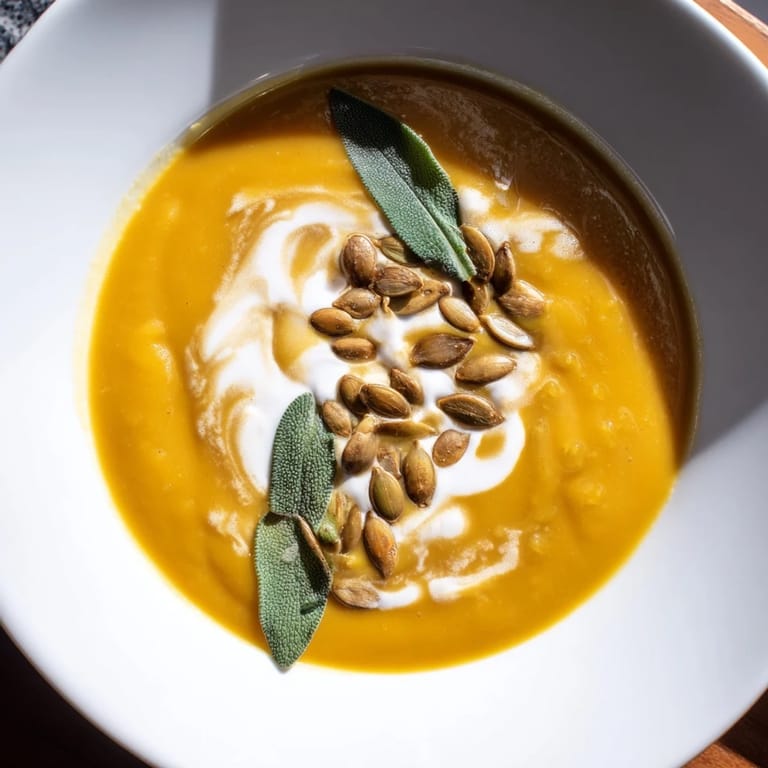
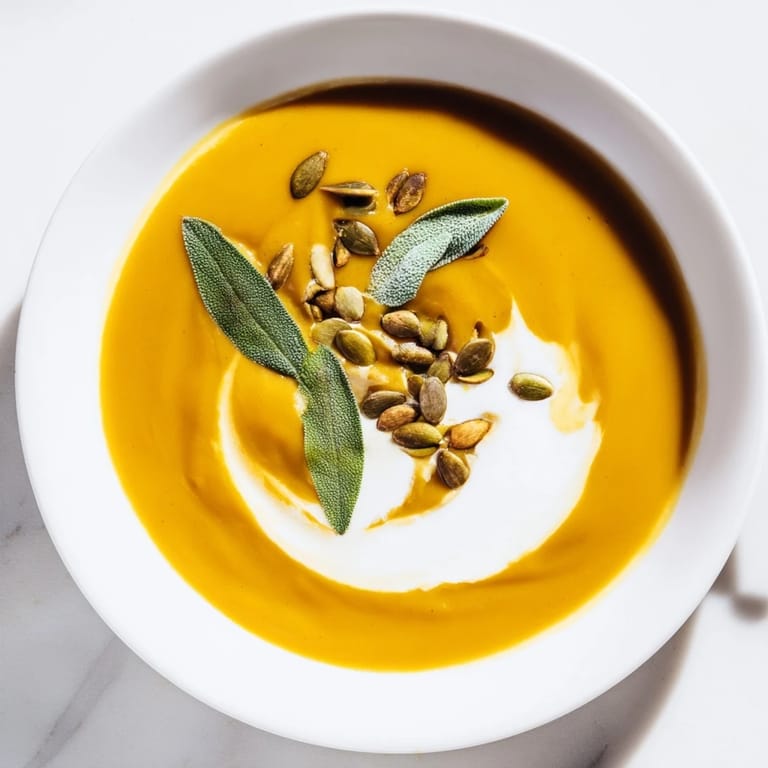
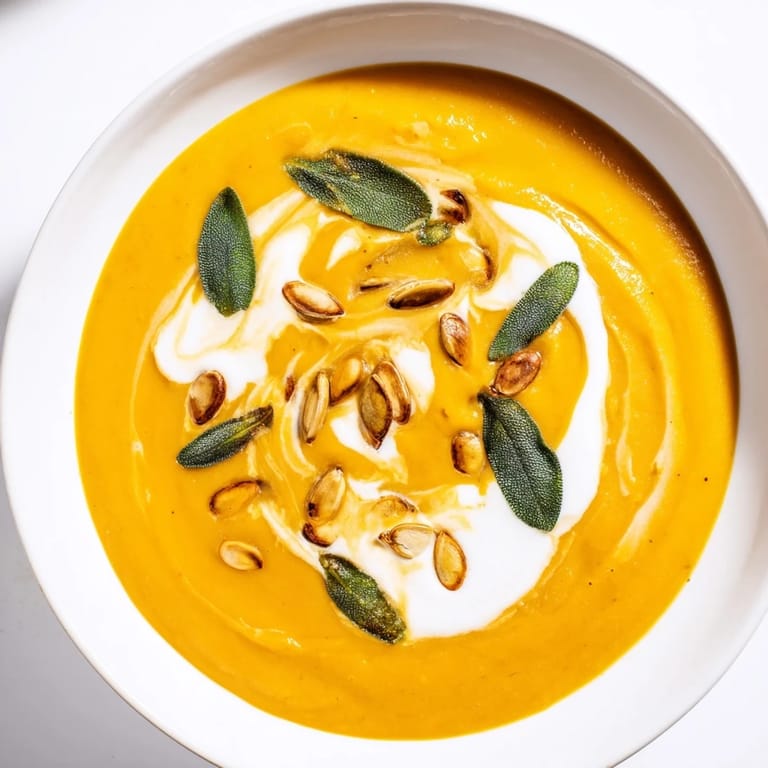
- Roasted pumpkin seeds and fresh sage leaves for garnish: These add texture and a visual reminder that this soup is actually quite elegant.
Tired of Takeout? 🥡
Get 10 meals you can make faster than delivery arrives. Seriously.
One email. No spam. Unsubscribe anytime.
Instructions
- Heat your oven and season the squash:
- Preheat to 400°F (200°C). Toss your cubed butternut squash with 1 tbsp olive oil, 1/2 tsp salt, and a pinch of pepper until every piece is lightly coated. Spread them in a single layer on a parchment-lined baking sheet—don't crowd the pan, or they'll steam instead of caramelize.
- Roast until golden:
- Into the oven for 30–35 minutes, stirring halfway through so the pieces brown evenly on all sides. You're looking for tender flesh and caramelized, golden-brown edges. This is where the flavor magic happens.
- Build the aromatic base:
- While squash roasts, heat the remaining 1 tbsp olive oil in a large pot over medium heat. Add your chopped onion and let it soften and turn translucent, about 4–5 minutes. Then add the minced garlic and cook for just 1 minute more—you want it fragrant, not browned.
- Combine and simmer:
- Pour in the roasted squash, then sprinkle in the sage and nutmeg and stir so you can smell what you're making. Add the 4 cups of vegetable broth, bring it to a boil, then lower the heat and let it simmer gently for 10 minutes so the flavors meld.
- Blend to silky smoothness:
- Remove from heat and blend using an immersion blender directly in the pot, or in batches in a countertop blender if that's what you have—be careful with hot liquid. Blend until there are no visible squash pieces and the soup looks like poured velvet.
- Taste and finish:
- Give it a taste and adjust salt and pepper as needed—you might surprise yourself with how much seasoning you want. Serve hot with a swirl of cream or coconut milk, a scatter of roasted pumpkin seeds, and a fresh sage leaf if you're feeling fancy.
 Pin It
 I realized this soup is my version of a hug—it shows up on the hardest days and makes them feel more manageable. There's something about the warmth and the color and the way it fills a kitchen with steam that just works.
Why Roasting Makes All the Difference
The moment those cubed pieces hit the hot oven, their natural sugars begin to concentrate and caramelize instead of just softening. This isn't just cooking—it's building flavor. The roasted squash brings sweetness and depth to the finished soup that you simply cannot achieve by boiling or steaming the raw vegetable. It's one of those small decisions that transforms an okay recipe into something you'll make repeatedly.
Playing with Flavor and Texture
Once you've nailed the basic soup, you have permission to play. A pinch of cayenne pepper wakes everything up if you're in the mood for gentle heat. Fresh thyme instead of sage gives it an almost French bistro feeling. Some people swirl in a bit of apple cider vinegar right at the end for brightness, or add a handful of crispy sage leaves fried in butter instead of fresh ones on top. The soup is forgiving enough to handle your experiments.
Serving and Storing
This soup tastes even better the next day once all the flavors have had time to get to know each other. It reheats gently on the stovetop with a splash of extra broth if it's thickened up in the fridge, or you can freeze it in portions for up to three months. I always make a double batch in fall and keep some tucked away for those unexpected cold nights.
- Pair it with crusty bread for soaking up the last spoonful, or with a crisp white wine like Sauvignon Blanc if you're eating it as part of a larger meal.
- For vegan versions, use coconut milk instead of heavy cream and double-check your broth for hidden animal products.
- Make sure to taste for salt one more time right before serving, since flavors can mute slightly as soup cools.
 Pin It
 This soup reminds me that the best comfort food doesn't need to be complicated—it just needs to be made with a little attention and shared with someone who matters. Make it for yourself on a quiet Tuesday, or make it for the people you're trying to say goodbye to on a kitchen floor surrounded by boxes.
Recipe Questions & Answers
- → What is the best method for roasting butternut squash?
Toss squash cubes with olive oil, salt, and pepper. Roast at 400°F for 30-35 minutes until tender and caramelized for enhanced sweetness.
- → Can I substitute vegetable broth with another liquid?
Yes, you can use chicken broth or water, but vegetable broth adds depth and enhances the overall flavor.
- → How can I achieve a silky smooth texture?
Use an immersion blender or blend in batches with a countertop blender until there are no lumps and the texture is creamy.
- → What garnishes complement this soup?
A swirl of cream or coconut milk adds richness, while roasted pumpkin seeds provide a crunchy contrast and fresh sage leaves add aroma.
- → How to make the flavors more robust?
Adjust seasoning with salt, pepper, or add a pinch of cayenne pepper to introduce a subtle spicy warmth.