 Pin It
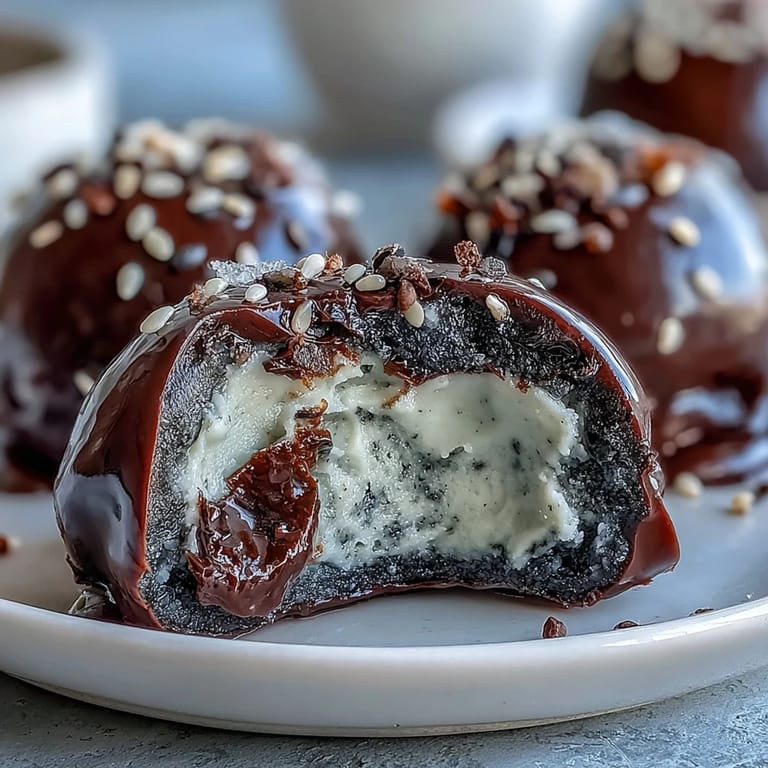
 There's something magical about the moment when you bite through a yielding mochi shell and hit that first spoonful of black sesame ice cream, earthy and rich and completely unexpected. I stumbled onto this combination while standing in a Tokyo convenience store at midnight, exhausted and hungry, watching a woman behind the counter assemble these little treasures with the kind of practiced ease that comes from making hundreds. Her hands moved so quickly, so confidently, and I remember thinking: I have to learn how to do this. What started as curiosity became an obsession, then a tradition, and now it's become one of those desserts I make when I want to impress people or, honestly, just when I need to remember that dessert can be interesting.
I made these for my neighbor's birthday last spring, and what I didn't expect was how much people would talk about them afterward. Someone asked for the recipe, which never happens, and then someone else wanted to know where to buy black sesame paste. By the next week, three people had texted me photos of their own attempts. That's when I realized this wasn't just a fancy dessert—it was the kind of thing that makes people want to get into the kitchen themselves.
Ingredients
- Whole milk: This is your base for silkiness, and honestly, don't skip it for a lower-fat option because the mouthfeel really matters when you're building custard.
- Heavy cream: The richness that makes ice cream taste like ice cream and not just frozen milk; there's no substitute that works as well.
- Granulated sugar: For both the custard and the mochi dough, and yes, you need two separate measurements because they serve different purposes in each component.
- Large egg yolks: The backbone of a proper custard, and room temperature eggs emulsify better than cold ones—let them sit on the counter while you heat the milk.
- Black sesame paste: The soul of this whole thing; make sure it's roasted and unsweetened, or you'll end up with something cloying that defeats the purpose.
- Vanilla extract: Just a whisper of it, enough to round out the earthiness of the sesame without announcing itself.
- Pinch of salt: This tiny amount amplifies every other flavor, so don't think it's optional.
- Sweet rice flour (Mochiko): This is glutinous rice flour, and it behaves completely differently than regular rice flour, so don't improvise here.
- Water: The amount matters because you're essentially making a thick paste that needs to be microwave-able; too much and it won't set up properly.
- Cornstarch: Your anti-stick agent for handling the warm mochi, and it makes the whole process significantly less frustrating than doing it without.
Tired of Takeout? 🥡
Get 10 meals you can make faster than delivery arrives. Seriously.
One email. No spam. Unsubscribe anytime.
Instructions
- Warm your milk and cream:
- Heat them together in a saucepan over medium heat until you see wisps of steam and little bubbles forming around the edges. You're not trying to boil anything; you're just warming it enough to cook the egg yolks.
- Whisk your egg yolks with sugar:
- Get a good clean bowl and whisk those yolks and sugar together for a minute or so until it goes pale and gets a bit fluffy. This step is doing something important to the texture, so don't rush it.
- Temper the eggs carefully:
- This is where patience matters. Slowly pour the hot milk into the eggs while whisking constantly, which raises the temperature gradually instead of scrambling them. It feels weird at first, but you'll get it.
- Cook the custard until thick:
- Return everything to the saucepan and cook over low heat, stirring constantly with a wooden spoon, until it coats the back of the spoon and you can draw a line through it with your finger. This takes maybe 5 minutes, and the smell will tell you when you're getting close to done.
- Fold in the black sesame:
- Once it's off the heat, whisk in the sesame paste, vanilla, and salt until smooth and dark. The paste will wake up the whole mixture and turn it into something that smells seriously good.
- Chill your custard properly:
- Strain it into a clean bowl to remove any bits of cooked egg, then let it get genuinely cold in the fridge—at least a couple hours. This step is non-negotiable for ice cream that actually tastes creamy.
- Churn the ice cream:
- Follow your machine's instructions, which usually takes 20-30 minutes. You're looking for it to reach soft-serve consistency, and yes, you need an ice cream maker for this to work.
- Freeze the ice cream balls:
- Scoop 8 balls onto a parchment-lined tray using about 2 tablespoons per ball, and get them in the freezer for at least 2 hours until they're rock solid.
- Make your mochi dough:
- In a microwave-safe bowl, whisk sweet rice flour, sugar, and water together until you have a completely smooth mixture with no lumps. Lumps will cook unevenly and ruin the texture.
- Microwave in stages:
- Cover loosely with plastic wrap and microwave for 2 minutes on high, then stir with a wet spatula. Microwave for another minute, and it should be opaque and thick and sticky.
- Cool and portion the mochi:
- Turn it out onto a cornstarch-dusted surface and let it cool just enough that you can handle it. Divide into 8 pieces and flatten each one into a round about 3.5 inches across, dusting with more cornstarch as you go.
- Wrap quickly and seal tightly:
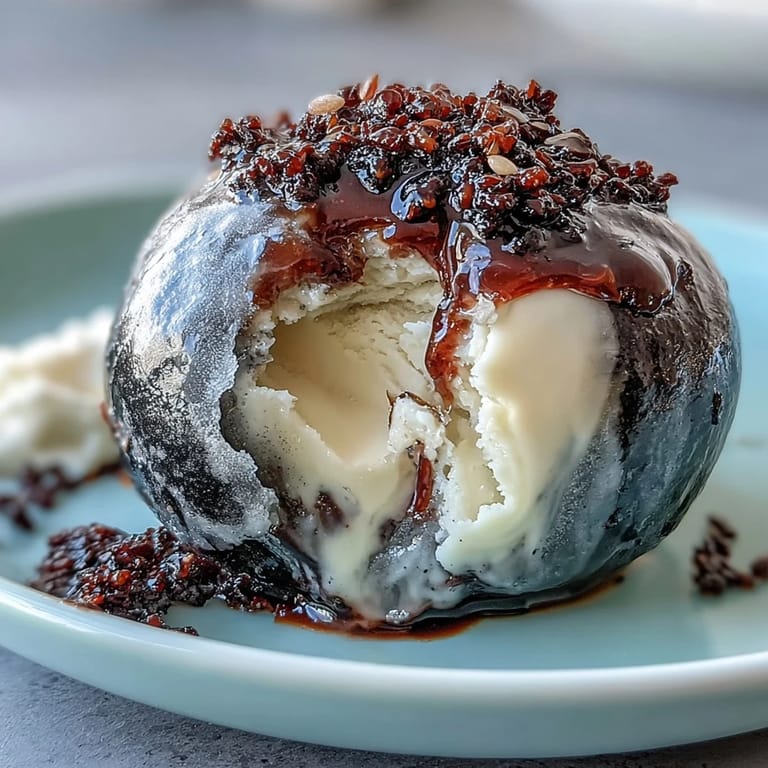
- Place a frozen ice cream ball in the center of each mochi round, then gently pinch the edges to seal it completely. You're racing time here because the ice cream melts, so work fast and don't worry about perfection.
- Set them in the freezer one more time:
- Place each wrapped ball seam-side down in a muffin tin lined with plastic wrap and freeze for 1 hour before serving. This final chill ensures the mochi stays firm and the ice cream stays scoopable.
 Pin It
 My sister called me while I was making these for a dinner party, and I was covered in cornstarch and slightly panicked about timing, but she just listened while I worked through it and somehow that made everything feel less stressful. By the time people bit into them later that night, I'd forgotten about the small disasters along the way and was just proud of what I'd made. That's when I understood that cooking for people you care about changes how the process feels, even when you're stressed.
Why Black Sesame Works
Black sesame tastes nothing like white sesame if you've only had tahini before, and that's the whole point. It's deeper and more mineral, with an almost savory edge that ice cream normally doesn't have, which makes it feel like you discovered something instead of just eating another vanilla variation. The roasting brings out nutty undertones, and when you freeze it, those flavors become even more concentrated and interesting. People who think they don't like sesame often come around once they taste this version, because it's not fishy or weird—it's just sophisticated.
The Texture Science Behind Mochi
Mochi is basically cooked rice flour that becomes this incredible stretchy, chewy thing, and the magic happens because of how the starches in sweet rice flour behave under heat. The microwave method is genius because it heats the mixture evenly and quickly, which prevents lumps from forming and keeps everything smooth. When you bite through that mochi shell, it should give way with a gentle snap before becoming chewy, and if it doesn't, it usually means the dough was either too thick or too thin—the water ratio really matters here.
Bringing It All Together
The assembly is honestly the most important part, not because it's technically complex but because speed determines whether your ice cream stays frozen or becomes a disaster. The muffin tin trick keeps them from sticking to each other or rolling around, and the plastic wrap makes cleanup easier when you're done. If you're making these ahead, they keep well in the freezer for up to a week, so you can make them days in advance if you want to avoid the last-minute rush.
- Serve them directly from the freezer while they're still very cold, because they warm up and lose their texture quickly once exposed to room temperature.
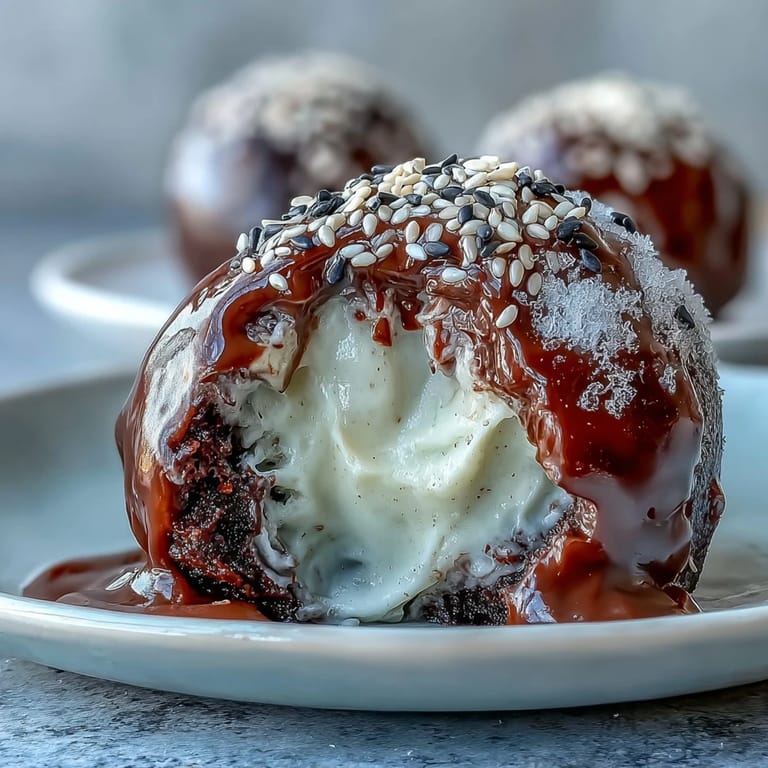
- If you want to fancy them up, roll the finished mochi in roasted black sesame seeds before that final freeze, which adds extra nuttiness and visual appeal.
- Green tea pairs perfectly with these because the bitterness balances the sweetness, and it's the most natural pairing you can imagine.
 Pin It
 These mochi ice cream balls are the kind of dessert that reminds you why cooking is worth the effort in the first place. They're beautiful, unexpected, and completely rewarding to make.
Recipe Questions & Answers
- → What gives the ice cream its black sesame flavor?
Roasted, unsweetened black sesame paste is whisked into the custard base to infuse a rich, nutty flavor throughout the ice cream.
- → How is the mochi dough prepared?
Sweet rice flour, sugar, and water are microwaved in intervals to form a sticky, pliable dough that’s dusted with cornstarch for handling.
- → How do I prevent ice cream from melting when wrapping?
Work quickly to enclose the frozen ice cream balls in mochi dough and keep them on parchment-lined trays in the freezer until sealing is complete.
- → Can I substitute black sesame paste with another ingredient?
Store-bought black sesame spread can be used as a convenient alternative without compromising flavor significantly.
- → What is the recommended serving suggestion?
For an authentic pairing, serve the treat alongside green tea to balance the rich and sweet flavors.