 Pin It
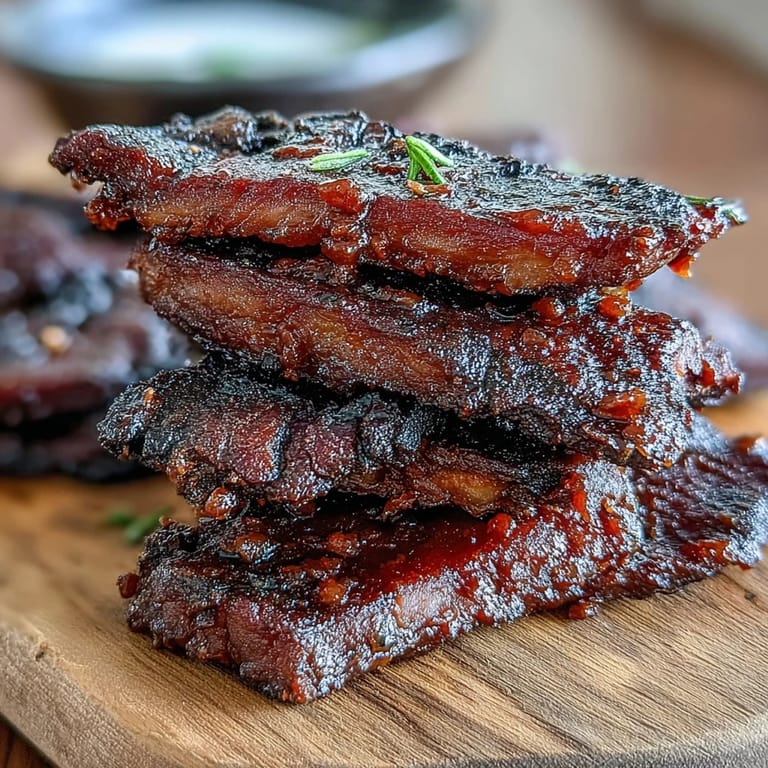
 There's something about the smell of cherry wood smoke curling through the kitchen that makes you feel like you're doing something properly old-school, even if you're just standing in front of your oven with the window cracked open. I stumbled onto this black currant jerky recipe during one of those late-night recipe spirals, convinced that jam had no business anywhere near beef until I actually tasted the result. The tanginess cuts through the richness, the smoke adds this mysterious depth, and suddenly you've got a snack that tastes nothing like what you expected but somehow exactly what you needed.
My partner walked in halfway through the marinating process, took one whiff of the fridge, and asked if something had gone wrong. Eight hours later, when I pulled those strips from the smoker, they'd made peace with the smell and were suddenly very interested in being taste-testers. Nothing bonds people faster than the promise of jerky that actually tastes like you put effort in.
Ingredients
- Lean beef (1.5 lbs, thinly sliced against the grain): This is your foundation, so don't skimp on quality—top round, flank, or sirloin all work beautifully, but slicing against the grain makes each bite tender rather than stringy.
- Black currant jam or preserves (1/2 cup): The sweet-tart hero here; use the real stuff, not the discount kind, because you'll actually taste the difference in that first pull.
- Soy sauce (1/4 cup): Swap for tamari if you need gluten-free, and don't mess around with the cheap stuff—you need the umami depth.
- Worcestershire sauce (2 tbsp): This adds a background savory note that makes people ask what the secret ingredient is.
- Apple cider vinegar (2 tbsp): Brings a brightness that prevents the marinade from feeling one-note sweet.
- Brown sugar (1.5 tbsp): Helps balance the acids and caramelizes slightly during smoking.
- Smoked paprika (1 tbsp): Echoes the cherry wood smoke so the flavor feels intentional, not accidental.
- Garlic powder, onion powder, black pepper, kosher salt (1 tsp, 1 tsp, 1/2 tsp, 1/2 tsp): The supporting cast that keeps everything grounded and savory.
- Cayenne pepper (1/4 tsp, optional): A whisper of heat if you want to shake things up; skip it if you're serving to people who think spicy means trouble.
- Water (2 tbsp): Helps the jam dissolve into the marinade instead of clumping up.
- Cherry wood chips: Absolutely worth hunting down; they're milder and sweeter than hickory, which pairs perfectly with the fruit notes.
Tired of Takeout? 🥡
Get 10 meals you can make faster than delivery arrives. Seriously.
One email. No spam. Unsubscribe anytime.
Instructions
- Build your marinade:
- In a bowl, whisk together the black currant jam, soy sauce, Worcestershire, apple cider vinegar, brown sugar, smoked paprika, garlic powder, onion powder, black pepper, salt, cayenne if using, and water until it's completely smooth with no jam chunks floating around. This should look like a glossy, deep-red sauce with flecks of spice.
- Coat and marinate:
- Add your beef slices to the marinade, making sure every single piece gets coated—use your hands if you need to, it's the best way to ensure nothing gets missed. Cover the bowl and refrigerate for at least 8 hours, though overnight is when the magic really happens and the flavors properly sink in.
- Prepare your strips:
- Take the beef out of the fridge, drain it well, and pat each strip completely dry with paper towels—this is non-negotiable if you want jerky and not beef leather. Don't be shy with the patting; excess moisture is the enemy of good texture.
- Arrange for smoking:
- Lay your strips out in a single layer on wire racks or dehydrator trays, making sure nothing overlaps, because air circulation is everything here. If pieces are touching, they'll stick together and won't dry evenly.
- Set your temperature:
- Get your smoker or oven ready for low and slow—aim for 160°F (71°C). If you're using a smoker, prep your cherry wood chips according to whatever manual you've got; if you're using an oven, this is where you have to get creative with propping the door open slightly or using an oven thermometer to keep temps steady.
- Smoke and dehydrate:
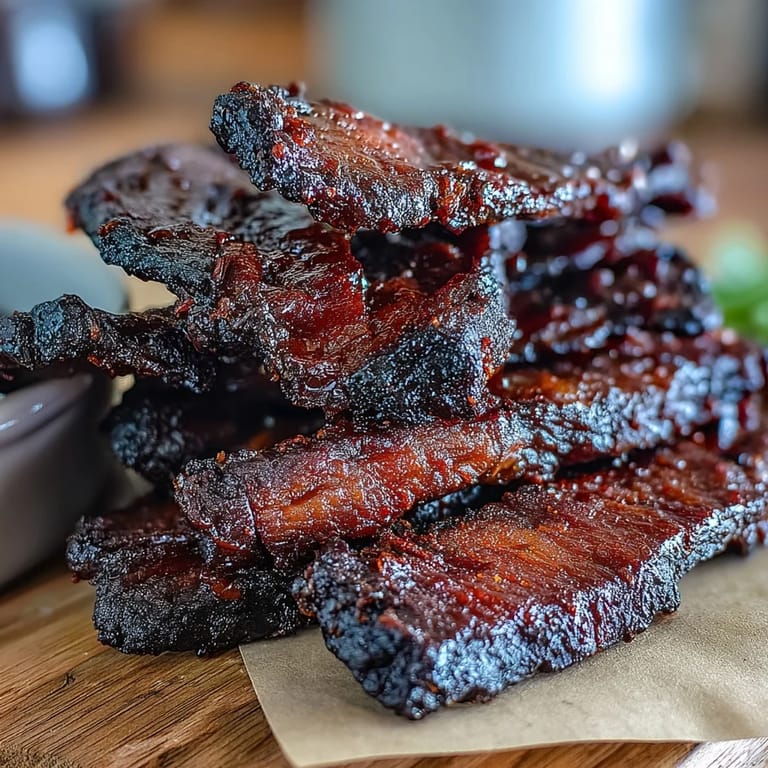
- Put the beef in to smoke or dehydrate for 4 to 6 hours total, flipping the strips halfway through so they dry evenly on both sides. You're looking for strips that bend slightly without snapping but have no moisture when you press them.
- Cool and store:
- Once the jerky is done, let it cool completely on the racks before touching it—patience here prevents burning your fingers and lets the smoke flavor settle in. Store in an airtight container, and it'll keep for up to 2 weeks refrigerated or a month if you vacuum-seal it.
 Pin It
 The best moment with this jerky came when a friend who claims to hate sweet things tried it without knowing about the black currant and actually stopped mid-chew to say it was nothing like they expected. It became the kind of snack we made in batches, the kind you find yourself picking at straight from the container at midnight.
The Black Currant Magic
Most people think jam in jerky marinade is a shortcut or a gimmick, but it's actually a smart move because it dissolves into the liquid, caramelizes slightly during smoking, and creates these little pockets of concentrated sweetness that hit you first. The acid in the jam also helps tenderize the beef, which means you're getting both flavor and texture benefits from a single ingredient.
Smoking Versus Dehydrating
If you've got a smoker, use it for the full time and embrace the cherry smoke—it's going to be noticeably better than oven-dehydrated jerky. If you're oven-bound, the first 2 hours with smoke (via a smoking box or wrapped chips on a burner nearby) followed by 2 to 4 hours of dry heat is a solid compromise that still gets you 80 percent of the way there.
Storage and Flavor Development
Fresh jerky tastes great, but it honestly gets better after sitting for a day or two—the flavors mellow and meld, and the smoke settles into every fiber. Vacuum-sealing is your friend if you want this to last a month, because it keeps air out and makes sure the jerky stays flexible and flavorful instead of slowly drying out further.
- If you like things sweeter, bump up the jam by a tablespoon and reduce the soy sauce slightly so you don't oversalt.
- Cayenne heat is completely optional, but a quarter teaspoon is just enough to add complexity without making people cough.
- Always let the jerky cool completely before storing, or moisture will condense inside the container and ruin your texture.
 Pin It
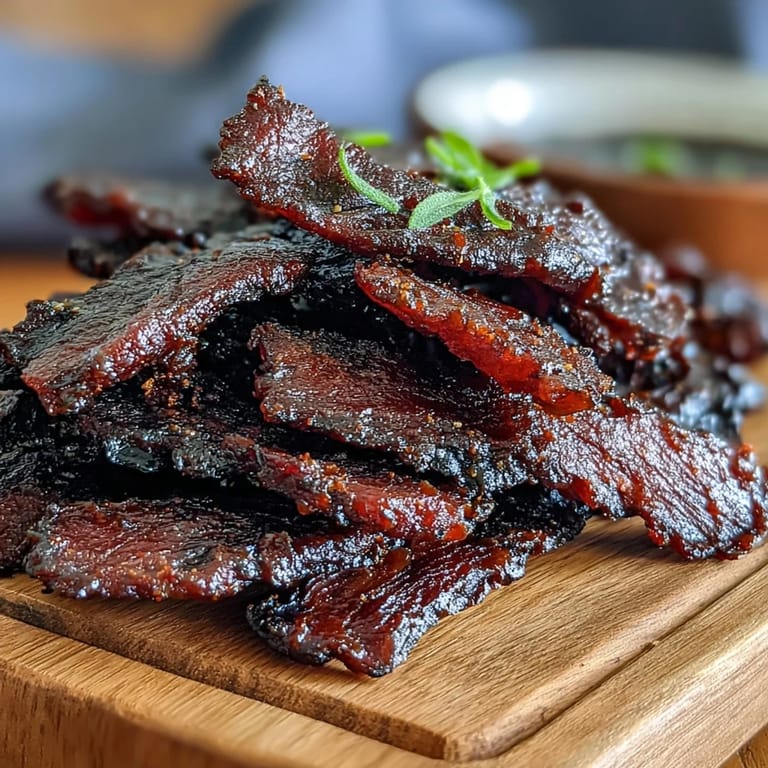
 This jerky sits in that beautiful middle ground where it's not a guilty pleasure and not trying too hard to be fancy—it's just genuinely good food that happens to take patience. Once you've made it once, you'll understand why it's worth the wait.
Recipe Questions & Answers
- → What cut of beef works best?
Top round, flank steak, or sirloin are ideal choices. Look for lean cuts with minimal fat, as fat doesn't dehydrate well and can make the final product spoil faster.
- → Can I make this without a smoker?
Yes. Use your oven set to the lowest temperature (usually 160°F/71°C) with the door slightly propped open. You'll miss the cherry wood smoke flavor, but liquid smoke added to the marinade helps compensate.
- → How thin should I slice the beef?
Aim for slices between 1/8 to 1/4 inch thick. Partially freezing the meat for 30-60 minutes before slicing makes it easier to cut uniform strips. Always slice against the grain for tender results.
- → How do I know when it's done?
The jerky is ready when it's dry to the touch but still slightly pliable. It should bend without breaking but shouldn't feel moist or sticky. A piece bent in half should crack slightly but not snap apart.
- → Can I use other fruit preserves?
Absolutely. Blackberry, raspberry, or blueberry preserves work well. Each brings slightly different sweetness and tartness levels. Adjust brown sugar accordingly to maintain the sweet-savory balance.
- → Is this gluten-free?
It can be. Substitute tamari or coconut aminos for regular soy sauce, and ensure your Worcestershire sauce is certified gluten-free. Always check labels on all packaged ingredients.