 Pin It
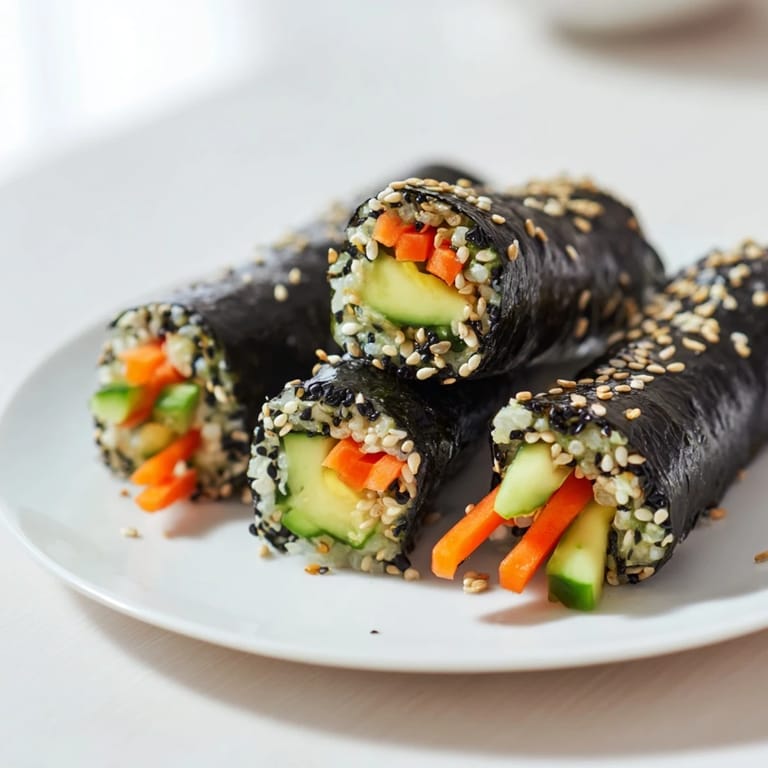
 I used to think sushi was something you could only trust a chef to make. Then one rainy Saturday, I found myself with leftover rice, a ripe avocado, and curiosity. My first roll fell apart completely, rice everywhere, but by the third try something clicked. Now I make these veggie rolls almost every week, and they taste better than anything I used to order.
I made these for a small dinner party once, and everyone assumed I'd spent the whole day preparing. The truth is, I rolled them in under half an hour while chatting with a friend in the kitchen. Watching people reach for seconds without knowing how simple they were felt like winning a quiet victory.
Ingredients
- Sushi rice: This short-grain rice gets sticky when cooked, which is exactly what holds your roll together. Rinse it well or the texture turns gummy.
- Rice vinegar: The tangy sweetness here is what makes sushi rice taste like sushi rice. Don't skip this step or you'll end up with plain rice.
- Nori sheets: These seaweed sheets add a subtle ocean flavor and structure. Keep them dry until you're ready to roll or they get limp.
- Avocado: Choose one that's ripe but still firm. Too soft and it turns to mush under the knife.
- Cucumber: Julienne it into thin strips so it doesn't overpower the roll. I like English cucumber because it has fewer seeds.
- Carrot: Optional, but it adds a pop of color and a little extra crunch that makes each bite more interesting.
- Sesame seeds: Toasting them for a minute in a dry pan brings out a nutty warmth that's worth the extra step.
- Soy sauce or tamari: For dipping. Tamari keeps it gluten-free if that matters to you.
Tired of Takeout? 🥡
Get 10 meals you can make faster than delivery arrives. Seriously.
One email. No spam. Unsubscribe anytime.
Instructions
- Rinse and cook the rice:
- Rinse the sushi rice under cold water until it runs clear, then combine with water in a saucepan. Bring to a boil, cover, reduce to low, and simmer for 18 to 20 minutes until the water disappears.
- Season the rice:
- Mix rice vinegar, sugar, and salt in a small bowl, then gently fold it into the warm rice. Let it cool to room temperature so it doesn't steam the nori when you roll.
- Prep your fillings:
- Slice the avocado, julienne the cucumber and carrot into thin matchsticks. Have everything ready before you start rolling or the rice will dry out.
- Spread the rice:
- Place a nori sheet shiny side down on your bamboo mat, then spread a quarter of the rice evenly over it with wet hands, leaving a one-inch border at the top. The rice should be thin and even, not clumpy.
- Add the fillings:
- Lay your avocado, cucumber, and carrot in a neat line along the bottom edge of the rice. Sprinkle sesame seeds over the top if you're using them.
- Roll it up:
- Use the mat to lift the bottom edge and roll it tightly away from you, pressing gently as you go. Moisten the top border with a little water to seal the roll closed.
- Slice and serve:
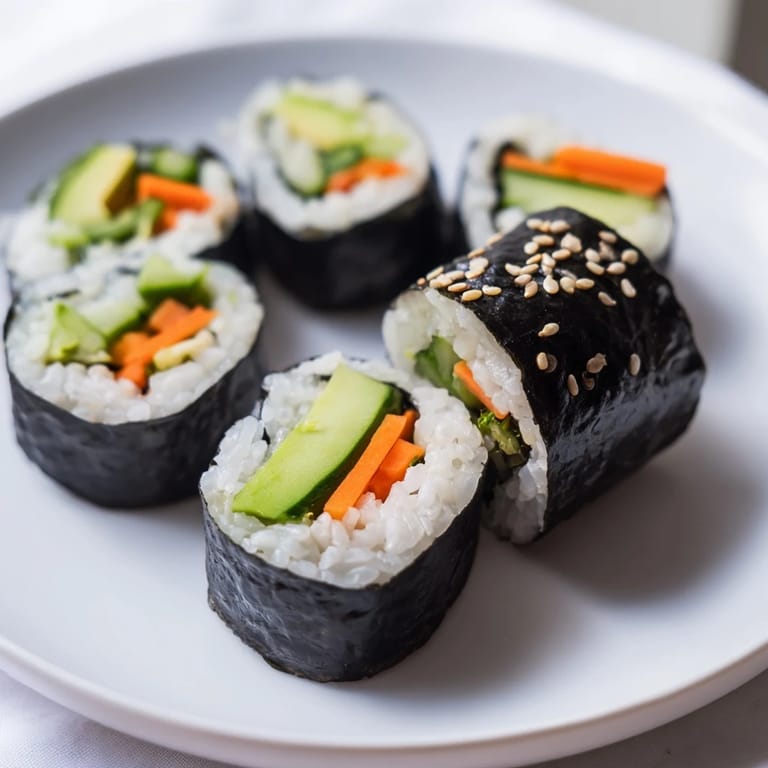
- Dip a sharp knife in water, then slice each roll into six to eight pieces. Serve with soy sauce, pickled ginger, and wasabi on the side.
 Pin It
 There's something meditative about rolling sushi now. The repetition, the neat rows of color, the way it all comes together in your hands. I made a batch the night before a long trip once, and eating them cold on the train felt like bringing a little piece of home along.
Variations You Might Try
I've added thin strips of bell pepper for sweetness, radish for bite, and even mango when I'm feeling adventurous. If you want protein, marinated tofu or crispy tempeh work beautifully. Brown sushi rice takes longer to cook but adds a nutty depth that's worth it if you have the time.
Storing and Packing
These rolls hold up surprisingly well for a few hours if you wrap them tightly in plastic wrap and keep them cool. I've packed them for picnics, road trips, and work lunches without any trouble. Just don't slice them until you're ready to eat or the edges dry out.
Serving Suggestions
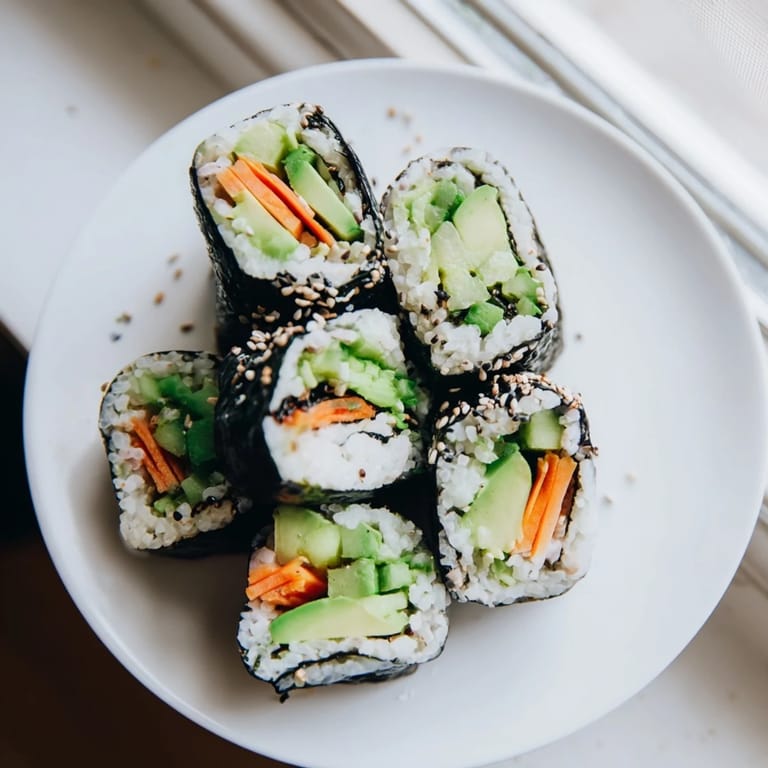
I like to arrange the slices on a wooden board with small bowls of soy sauce, pickled ginger, and a dab of wasabi. Sometimes I add a side of miso soup or a simple seaweed salad to round out the meal. Here are a few things I've learned about serving.
- Room temperature sushi tastes better than cold sushi straight from the fridge.
- A little wasabi mixed into the soy sauce goes a long way.
- Pickled ginger is meant to cleanse your palate between bites, not to pile on top.
 Pin It
 Once you get the hang of it, rolling sushi becomes second nature. You'll start experimenting with fillings, adjusting the rice, and finding your own rhythm.
Recipe Questions & Answers
- → How do I prepare sushi rice for the rolls?
Rinse the sushi rice until water runs clear. Cook with water until absorbed, then season with rice vinegar, sugar, and salt for authentic flavor.
- → What ingredients add crunch to these rolls?
Crisp cucumber and optional julienned carrot provide refreshing crunch alongside the creamy avocado.
- → Can I make these rolls gluten-free?
Yes, by using tamari instead of soy sauce and ensuring all ingredients are gluten-free, these rolls suit gluten-sensitive diets.
- → What tools help with assembling the rolls?
A bamboo sushi rolling mat and a sharp knife make rolling compact and slicing easier for neat pieces.
- → How can these rolls be customized?
Add vegetables like bell pepper or radish, or include tofu or tempeh strips to vary texture and boost protein.