 Pin It
 There's something about spring that makes me want to make soup, which sounds backwards until you taste asparagus soup on a cool April evening when the weather can't decide what it wants to be. My neighbor dropped off a bundle of impossibly green asparagus from her garden, and I found myself standing in the kitchen at dusk, wondering what to do with something so elegant and fleeting. This soup came together almost by accident, becoming the kind of dish that tastes like it took hours but somehow doesn't.
I made this for my mother-in-law once when she arrived unannounced, and I watched her face shift from polite to genuinely delighted with the first spoonful, which was worth every bit of knife work on that leek. She asked for the recipe immediately, and when I told her it was mostly just patience and good vegetables, she smiled like I'd given her the real secret anyway.
Ingredients
- Fresh green asparagus (500 g), trimmed and cut into 2 cm pieces: The stalks do the heavy lifting here, while the tips stay separate to crown each bowl with a whisper of fresh vegetable—this trick keeps the texture interesting and the presentation bright.
- Medium leek, white and light green parts only, sliced: People often skip leeks thinking they're complicated, but they're actually gentler and sweeter than onions once you've separated the tender white layers from the tougher greens.
- Small onion, chopped: Just enough to give the base a whisper of depth without overpowering the asparagus, which is the star here.
- Medium potato, peeled and diced: This becomes invisible in the blending but gives the soup body and a silky mouthfeel that makes people think you've added cream earlier than you actually did.
- Vegetable broth (1 L): Use something you'd actually drink on its own—the quality matters more here than in dishes where the flavors get buried.
- Heavy cream (150 ml): This is the final note that transforms the soup from bright and simple to luxurious, so don't skip it or substitute it lightly.
- Unsalted butter (2 tbsp): The starting point that gently coaxes out the sweetness of the vegetables without rushing them.
- Salt, freshly ground black pepper, and nutmeg to taste: The nutmeg is optional but recommended—just a pinch wakes up the earthiness without announcing itself.
- Fresh lemon juice (1 tbsp): This is the rescue button you press at the end if the soup tastes flat; it pulls everything into focus without making the soup taste sour.
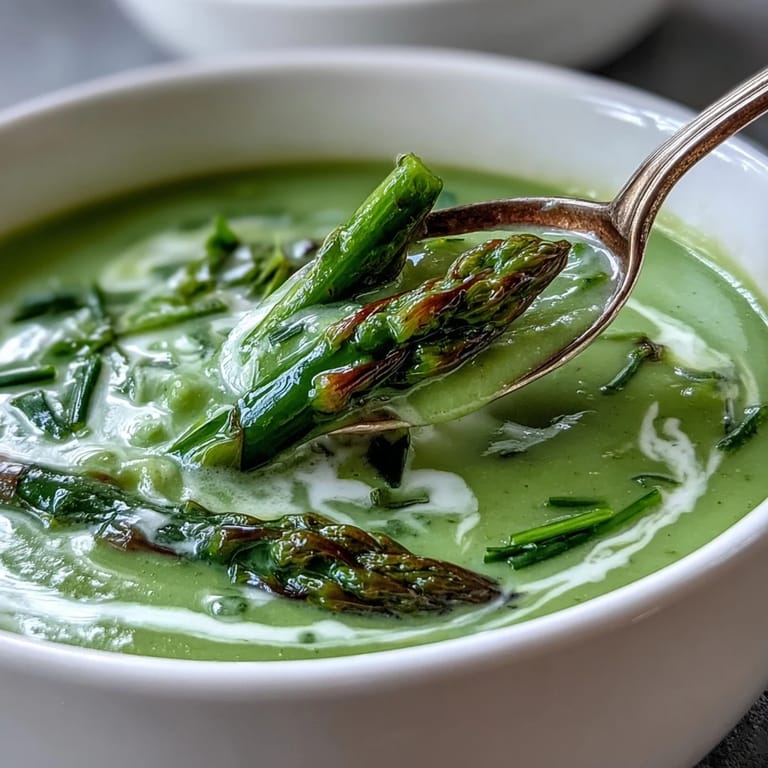
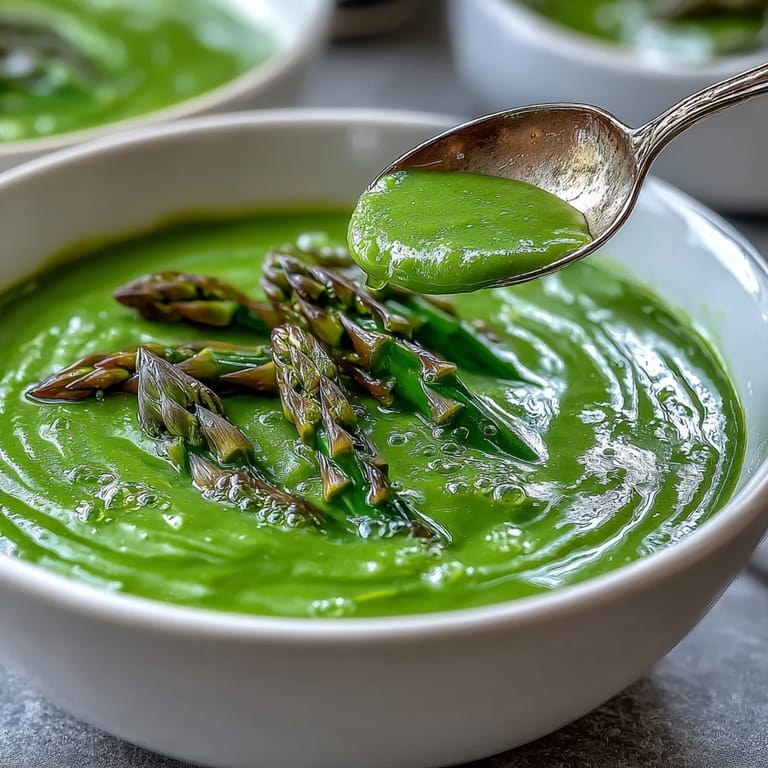
- Reserved asparagus tips, blanched, for garnish: These are your final flourish, adding texture and reminding everyone what this soup is actually made from.
- Chopped fresh chives or parsley (optional): A handful scattered on top brings brightness and a delicate onion note that complements the asparagus perfectly.
Tired of Takeout? 🥡
Get 10 meals you can make faster than delivery arrives. Seriously.
One email. No spam. Unsubscribe anytime.
Instructions
- Melt butter and soften the base:
- In a large saucepan over medium heat, let the butter pool and foam gently before adding the onion, leek, and potato. Cook for 4 to 5 minutes, stirring occasionally, until they soften and turn translucent—you're listening for a gentle sizzle, not a furious sear.
- Add the asparagus stalks and build flavor:
- Toss in those reserved asparagus stalks and let them cook for just 2 minutes so they start to release their flavor into the butter. The kitchen will smell like spring at this point, which is how you know you're on the right track.
- Bring the soup to a boil, then simmer gently:
- Pour in the vegetable broth, increase the heat until you see active bubbles, then lower it back down and let everything simmer for 15 minutes until the vegetables are completely tender and giving no resistance when you press them with a spoon. This is the moment to prepare the asparagus tips.
- Blanch the asparagus tips while the soup cooks:
- In a separate pot of boiling salted water, drop the reserved tips and count to 90 seconds—they should still have a slight firmness and that brilliant green color. Drain them immediately and set aside so they stay crisp and bright.
- Puree the soup until completely smooth:
- If you have an immersion blender, submerge it completely and work it through the soup in slow passes until there's no trace of vegetable chunks and the whole thing becomes a silky, pale green. If you're using a countertop blender, work in batches and let the steam escape by leaving the lid slightly ajar.
- Finish with cream and final seasoning:
- Stir in the heavy cream and bring the soup back to a gentle simmer—not a boil, which can cause the cream to separate and look curdled. Add salt, pepper, a pinch of nutmeg if you're using it, and the lemon juice, then taste and adjust until it tastes like itself but better.
- Serve with intention and garnish:
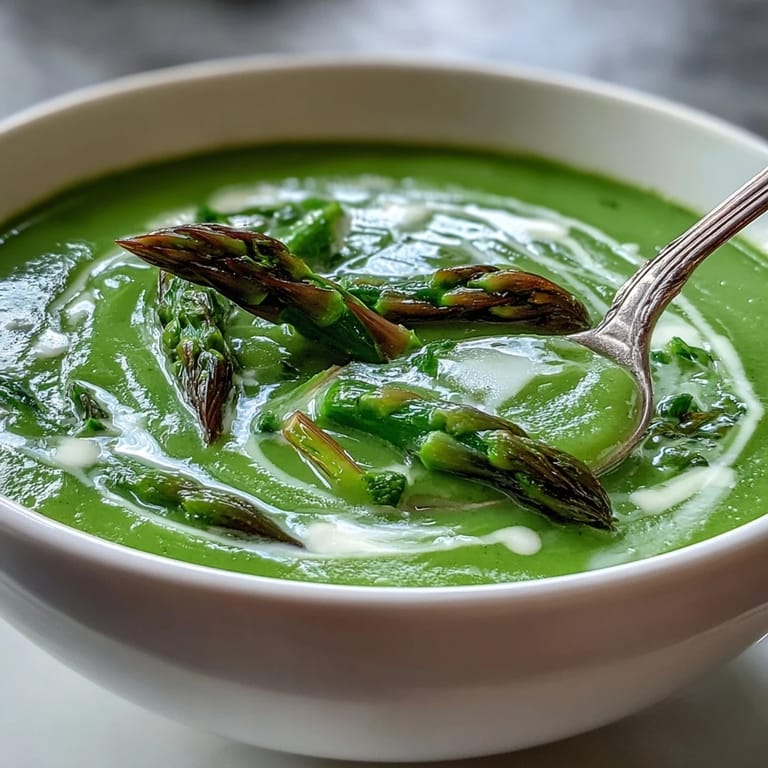
- Ladle into bowls and crown each one with a small handful of the blanched asparagus tips and a sprinkle of fresh chives or parsley if you have them. The combination of the silky soup with the tender vegetables on top is where the magic lives.
 Pin It
 There's a moment when you're standing over a pot of pale green soup and you add that squeeze of lemon and suddenly the whole thing snaps into focus, tastes alive, and you realize you've made something that tastes like it cost more than the vegetables you spent on it. That's when this dish stops being about technique and becomes about the small magic of cooking something simple with attention.
The Spring Vegetable Window
This soup exists in a narrow window of time when asparagus is truly in season—usually late March through May depending on where you live. If you can't find fresh asparagus, the soup won't be the same, and that's okay; it's better to wait a few weeks than to force it with the woody, pale stalks that sit in bins for months. When you do find good asparagus, buy more than you think you need because it cooks down dramatically and tastes so much better than you'd expect something so simple to taste.
Why This Works as an Appetizer
There's something about serving this soup first that puts people in the right mood for whatever comes next—it's light enough that it doesn't fill you up, but flavorful enough that it feels special and intentional. The cream and the bright asparagus flavor together create a moment of pause, a chance to settle into a meal and actually taste what you're eating instead of just moving through courses automatically. I've learned that this kind of opening sets the tone for the whole dinner.
Making It Your Own
Once you understand the skeleton of this soup—softened vegetables, broth, blending, cream—you can play with it in ways that feel natural and true to what you have on hand. Some days I add a whisper of tarragon instead of nutmeg, other times I stir in a splash of white wine before the broth for a deeper note. The potato is what makes it feel luxurious, but you could use cauliflower if you prefer a lighter texture, or add spinach if you want earthiness.
- A poached egg stirred into each bowl at serving time turns this from appetizer to simple lunch.
- Crispy pancetta or prosciutto crumbled over the top adds a salty contrast that some people find irresistible.
- Swapping the cream for crème fraîche gives it a subtle tang that brightens the whole thing without changing the texture.
 Pin It
 This soup taught me that good cooking is often just about choosing the best version of something simple and then leaving it alone long enough to become itself. It's a lesson that applies to life as much as it applies to vegetables and cream.
Recipe Questions & Answers
- → How do I make this soup vegan?
Substitute olive oil for butter and use plant-based cream instead of heavy cream. The flavor and texture remain excellent while making it completely dairy-free.
- → Can I freeze this soup?
Yes, freeze before adding cream. Cool completely, store in airtight containers for up to 3 months. Thaw overnight, reheat, then stir in cream and finish as directed.
- → What can I use instead of potato?
You can use cauliflower florets or omit potato entirely for a thinner consistency. The potato adds natural thickness and body to the puree.
- → How do I store leftovers?
Refrigerate in a sealed container for 3-4 days. Reheat gently over medium-low heat, stirring occasionally. The soup may thicken when cold, add splash of broth when reheating.
- → Can I use frozen asparagus?
Fresh asparagus yields the best flavor, but frozen works in a pinch. Thaw completely before cooking and expect slightly different texture. Skip blanching step for tips.