 Pin It
 I'll never forget the first time I walked into a modern Asian fusion restaurant and saw a noodle board presentation that absolutely stopped me in my tracks. It was so beautifully arranged, like edible art, with every color of the rainbow represented in neat little sections. That moment sparked something in me—I realized that food this stunning didn't have to stay in a restaurant kitchen. I went home that night and started experimenting, and this Asian Fusion Noodle Bowl Board became my love letter to that experience. Now whenever I make it for friends and family, I watch their faces light up the same way mine did, and I know I've captured that magic.
I remember making this for a dinner party on a Friday night when I was feeling ambitious. My best friend arrived early to help, and instead of just sitting and catching up like we usually do, we found ourselves standing side by side at my kitchen counter, slicing vegetables together and talking about life while the noodles cooled. By the time everyone arrived, the board was stunning, but what I remember most clearly is how that simple shared task brought us closer together. Food really does have a way of creating those moments.
Ingredients
- Rice noodles or soba noodles (300 g): These are the foundation of your board—rice noodles stay tender and won't get mushy, while soba brings a nutty complexity if you're feeling fancy. I always cook them until just barely tender and rinse with cold water immediately so they don't stick together.
- Sesame oil (1 tbsp): This is the secret ingredient that keeps noodles separate and adds a toasted aroma that whispers through every bite. Use regular sesame oil here, not the dark kind meant for drizzling.
- Cooked chicken breast, thinly sliced (200 g): Slice it thin so it's easy to pick up and eat. I like to cook my chicken with a bit of soy sauce and ginger so it has flavor beyond just being protein.
- Cooked shrimp, peeled and deveined (150 g): The shrimp adds elegance and a hint of the sea. Buy them pre-cooked if you're short on time—nobody will know, and you'll have more energy for presentation.
- Boiled eggs, halved (2): These add richness and help hold everything together. I boil mine for exactly 6 minutes so the yolks stay slightly jammy in the center.
- Julienned carrots (1 cup): The bright orange is non-negotiable for visual appeal. Use a vegetable peeler or knife to create thin, consistent strands.
- Cucumber, thinly sliced (1 cup): This brings cooling freshness and a subtle crunch that feels essential when you're dipping into rich sauces.
- Red bell pepper, julienned (1): Another color hero on the board. I love how the strips catch the light when you arrange them.
- Red cabbage, thinly sliced (1 cup): Deep, gorgeous color and a slight sweetness that plays beautifully with the salty sauces.
- Cooked edamame, shelled (1 cup): These little green gems add texture and protein, and they feel special on a sharing board.
- Radishes, thinly sliced (4): They bring a peppery bite and paper-thin slices that are almost translucent if you do them right.
- Scallions, sliced (2): These are your finishing touch—green and fresh and they remind everyone this is meant to be vibrant and alive.
- Fresh cilantro leaves (1/4 cup): Don't skip this. The herbaceous brightness is what makes people close their eyes when they eat.
- Fresh mint leaves (1/4 cup): This was my secret weapon that I discovered by accident. It sounds unexpected, but it transforms the entire experience.
- Roasted peanuts, chopped (1/4 cup): Buy them already roasted so you don't have to think about it, and chop them right before assembly so they stay crunchy.
- Toasted sesame seeds (2 tbsp): Toast these yourself if you have five minutes—it makes them infinitely better than pre-toasted. If you don't, pre-toasted is absolutely fine.
- Lime wedges: These are the punctuation mark at the end of every bite. Don't underestimate their power.
- Soy sauce (1/3 cup): Your classic umami anchor. I use low-sodium so I can control the saltiness.
- Spicy peanut sauce (1/3 cup): Buy a good quality brand or make your own—this is where the bowl gets heat and personality.
- Hoisin sauce (1/3 cup): Sweet, tangy, and slightly mysterious. This is the sauce people always ask about.
- Sweet chili sauce (1/3 cup): Bright, accessible, and somehow makes everything taste better. It's the friend everyone likes at the party.
Tired of Takeout? 🥡
Get 10 meals you can make faster than delivery arrives. Seriously.
One email. No spam. Unsubscribe anytime.
Instructions
- Cook the noodles with intention:
- Fill a pot with water and bring it to a rolling boil—you want the water actively bubbling. Add your noodles and stir gently so they don't clump together. Follow the package timing, but start checking a minute before so you catch them at that perfect tender-but-still-has-character moment. When they're done, drain them carefully and rinse under cold running water until the water runs clear and they feel cool to your touch. This stops the cooking and prevents them from becoming gluey. Toss them with the sesame oil right away, and you'll notice how the oil coats each strand so they stay separate and silky.
- Prep all your vegetables with care:
- This is where meditation meets cooking. Take your time slicing each vegetable, thinking about how it will look on the board. Use a sharp knife and a steady hand. The thinner and more uniform your slices, the more professional the whole thing will look. Julienne the carrots and peppers into thin matchsticks, slice the cucumber and radishes paper-thin, and shred the cabbage like you're being paid by the restaurant to do it. Arrange everything on a separate plate as you go so you know exactly what you have.
- Arrange the proteins thoughtfully:
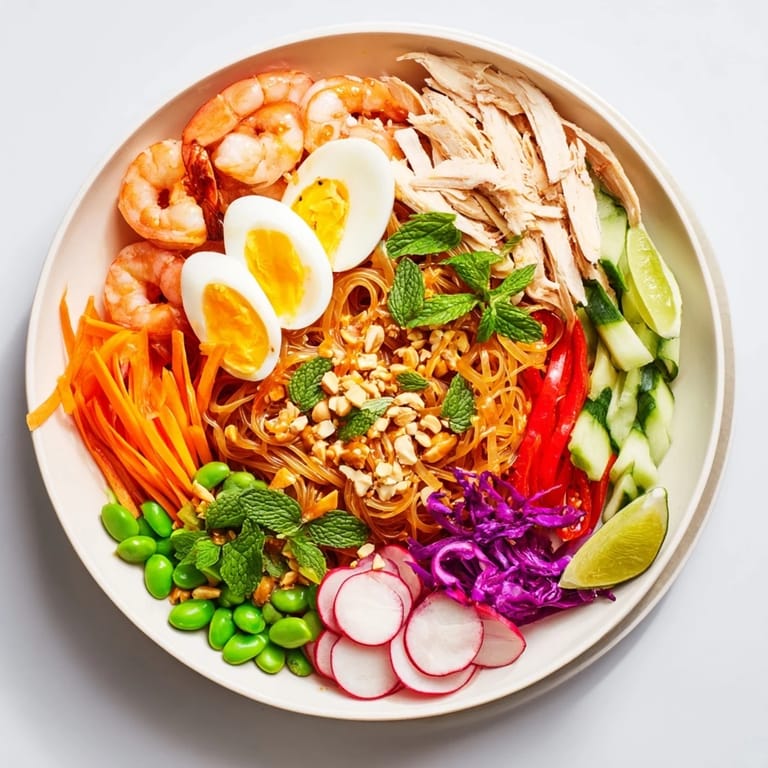
- On your large board or platter, designate specific sections for chicken, shrimp, tofu, and eggs. I like to make neat little piles or fan them out slightly so each protein feels special and separate. This isn't just practical—it also gives your guests choice and makes the board feel more intentional.
- Create the sauce center:
- Place your bowl (or four small bowls if you have them) in the center of the board. If you're using one bowl, divide it mentally into quarters and pour each sauce into its section, or use a divided dish that does this for you. The sauces should look jewel-like and inviting, and they're the beating heart of this whole experience.
- Build the visual landscape:
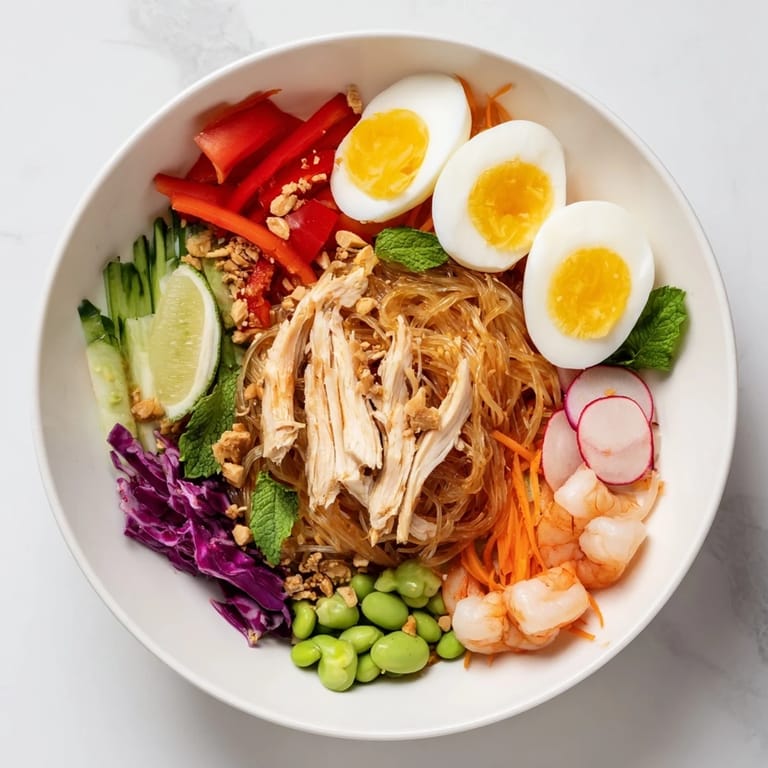
- Now comes the part that feels like art. Fill the remaining spaces with noodles arranged in a neat coil or pile, then position your vegetables in rows or fan shapes around them. Think about color balance—you want bright greens near deep reds, orange next to purple. If one area feels empty, fill it with another vegetable or some extra herbs. Step back and look at it from above. Does it make you happy? Does it look like something you'd photograph? If yes, you're ready.
- Finish with the flourish:
- Scatter the cilantro, mint, peanuts, and sesame seeds across the whole board—not so much that it's overwhelming, but enough that there's herbaceous green and flecks of gold everywhere. Tuck lime wedges into the gaps. Everything should feel abundant but organized, like a beautiful garden someone actually planned.
 Pin It
 I made this board for my mom's birthday dinner last spring, and I watched her face as everyone arrived and saw the table. She got a little teary, which wasn't about the noodles at all—it was about seeing the people she loves gathered around something beautiful that said, without words, "I made this time special for you." That's when I really understood what this recipe was about.
The Art of Building Your Own Bowl
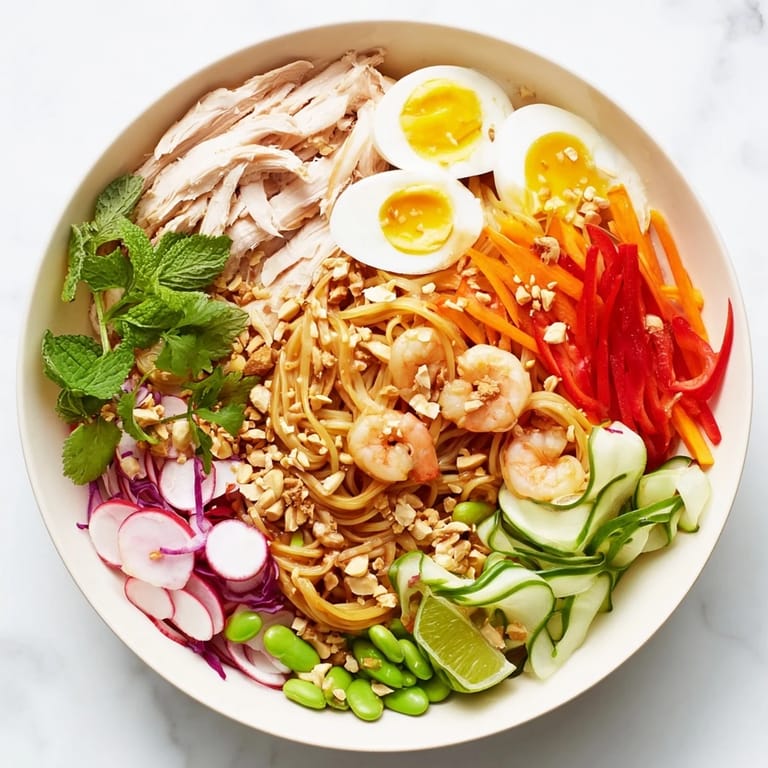
The beauty of this noodle board is that it's not just about eating—it's about creating. Everyone builds their own bowl with the components they love most, and what emerges is as unique as the person making it. Some people will load up on vegetables and go light on sauce. Others will create a shrimp-and-egg focused situation with minimal noodles. There's no wrong way to do this, and that freedom is what makes it feel special. I like to watch people as they make their choices—you learn a lot about someone by watching how they build their bowl.
Why This Works as a Sharing Experience
There's something about sharing from a central board that creates conversation and connection in a way individual plates never quite manage. People lean in, they reach across each other, they point and say "try this with that," and suddenly you're not just eating—you're having an experience together. It takes the pressure off you as the host too, because you're not plating individual servings and worrying about whether everyone's happy. The board is the star, and people serve themselves, which is both easier for you and somehow more satisfying for them.
Sauce Strategy and Flavor Combinations
The four sauces on this board represent four different flavor personalities, and learning how to pair them with your components is its own kind of fun. Soy sauce is your classic umami backbone—pair it with shrimp and sesame seeds. Spicy peanut sauce loves the vegetables and adds heat that wakes everything up. Hoisin brings sweetness that mellows the raw vegetables, and sweet chili sauce is honestly good with absolutely everything. The magic happens when you try combinations—a bit of shrimp dipped in hoisin, then a piece of cucumber in spicy peanut, then some noodles with a lime squeeze in soy sauce. You start to understand what these flavors are doing and why they exist.
- If you're serving people who don't like spice, you can go lighter on the spicy peanut sauce and emphasize the hoisin and sweet chili instead
- Always put out extra lime wedges than you think you'll need—people use them more liberally than you'd guess, and they're the difference between good and incredible
- Consider making a simple ginger-soy dipping sauce as a fifth option if you have time—fresh ginger, soy, rice vinegar, and a touch of honey is unbeatable
 Pin It
 This noodle board has become my go-to when I want to feed people something that tastes like love but doesn't require me to stress myself out in the kitchen. It's given me so many moments of watching friends and family discover what they love, which is really all any of us are trying to do.
Recipe Questions & Answers
- → What noodles work best for this board?
Rice noodles or soba noodles are ideal, offering a light and tender base that complements fresh vegetables and proteins.
- → How can I make it vegetarian-friendly?
Replace chicken and shrimp with firm tofu to keep the protein element while maintaining flavor and texture diversity.
- → What sauces should I prepare for dipping?
A combination of soy sauce, spicy peanut sauce, hoisin, and sweet chili sauce gives a range of flavors from savory to sweet and spicy.
- → Can this dish be made gluten-free?
Yes, substitute tamari for soy sauce and ensure all dipping sauces are gluten-free to accommodate gluten sensitivities.
- → What garnishes enhance the overall flavor?
Toasted sesame seeds, chopped peanuts, fresh cilantro and mint leaves, and lime wedges add aroma, crunch, and brightness.
- → How should I arrange the ingredients on the platter?
Arrange noodles, vegetables, proteins, and garnishes in neat rows or fan patterns around a central bowl holding dipping sauces for visual appeal.